

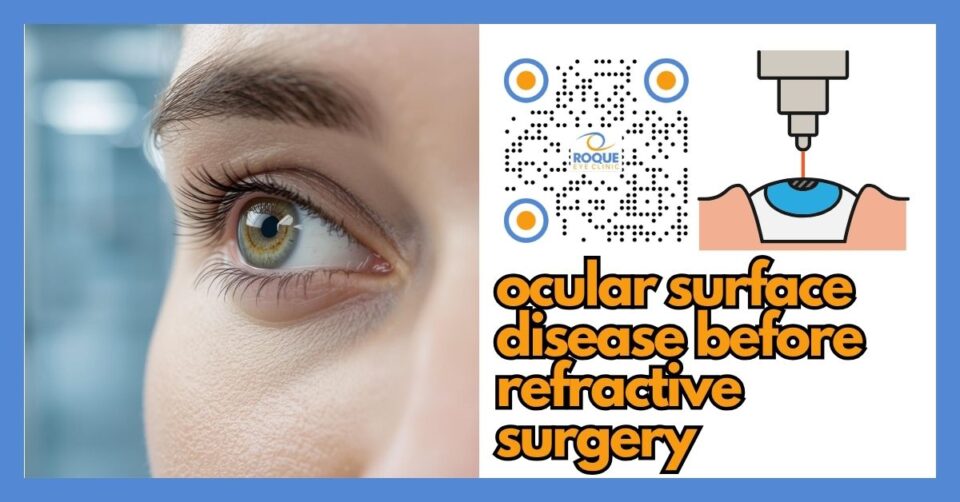
Ocular Surface Disease Before Refractive Surgery
🧠 Quick Answer
Ocular surface disease before refractive surgery means problems affecting the tear film, eyelids, meibomian glands, conjunctiva, or cornea before LASIK, PRK, SMILE, or lens-based surgery. These issues matter because they can distort measurements, worsen healing, reduce comfort, and increase the risk of blurry vision, glare, fluctuating vision, and patient dissatisfaction if not recognized and treated before surgery.
Many patients think refractive surgery planning is mostly about the eyeglass prescription and corneal thickness. Those are important, but they are not the whole story. The surface of the eye must also be healthy. If the tear film is unstable or the lids are inflamed, preoperative measurements may become unreliable, the eyes may feel worse after surgery, and even an otherwise technically successful procedure may not feel like a success to the patient.
That is why careful surgeons pay close attention to ocular surface disease before refractive surgery. In simple language, the surface of the eye is the “front window” through which all your light enters. If that window is dry, inflamed, oily in the wrong way, or healing poorly, the vision can fluctuate even when the laser treatment or lens-based procedure is well performed.
🧩 Focus: Ocular surface disease and tear-film problems before refractive surgery
👁 Goal: Help patients understand why dry eye, lid disease, and ocular surface inflammation must be identified and treated before surgery
🛡 Evidence-Based: Preferred Practice Patterns • Standards of Care • Systematic Reviews • Meta-Analyses
REFRACTIVE SURGERY Knowledge Hub
Start with the complete guide:
🔬 Ocular Surface Disease Anatomy Micro-Primer
- Tear film: This thin layer coats the eye and helps keep vision smooth, comfortable, and stable.
- Meibomian glands: These oil glands in the eyelids help prevent tears from evaporating too quickly.
- Corneal epithelium: This is the eye’s outermost protective surface and one of the first tissues affected by dryness and inflammation.
- Conjunctiva: This clear tissue covering the white part of the eye can become inflamed, irritated, and unstable in ocular surface disease.
📘 Ocular Surface Disease Terminology Glossary
- Dry eye disease: A common condition in which the tears are unstable or unhealthy, causing irritation and fluctuating vision.
- Meibomian gland dysfunction: A blockage or abnormality of the eyelid oil glands that often leads to evaporative dry eye.
- Tear breakup time: A test showing how quickly the tear film becomes unstable after a blink.
- Ocular surface staining: Dye testing used to detect damaged or irritated surface cells on the cornea or conjunctiva.
- Blepharitis: Inflammation of the eyelid margins, often linked to crusting, irritation, and poor tear quality.
- Optimization: Treating the ocular surface before surgery so measurements and healing are more reliable.
Quick Navigation
Related Reading
Key Learning Points
- Ocular surface disease is common in refractive surgery candidates and may be present even when symptoms seem mild.
- Dry eye, meibomian gland dysfunction, blepharitis, and contact-lens-related surface changes can affect measurements and postoperative comfort.
- Unchecked ocular surface disease can lead to fluctuating vision, slower healing, more discomfort, and dissatisfaction after surgery.
- Treating the surface before surgery often improves both the accuracy of planning and the quality of recovery.
- A temporary delay is often safer and smarter than rushing into surgery with an unhealthy ocular surface.
What Ocular Surface Disease Is
Ocular surface disease is a broad term for problems affecting the tear film, eyelid margins, meibomian glands, conjunctiva, and corneal surface. In refractive surgery, the most common example is dry eye disease, but the category also includes blepharitis, meibomian gland dysfunction, contact-lens-related irritation, allergic inflammation, exposure-related dryness, and surface damage from medications or chronic irritation.
Some patients imagine dry eye as simply “not enough tears.” In reality, the problem is often more complex. The eyes may produce tears but lose them too quickly because the tear film is unstable. Others have inflamed eyelid margins, poor oil quality, an unhealthy blinking pattern, or damaged surface cells. That is why a patient may say, “My eyes do not feel that dry,” yet still have significant findings during preoperative testing.
💡 Analogy
Think of the tear film like the smooth clear polish on a camera lens. If the polish is patchy, oily, or drying too fast, the image becomes irregular. The eye can do the same thing: even if the inside of the eye is healthy, an unstable surface can make the vision blur, fluctuate, and feel uncomfortable.
Why Ocular Surface Disease Matters Before Refractive Surgery
Refractive surgery depends on accurate measurements. If the tear film is irregular, the shape of the cornea may appear different from blink to blink. That can affect refraction, topography, tomography, keratometry, aberrometry, and even the surgeon’s confidence in which treatment profile is best. A dry or inflamed surface can therefore distort the “map” used to plan surgery.
There is also a second problem: the eye surface often becomes more stressed after corneal refractive surgery, especially after LASIK and surface-ablation procedures. Patients who already have dry eye or lid disease before surgery are more likely to notice worse symptoms afterward. In other words, pre-existing ocular surface disease is not just a comfort issue. It is both a measurement issue and a recovery issue.
Common Types of Ocular Surface Disease Seen Before Surgery
1) Dry eye disease
This is the most recognized problem. Patients may report burning, dryness, heaviness, irritation, tearing, or fluctuating vision. Some patients have very few symptoms despite clear signs on examination.
2) Meibomian gland dysfunction
This is one of the most important eyelid-related causes of evaporative dry eye. The oil glands may become blocked or may produce poor-quality oil, leading to rapid tear evaporation and unstable vision.
3) Blepharitis
Inflamed lid margins can contribute to irritation, bacterial overgrowth, debris, and poor tear quality. If significant, it should be treated before surgery.
4) Contact-lens-related surface changes
Contact lenses can alter the corneal surface and destabilize the tear film. This is why surgeons commonly instruct patients to stop wearing contact lenses before testing and surgery planning.
5) Allergic or inflammatory conjunctival disease
Itching, redness, mucus, and chronic rubbing can worsen inflammation and may interfere with healing. Eye rubbing is also especially concerning in corneal ectasia risk discussions.
Symptoms Patients May Notice
- Dryness or sandy sensation
- Burning or stinging
- Tearing that seems excessive
- Fluctuating vision that clears after blinking
- Redness
- Light sensitivity
- Eye fatigue, especially with screen use
- Discomfort with contact lenses
- Crusting or irritation along the eyelids
One important point for patients: watery eyes do not always mean the eyes are “too wet.” Sometimes the eyes water because they are irritated and the tear film is poor quality. This is why a patient with dry eye may still complain of excessive tearing.
How Surgeons Test for Ocular Surface Disease Before Surgery
A careful preoperative exam may include symptom questions, slit-lamp examination, tear breakup time, ocular surface staining, meibomian gland evaluation, tear meniscus assessment, blink assessment, and review of lid-margin health. Many clinics also look closely at how the corneal maps behave. If the measurements are inconsistent or “noisy,” the tear film may be part of the problem.
Some surgeons also use standardized questionnaires or additional tear tests, depending on the clinic and technology available. The exact work-up varies, but the main principle is the same: do not trust the preoperative plan until the front surface of the eye is reliable enough to trust.
Who Is at Higher Risk?
- Patients with a prior dry eye diagnosis
- Contact lens wearers
- Older patients
- Patients with screen-heavy lifestyles and reduced blinking
- People with rosacea or chronic blepharitis
- Patients using medications that worsen dryness
- Patients with autoimmune or inflammatory disease
- Patients with hormonal fluctuation or refractive instability
How Doctors Optimize the Ocular Surface First
Optimization means treating the surface before surgery rather than trying to “push through” a poor tear film. The exact plan depends on the findings. Common strategies include artificial tears, preservative-free lubricants, warm compresses, lid hygiene, temporary contact lens discontinuation, treatment of blepharitis or meibomian gland dysfunction, anti-inflammatory therapy when appropriate, allergy control, and lifestyle adjustments such as blink awareness and screen breaks.
Some patients need only a short period of lubrication and lid care. Others need a more structured dry-eye treatment plan before the surgeon repeats the corneal maps and refraction. This extra step can feel inconvenient, but it often protects the quality of the final result.
Why Delaying Surgery Can Be the Right Decision
Patients sometimes worry that a delay means they are poor candidates forever. Often that is not true. A delay can simply mean the surgeon wants better data and a healthier surface. In many cases, once the ocular surface improves, the treatment plan becomes clearer and the patient’s recovery experience becomes more predictable.
A rushed surgery on an unstable ocular surface can create avoidable problems: blurry vision, more discomfort, repeated visits, frustration, and uncertainty about whether symptoms come from dryness, healing, or refractive error. Treating first is often the more efficient path in the long run.
🚨 Emergency Warning
Urgent assessment is needed if eye irritation is accompanied by severe pain, marked light sensitivity, sudden drop in vision, pus-like discharge, or a white spot on the cornea. These signs may suggest infection or another serious corneal problem and should not be treated as “simple dry eye.”
When Surgery May Need to Be Delayed
- If corneal maps are inconsistent because of tear instability
- If there is significant blepharitis or meibomian gland dysfunction
- If ocular surface staining shows active surface damage
- If the patient is very symptomatic and already struggling with dryness
- If contact-lens wear is still affecting corneal measurements
- If inflammation, allergy, or exposure-related dryness remains uncontrolled
What Patients Can Do Before the Screening Visit
- Tell your surgeon honestly about dryness, tearing, burning, or contact lens discomfort.
- Follow instructions about stopping contact lenses before testing.
- Bring a list of eye drops and medications you use.
- Do not assume fluctuating vision is “just stress” or “just screen time.” Mention it.
- Avoid eye rubbing, especially if allergy or irritation is present.
The Bigger Message for Patients
Ocular surface disease before refractive surgery is not a minor side issue. It is one of the most important things that can affect preoperative measurements, postoperative comfort, and overall satisfaction. Patients often focus on the laser technology, but the tear film and lid health matter just as much as the machine when it comes to seeing clearly and healing well.
The best refractive surgeons do not simply ask, “Can I do this procedure?” They also ask, “Is the eye surface healthy enough to trust the measurements and support a good recovery?” That question is a sign of careful care, not unnecessary delay.
Continue Reading
🏁 Take-Home Message
A healthy ocular surface is essential before refractive surgery. Dry eye, lid inflammation, and tear-film instability can distort measurements and worsen comfort after surgery. Treating these problems first often improves planning, healing, and patient satisfaction. If your surgeon recommends surface optimization before surgery, that is usually a safety step—not a setback.
FAQ
1) Can I still have LASIK or SMILE if I have dry eye?
Sometimes yes, but the dry eye should be evaluated properly first. Some patients can proceed after treatment and optimization, while others may need a different procedure or a delay.
2) Why does my vision fluctuate if my glasses prescription seems correct?
An unstable tear film can cause the front surface of the eye to become optically irregular. That can make the vision blur and clear again after blinking.
3) Do contact lenses affect ocular surface testing?
Yes. Contact lenses can alter the cornea and tear film, which is why surgeons usually ask patients to stop wearing them before preoperative measurements.
4) Is watery tearing a sign that I do not have dry eye?
No. Reflex tearing can happen when the surface is irritated. Some patients with dry eye complain of excessive watering rather than a dry feeling.
5) Will treating blepharitis or meibomian gland dysfunction really help surgery planning?
Often yes. Better lid health usually improves tear quality, surface stability, and the reliability of corneal measurements.
6) Why would my surgeon delay surgery even if I am eager to proceed?
Because rushing through unstable measurements or a sick ocular surface can lead to more discomfort, less reliable planning, and lower satisfaction after surgery.
📚 References
- American Academy of Ophthalmology. Refractive Surgery Preferred Practice Pattern® Summary Benchmarks. Updated 2024.
- U.S. Food and Drug Administration. What should I expect before, during, and after surgery?
- Tear Film & Ocular Surface Society (TFOS). DEWS II Executive Summary.
- Nair S, et al. Refractive surgery and dry eye - An update. 2023.
- Dossari SK, et al. Post-refractive Surgery Dry Eye: A Systematic Review. 2024.
🤝 Roque Eye Clinic Patient Education Series
Dr. Manolette Roque | Dr. Barbara Roque
St. Luke's Medical Center Global City | Asian Hospital Medical Center
Philippines
Medical Review: Roque Advisory Council
Last Updated: March 2026
Medical Disclaimer
This article is intended for educational purposes only and does not replace professional medical consultation.