
Is Refractive Surgery Safe
🧠 Quick Answer
Refractive surgery is generally safe when the right procedure is performed on the right eye for the right patient after a proper screening. However, safe does not mean risk-free. Dry eye, glare, halos, undercorrection, overcorrection, infection, corneal ectasia, retinal problems, or the need for enhancement can still happen, so candidacy and informed consent matter greatly.
Many patients ask a very reasonable question before considering LASIK, PRK, SMILE, ICL, or lens-based vision correction: Is refractive surgery safe? The honest answer is yes, refractive surgery is generally considered safe in properly selected patients, but it is never completely risk-free. Safety depends heavily on accurate diagnosis, careful screening, the correct choice of procedure, appropriate technology, surgical skill, postoperative care, and realistic expectations.
In other words, refractive surgery is not one single operation with one single risk profile. A flap-based laser procedure, a surface-ablation procedure, a lenticule procedure, a phakic lens implant, and refractive lens exchange do not carry exactly the same risks. That is why a good safety discussion must go beyond marketing language and look at the patient’s actual eye anatomy, age, tear film, retina, occupation, and tolerance for trade-offs.
🧩 Focus: Overall safety of refractive surgery
👁 Goal: Explain what “safe” really means, which risks are common or uncommon, and how proper screening lowers avoidable complications
🛡 Evidence-Based: Preferred Practice Patterns • Standards of Care • Systematic Reviews • Meta-Analyses
REFRACTIVE SURGERY Knowledge Hub
Start with the complete guide:
🔬 Refractive Surgery Safety Anatomy Micro-Primer
- Cornea: The clear front window of the eye. Many laser procedures reshape this tissue, so thickness, curvature, and structural stability matter for safety.
- Tear film: The tear layer coats the cornea. If it is unstable, symptoms such as dryness, fluctuating vision, or discomfort can worsen after surgery.
- Lens: The natural lens sits behind the iris. Lens-based procedures interact with or replace this structure, so age and lens clarity influence which surgery is safest.
- Retina: The light-sensitive tissue at the back of the eye. High myopia and peripheral retinal disease can affect overall visual risk even if the front of the eye looks suitable.
📘 Refractive Surgery Safety Terminology Glossary
- Candidacy: Whether a patient is a safe and suitable match for a specific procedure.
- Ectasia: Progressive weakening and bulging of the cornea that can happen after surgery in susceptible eyes.
- Enhancement: An additional refractive procedure done to fine-tune a result.
- Residual refractive error: Remaining nearsightedness, farsightedness, or astigmatism after surgery.
- Higher-order aberrations: Complex optical imperfections that can contribute to glare, halos, and reduced night vision quality.
- Informed consent: A discussion of benefits, alternatives, limitations, and risks before choosing surgery.
Quick Navigation
Related Reading
Key Learning Points
- Refractive surgery is generally safe in properly selected patients, but it is not risk-free.
- The biggest safety factor is often screening and patient selection, not the advertisement or machine name.
- Dry eye, glare, halos, fluctuating vision, and the need for enhancement are more common than severe complications.
- Serious problems such as infection, corneal ectasia, retinal complications, or major visual loss are less common, but they matter and must be discussed honestly.
- The safest procedure is not always the newest or most popular one. It is the one that best matches the patient’s eye and goals.
What “Safe” Means in Refractive Surgery
In medicine, “safe” never means “guaranteed.” It means that the expected benefits are reasonable compared with the expected risks when the procedure is performed correctly in an appropriate patient. Refractive surgery is elective surgery. Unlike an emergency operation that is done to save life or vision, refractive surgery is done to reduce dependence on glasses or contact lenses. That means the safety standard is especially important. Even a low risk may feel unacceptable if the patient was not screened properly or was never told about realistic trade-offs.
A helpful analogy is air travel. Flying is generally safe, but that does not mean turbulence never happens or that pilots can skip pre-flight checks. Refractive surgery is similar. The procedure may be safe overall, but the safety depends on preparation, patient selection, equipment, execution, and follow-up.
💡 Analogy
Asking whether refractive surgery is safe is like asking whether driving is safe. The honest answer depends on the road, the driver, the condition of the car, the weather, and how carefully the rules are followed. In eye surgery, the “road conditions” include the cornea, tear film, retina, lens, and overall health of the eye.
Why Refractive Surgery Is Generally Considered Safe
Modern refractive surgery benefits from better diagnostics, more refined laser algorithms, improved eye tracking, better understanding of dry eye and ectasia risk, and stronger screening protocols than in earlier eras. Large numbers of patients have undergone procedures such as LASIK, PRK, and SMILE, and many achieve good unaided vision with high satisfaction when they are well selected. Lens-based procedures such as ICL and refractive lens exchange also have established roles in appropriate patients.
Still, the phrase “generally safe” should not be misread as “safe for everyone.” A healthy cornea with stable refraction and realistic expectations is not the same as a borderline cornea with untreated ocular surface disease and fluctuating diabetes. The first patient may be an excellent candidate. The second may face avoidable risk.
Safety Starts Before Surgery
The safest refractive surgeries often begin with the surgeon saying no, not yet, or this is not the best option for you. That may sound disappointing, but it is one of the strongest signs of a responsible screening process. Surgery is safest when the clinic checks refraction stability, corneal topography or tomography, pachymetry, tear film, meibomian glands, pupil-related visual quality concerns, retina, eye pressure, and general medical context before recommending treatment.
Patients at higher risk may need more testing, pretreatment of ocular surface disease, retinal treatment first, a different refractive procedure, or no surgery at all.
Common Risks and Side Effects
When patients hear the word “risk,” they often imagine only catastrophic complications. In reality, the more common safety issues are usually symptoms or limitations that may be temporary, manageable, or sometimes persistent. These can still matter a lot because refractive surgery is elective.
Dry eye symptoms
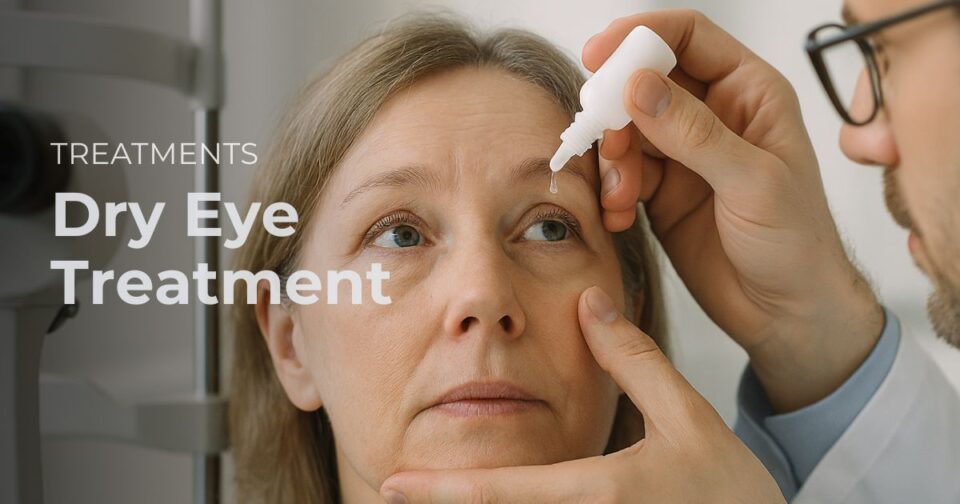
Dryness, burning, foreign-body sensation, and fluctuating blur are common topics in refractive surgery counseling. Some patients already have dry eye before surgery, and the procedure may temporarily worsen symptoms. This is one reason ocular surface optimization is so important before treatment.
Glare, halos, starbursts, and night-vision complaints
Some patients notice visual quality symptoms, especially in low light. These may improve with healing and neuroadaptation, but they can be bothersome, especially for frequent night drivers or patients with demanding visual needs.
Residual refractive error
Some patients still need thin glasses for certain tasks or may prefer enhancement if the result is not close enough to target. This is not necessarily a surgical failure, but it does mean “safe” is not the same as “perfect.”
Longer recovery than expected
Surface procedures such as PRK or TransPRK often involve more early discomfort and slower visual recovery than LASIK. Even with other procedures, patients may heal at different speeds.
Uncommon but Serious Complications
Although uncommon, some complications deserve direct discussion because they can threaten vision or require additional treatment.
- Infection: Serious postoperative infection is uncommon but potentially vision-threatening.
- Corneal ectasia: A weakened cornea can progressively bulge after surgery in susceptible eyes. This is one reason ectasia screening is essential.
- Flap complications: These apply mainly to LASIK and may include displacement, wrinkles, epithelial ingrowth, or interface problems.
- Steroid response or pressure rise: Some postoperative medications can increase eye pressure in susceptible patients.
- Retinal complications: Highly myopic eyes already carry retinal risks, and these must not be ignored simply because the surgery is done at the front of the eye.
- Loss of best-corrected vision: This is uncommon, but it is one of the most serious possibilities discussed in informed consent.
🚨 Emergency Warning
Seek urgent ophthalmic review if you develop severe pain, rapidly worsening vision, marked redness, increasing discharge, sudden new floaters, flashes of light, or a curtain-like shadow after refractive surgery. These are not routine symptoms and may need prompt treatment.
Who May Be at Higher Risk
Refractive surgery tends to be safer in adults with stable refraction, healthy corneas, controlled ocular surface disease, healthy retinas, and realistic expectations. Risk may be higher when one or more of the following are present:
- Prescription that has changed recently
- Pregnancy or breastfeeding with refractive fluctuation
- Diabetes with unstable vision
- Suspicious topography, keratoconus, thin cornea, or ectasia risk
- Significant dry eye disease or untreated blepharitis
- Autoimmune or healing-related medical issues
- Early cataract or lens dysfunction that makes lens-based options more logical
- Retinal tears, lattice degeneration, or very high myopia requiring retinal caution
- Unrealistic goals such as expecting “superhuman” vision or zero need for glasses forever
Is One Type of Refractive Surgery Safer Than Another?
Not universally. Each category has its own advantages and its own risk profile. LASIK offers fast recovery but has flap-related risks. PRK and other surface-ablation procedures avoid a stromal flap but usually involve more early discomfort and slower recovery. SMILE avoids a large flap but still has its own limitations and possible complications. ICL can preserve corneal tissue but introduces intraocular considerations such as vault, cataract risk, pressure issues, or the need for future monitoring. Refractive lens exchange may be reasonable in selected older patients but changes the eye permanently and carries lens-surgery-related risks.
The right question is usually not “Which surgery is safest for everyone?” but “Which surgery is safest for my eye?”
How to Make Refractive Surgery Safer
- Have a full screening evaluation. Do not rely on a brief promotional scan alone.
- Be honest about symptoms and habits. Mention dryness, contact lens wear, night-driving needs, and medical conditions.
- Ask why a procedure is being recommended. A good answer should refer to your anatomy and goals, not only to convenience.
- Understand trade-offs. Fast recovery, flap-free treatment, tissue preservation, and presbyopia goals do not all point to the same procedure.
- Follow postoperative instructions carefully. Medication use, hygiene, follow-up visits, and activity restrictions all matter.
- Know the red flags. Pain, sudden vision loss, increasing redness, or symptoms of retinal detachment need urgent review.
What a Responsible Surgeon Usually Says
A responsible refractive surgeon usually does not say, “This surgery is perfectly safe.” Instead, a responsible surgeon says something closer to this: “This procedure is generally safe in a properly selected patient, but it still has known risks, side effects, and limitations. Let us first decide whether you are a good candidate and whether this is the best option for your eye.”
That kind of answer may sound less dramatic than advertising language, but it is more trustworthy and much safer.
Continue Reading
🏁 Take-Home Message
Refractive surgery is generally safe when it is matched carefully to the right patient after a thorough screening. The most important safety step is not choosing the flashiest technology. It is choosing the correct procedure—or deciding not to proceed—based on your cornea, tear film, retina, age, and visual needs. Safe surgery begins with honest evaluation, not shortcuts.
FAQ
1) Is refractive surgery considered safe overall?
Yes, refractive surgery is generally considered safe in properly selected patients, but it is not risk-free. Safety depends heavily on screening, candidacy, procedure choice, and follow-up care.
2) What are the most common problems after refractive surgery?
Common issues include dry eye symptoms, glare, halos, fluctuating vision, slower-than-expected recovery, and residual refractive error. These are usually discussed during informed consent because they can affect satisfaction.
3) Can serious complications happen?
Yes. Serious complications are less common, but infection, corneal ectasia, significant flap problems, retinal events, and major visual loss can occur. This is why elective surgery still deserves careful risk discussion.
4) Is LASIK safer than PRK or SMILE?
Not in every case. LASIK, PRK, and SMILE have different strengths and different risks. The safest procedure depends on the patient’s cornea, tear film, lifestyle, prescription, and overall eye health.
5) What makes refractive surgery less safe?
Unstable prescription, suspicious corneal imaging, untreated dry eye, pregnancy-related refractive fluctuation, poorly controlled systemic disease, retinal problems, or unrealistic expectations can all increase risk or reduce suitability.
6) How can I improve safety before surgery?
Have a complete evaluation, follow contact lens washout instructions, disclose all symptoms and medications, ask why a specific procedure is being recommended, and follow postoperative instructions closely.
📚 References
- American Academy of Ophthalmology. Refractive Surgery Preferred Practice Pattern®. Updated guidance available from the American Academy of Ophthalmology.
- U.S. Food and Drug Administration. What are the risks and how can I find the right doctor for me?
- U.S. Food and Drug Administration. When is LASIK not for me?
- U.S. Food and Drug Administration. What should I expect before, during, and after surgery?
- National Eye Institute. Surgery for Refractive Errors.
🤝 Roque Eye Clinic Patient Education Series
Dr. Manolette Roque | Dr. Barbara Roque
St. Luke's Medical Center Global City | Asian Hospital Medical Center
Philippines
Medical Review: Roque Advisory Council
Last Updated: March 2026
Medical Disclaimer
This article is intended for educational purposes only and does not replace professional medical consultation.