

LASIK Surgery Guide
🧠 Quick Answer
LASIK is a laser vision correction procedure that reshapes the cornea to reduce dependence on glasses or contact lenses. It can work very well for properly screened adults with stable myopia, hyperopia, or astigmatism. Recovery is often faster than surface laser procedures, but LASIK is still real eye surgery with real risks, limitations, and trade-offs.
LASIK is one of the best-known refractive surgery procedures in the world. Many patients ask about it because they want clearer vision without depending as much on eyeglasses or contact lenses. The procedure is popular for a reason: in carefully selected patients, it can provide rapid visual recovery and strong functional results. Still, LASIK is not magic, not risk-free, and not the right option for every eye.
A good LASIK decision starts with proper screening, not with marketing. The key question is not only “Can LASIK reduce my prescription?” but also “Is LASIK the safest and best fit for my eyes, my lifestyle, and my long-term visual needs?” That distinction matters. Some patients are excellent LASIK candidates. Others may do better with PRK, SMILE, ICL, lens-based surgery, or no refractive surgery at all.
🧩 Focus: LASIK surgery for refractive error correction
👁 Goal: Explain what LASIK is, who may qualify, how surgery works, expected benefits, limitations, recovery, and important risks
🛡 Evidence-Based: Preferred Practice Patterns • Standards of Care • Systematic Reviews • Meta-Analyses
REFRACTIVE SURGERY Knowledge Hub
Start with the complete guide:
🔬 LASIK Anatomy Micro-Primer
- Cornea: The clear front window of the eye. LASIK changes its shape so light focuses more accurately on the retina.
- Corneal flap: A thin hinged layer created at the front of the cornea during LASIK, then repositioned after laser treatment.
- Corneal stroma: The main structural layer beneath the flap. This is the layer the excimer laser reshapes.
- Tear film: The thin protective layer over the eye surface. Dry eye can affect both LASIK measurements and comfort after surgery.
📘 LASIK Terminology Glossary
- LASIK: Laser-assisted in situ keratomileusis, a refractive surgery procedure that uses a flap and laser reshaping.
- Excimer laser: The laser that reshapes the cornea to correct refractive error.
- Femtosecond laser: A laser commonly used to create the LASIK flap.
- Enhancement: An additional procedure sometimes performed if residual refractive error remains after healing.
- Dry eye: A condition in which tears are insufficient or unstable, which can affect comfort and vision quality.
- Presbyopia: Age-related loss of near focusing ability. LASIK for distance vision does not automatically remove the need for reading glasses.
Quick Navigation
Related Reading
Key Learning Points
- LASIK treats myopia, hyperopia, and astigmatism by reshaping the cornea.
- It usually works best in adults with a stable prescription and healthy corneal structure.
- Recovery is often faster than PRK, but LASIK involves a corneal flap, which changes the risk profile.
- Possible issues include dry eye, glare, halos, residual refractive error, and the need for enhancement.
- LASIK does not directly cure presbyopia, so reading glasses may still be needed with age.
What LASIK Is
LASIK stands for laser-assisted in situ keratomileusis. It is a refractive surgery procedure that changes the shape of the cornea so that light focuses more accurately on the retina. The goal is to reduce dependence on glasses or contact lenses for distance vision. Depending on the eye and the treatment plan, LASIK may be used for nearsightedness, farsightedness, and astigmatism.
LASIK became widely known because many patients notice useful visual improvement quite quickly. Compared with surface procedures such as PRK, the recovery often feels faster and more comfortable in the first few days. That convenience, however, should not distract from the need for careful candidacy screening and realistic expectations.
💡 Analogy
Think of the cornea like a camera’s front lens. If its curve is slightly off, the image can look blurry. LASIK carefully reshapes that front lens so incoming light lands in the right place, much like fine-tuning a camera for sharper focus.
How LASIK Works
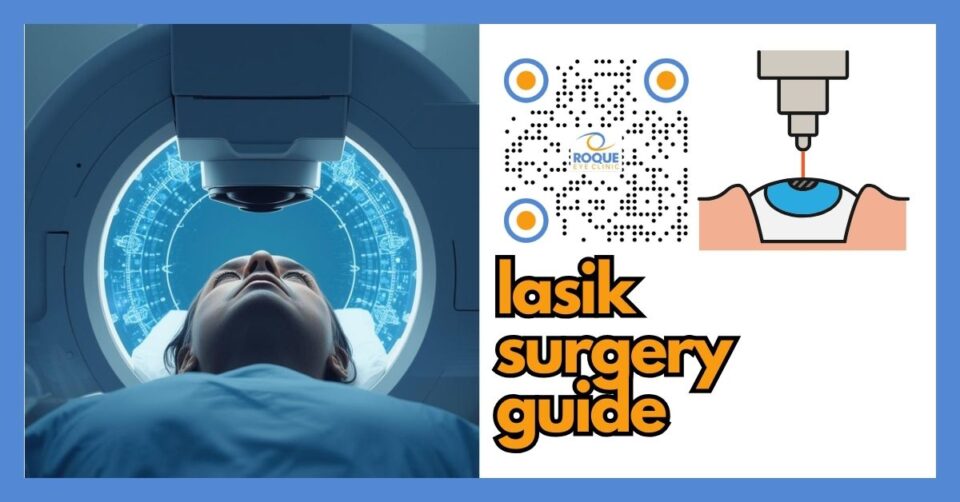
LASIK has two main steps. First, a thin flap is created on the front of the cornea. This flap may be created with a femtosecond laser or, in some systems, a microkeratome blade. The flap is lifted. Second, an excimer laser removes microscopic amounts of tissue from the underlying corneal stroma to change the cornea’s shape. The flap is then repositioned.
The reshaping pattern depends on the refractive error. In myopia, the cornea is generally flattened. In hyperopia, the treatment pattern is different and tends to steepen central optical power relative to surrounding tissue. In astigmatism, the laser also addresses uneven curvature. The exact treatment plan depends on the patient’s measurements, laser platform, and surgeon’s planning method.
What LASIK Treats
- Myopia: Nearsightedness
- Hyperopia: Farsightedness
- Astigmatism: Irregular curvature that causes blurred or distorted vision
LASIK does not directly solve age-related presbyopia in the same way it treats a standard distance prescription. Some patients may still need reading glasses later, even when their distance vision improves substantially.
Who May Be a Candidate for LASIK
A good LASIK candidate usually has a stable prescription, healthy corneal structure, healthy ocular surface, and realistic expectations. Screening matters because LASIK is not simply about plugging in a glasses number. The surgeon must also study corneal thickness, topography or tomography, tear film stability, pupil behavior, eye pressure, retinal health, and general medical factors.
Patients may be less suitable for LASIK if they have unstable refraction, pregnancy-related refractive fluctuation, significant dry eye, suspicious corneal shape, thin or weak corneas, certain autoimmune or healing-related concerns, or other eye diseases that change the safety profile. In those cases, another procedure—or delaying surgery—may be wiser.
When LASIK May Not Be the Best Choice
- When the prescription is still changing
- When dry eye is significant and not yet controlled
- When corneal shape suggests ectasia risk or keratoconus concern
- When corneal tissue is not ideal for flap-based treatment
- When the patient’s work or sports raise special flap concerns
- When expectations are unrealistic, such as assuming perfection in all lighting conditions
Benefits of LASIK
Fast functional recovery
One of LASIK’s biggest advantages is that many patients notice useful visual recovery relatively quickly. This is one reason it remains popular.
Reduced dependence on glasses or contacts
The main goal is practical visual freedom. Many patients appreciate waking up and seeing more clearly without first reaching for glasses or inserting contact lenses.
Established procedure with extensive clinical experience
LASIK has been studied and performed for many years. Modern screening, better flap creation methods, and refined laser platforms have improved safety and predictability compared with earlier eras.
Limitations and Trade-Offs
Not everyone reaches perfect vision
Many patients do very well, but not all eyes achieve perfect uncorrected vision. Some people still need glasses for certain tasks, especially at night, for small print, or as presbyopia develops.
Visual quality can differ from the eye-chart number
A patient may read a good line on the chart and still feel bothered by glare, halos, starbursts, or contrast issues in dim environments. This is why honest counseling is essential.
A flap changes the risk profile
Because LASIK involves a corneal flap, it has flap-related risks that surface procedures do not have. That does not make LASIK “bad,” but it does mean the choice between LASIK and flap-free procedures must be individualized.
What Recovery After LASIK Usually Feels Like
Many patients notice clearer vision within the first day or two, but that does not mean healing is complete. Mild irritation, watering, light sensitivity, fluctuating vision, and dryness are common early on. Vision may continue to refine over time, and follow-up visits remain important even when the patient feels “fine.”
Doctors commonly prescribe drops to reduce inflammation and prevent infection, along with lubricating tears. Patients should avoid rubbing the eyes and should follow all instructions about shields, drops, hygiene, and follow-up visits.
🚨 Emergency Warning
Seek urgent ophthalmic review if you develop severe pain, marked redness, rapidly worsening vision, discharge, or sudden major vision loss after LASIK. These can signal serious complications such as flap problems, infection, or other urgent issues.
Risks and Complications of LASIK
LASIK is often safe in suitable candidates, but “often safe” is not the same as risk-free. Patients should understand the main categories of risk before proceeding.
- Dry eye symptoms: Dryness is one of the most discussed issues after LASIK and may be temporary or, less commonly, persistent.
- Glare, halos, and night-vision complaints: These can be especially frustrating for night drivers or patients sensitive to low-contrast conditions.
- Undercorrection or overcorrection: Some residual refractive error may remain.
- Need for enhancement: A second procedure is sometimes considered, but it is not always possible or advisable.
- Flap complications: Because a flap is created, flap-related issues are part of LASIK-specific counseling.
- Infection or inflammation: Uncommon, but potentially serious.
- Ectasia risk in vulnerable corneas: This is one reason topography, tomography, and candidacy screening are so important.
LASIK and Presbyopia
Patients in their 40s and beyond often ask whether LASIK will remove both distance blur and the future need for reading glasses. This needs careful discussion. Standard LASIK for distance correction does not stop the natural age-related loss of near focus called presbyopia. Some patients still need reading glasses afterward, especially as they age. Others may explore monovision or other presbyopia strategies, but these involve trade-offs and should be discussed carefully.
How LASIK Compares With Other Options
LASIK is only one part of the refractive surgery toolkit. PRK may be considered when a flap-free approach is preferred. SMILE may be attractive for selected myopic cases. ICL can be useful in certain high prescriptions or when corneal laser treatment is less suitable. Lens-based surgery becomes more relevant in older patients or when lens changes are already present. The best procedure depends on the eye—not just on popularity.
Questions Worth Asking Before LASIK
- Why are you recommending LASIK instead of PRK, SMILE, or ICL for my eyes?
- Is my prescription stable enough for surgery?
- Do I have any dry eye or corneal findings that change your advice?
- What is my risk of glare, halos, or night-vision symptoms?
- What happens if I still need a small prescription afterward?
- Will I still need reading glasses as I get older?
Continue Reading
🏁 Take-Home Message
LASIK can be an excellent procedure for the right patient, but the best LASIK result starts long before surgery. It starts with proper screening, accurate counseling, and realistic expectations. LASIK is not simply about getting rid of glasses. It is about choosing the safest and most suitable visual solution for your eyes and your lifestyle.
FAQ
1) What does LASIK treat?
LASIK is used to treat myopia, hyperopia, and astigmatism by reshaping the cornea so light focuses more accurately on the retina.
2) Is LASIK permanent?
The corneal reshaping is permanent, but your eyes can still change over time because of aging, healing behavior, presbyopia, or other factors. Some patients may notice regression or need reading glasses later.
3) How long does LASIK recovery take?
Many patients notice useful vision quickly, sometimes within a day or two, but complete healing and visual refinement take longer. Follow-up care remains important even when recovery seems fast.
4) Can LASIK cause dry eye?
Dry eye symptoms are a known concern after LASIK. For many patients this improves, but dry eye can be significant in some cases, which is why preoperative surface evaluation is important.
5) Will I still need glasses after LASIK?
Possibly. Some patients still need glasses for certain tasks, and many people will eventually need reading glasses as presbyopia develops with age.
6) Is LASIK safer than PRK or SMILE?
Not in a one-size-fits-all way. Each procedure has its own strengths and trade-offs. The safest option depends on your cornea, tear film, prescription, lifestyle, and the surgeon’s evaluation.
📚 References
- American Academy of Ophthalmology. Refractive Surgery Preferred Practice Pattern®. Updated 2024.
- American Academy of Ophthalmology. LASIK — Laser Eye Surgery. Updated January 9, 2026.
- U.S. Food and Drug Administration. When is LASIK not for me?
- U.S. Food and Drug Administration. What are the risks and how can I find the right doctor for me?
- National Eye Institute. Surgery for Refractive Errors. Updated December 6, 2024.
🤝 Roque Eye Clinic Patient Education Series
Dr. Manolette Roque | Dr. Barbara Roque
St. Luke's Medical Center Global City | Asian Hospital Medical Center
Philippines
Medical Review: Roque Advisory Council
Last Updated: March 2026
Medical Disclaimer
This article is intended for educational purposes only and does not replace professional medical consultation.