

Lid, Tear Film, and Ocular Surface Evaluation
🧠 Quick Answer
Lid, tear film, and ocular surface evaluation is a key part of refractive surgery screening. It checks for dry eye, blepharitis, meibomian gland dysfunction, allergy, and surface inflammation that can blur measurements, worsen healing, and increase discomfort after LASIK, PRK, SMILE, or lens-based surgery. Treating these problems first often improves safety, comfort, and visual quality.
Many patients focus on the cornea, laser, or lens implant when they ask about refractive surgery. However, the surface of the eye matters just as much. A healthy ocular surface helps produce accurate preoperative measurements, smoother healing, better comfort, and more reliable visual results. An unhealthy surface can do the opposite.
That is why good refractive screening does not stop at refraction and topography. It also examines the eyelids, meibomian glands, tear film, conjunctiva, and corneal surface. This is where hidden problems such as dry eye disease, blepharitis, meibomian gland dysfunction, rosacea-related lid disease, exposure, and allergy often show up.
🧩 Focus: Preoperative lid, tear film, and ocular surface evaluation before refractive surgery
👁 Goal: Detect and optimize surface disease before surgery to improve safety, comfort, measurements, and outcomes
🛡 Evidence-Based: Preferred Practice Patterns • Standards of Care • Systematic Reviews • Meta-Analyses
🧠 REFRACTIVE SURGERY Knowledge Hub
Start with the complete guide:
🔬 Ocular Surface Anatomy Micro-Primer
- Eyelid margin: The edge of the eyelid helps spread tears evenly across the eye and protects the surface during blinking.
- Meibomian glands: These oil glands in the eyelids make the oily layer of the tear film. If they are blocked or inflamed, tears evaporate too fast.
- Tear film: This thin coating keeps the eye smooth, comfortable, and optically clear. When it becomes unstable, vision may fluctuate.
- Corneal and conjunctival surface: These tissues must stay healthy and well-lubricated for accurate measurements and comfortable recovery after surgery.
📘 Terminology Glossary
- Dry eye disease: A common condition in which tears do not keep the eye surface stable and comfortable.
- Blepharitis: Inflammation of the eyelid margins, often causing crusting, irritation, redness, and unstable tears.
- Meibomian gland dysfunction: Poor oil-gland function that leads to faster tear evaporation.
- Tear breakup time: A test that checks how quickly the tear film becomes unstable after a blink.
- Surface staining: A dye test that highlights dry or damaged areas on the ocular surface.
- Optimization: Treating the surface before surgery so measurements and healing are more reliable.
Quick Navigation
Related Reading
Key Learning Points
- Dry eye, blepharitis, meibomian gland dysfunction, and allergy are common in refractive surgery candidates.
- An unhealthy surface can distort refraction, keratometry, topography, tomography, and other preoperative measurements.
- Uncontrolled external eye disease may make refractive surgery unsafe or may require treatment first.
- Optimizing the lids and tear film before surgery can improve comfort, healing, and visual quality.
- Some patients can still have surgery, but only after the surface becomes more stable.
What Lid, Tear Film, and Ocular Surface Evaluation Includes
This part of refractive screening looks at the “front-line environment” of the eye. It checks how well the lids blink, whether the lid margins are inflamed, whether the meibomian glands are functioning, whether tears are stable, and whether the conjunctiva and cornea show signs of dryness, staining, inflammation, or allergy.
In practical terms, this evaluation asks a simple question: Is the surface of the eye healthy enough to give accurate measurements and recover well after surgery? If the answer is no, the safest next step is often treatment first, not immediate surgery.
💡 Analogy
Think of the tear film as the smooth top coat on a camera lens. If the coating is patchy, oily, or dries out quickly, the image becomes unstable even if the camera itself is excellent. Refractive surgery measurements can behave the same way when the tear film is poor.
Why the Ocular Surface Matters Before Refractive Surgery
The ocular surface is not a small side issue. It directly affects both preoperative accuracy and postoperative experience. If the tear film is irregular, the measured corneal power can vary from blink to blink. That can influence refraction, astigmatism estimates, corneal mapping, and procedure planning.
It also matters after surgery. Procedures such as LASIK, PRK, and SMILE can temporarily worsen dry-eye symptoms because corneal nerves and surface homeostasis are affected during healing. Patients who already have untreated dry eye or lid disease may notice more burning, foreign-body sensation, fluctuating vision, or delayed comfort after surgery.
For that reason, major guidelines and reviews emphasize that external eye disease such as dry eye and blepharitis should be controlled before elective refractive surgery is performed.
What Doctors Look For
1) Lid margin disease
The exam checks for blepharitis, debris at the lashes, capped oil glands, telangiectatic vessels, eyelid redness, poor blink, and skin findings that may suggest rosacea-related inflammation. Even mild lid disease can destabilize the tear film.
2) Meibomian gland dysfunction
Blocked or poor-quality meibomian secretions are a major cause of evaporative dry eye. The oil layer of the tear film is what helps keep tears from evaporating too quickly. When these glands do not function well, patients often complain of burning, fluctuating vision, or discomfort with screen use and air-conditioning.
3) Tear quantity and tear quality
Not all dry eye is due to “not enough tears.” Some patients make tears, but the tears are unstable or evaporate too fast. That is why doctors evaluate both quantity and quality. A patient can still feel very symptomatic even when tears seem present at first glance.
4) Ocular surface staining
Special dyes can reveal microscopic areas of dryness or epithelial stress on the cornea and conjunctiva. This staining helps show whether the surface is healthy, mildly stressed, or significantly compromised.
5) Allergy and inflammation
Itching, mucus, redness, lid swelling, papillary reaction, and chronic rubbing can point to ocular allergy. This matters because active inflammation and persistent eye rubbing can interfere with comfort, measurements, and long-term corneal safety.
6) Exposure and blink problems
Incomplete blinking, lagophthalmos, facial asymmetry, or surface exposure during sleep can worsen dryness. These issues may be subtle and easy to miss unless they are looked for on purpose.
Common Tests and Examination Steps
Not every clinic uses the same exact sequence, but ocular surface evaluation often includes the following:
- Symptom review, including dryness, burning, tearing, fluctuating vision, light sensitivity, and contact lens intolerance
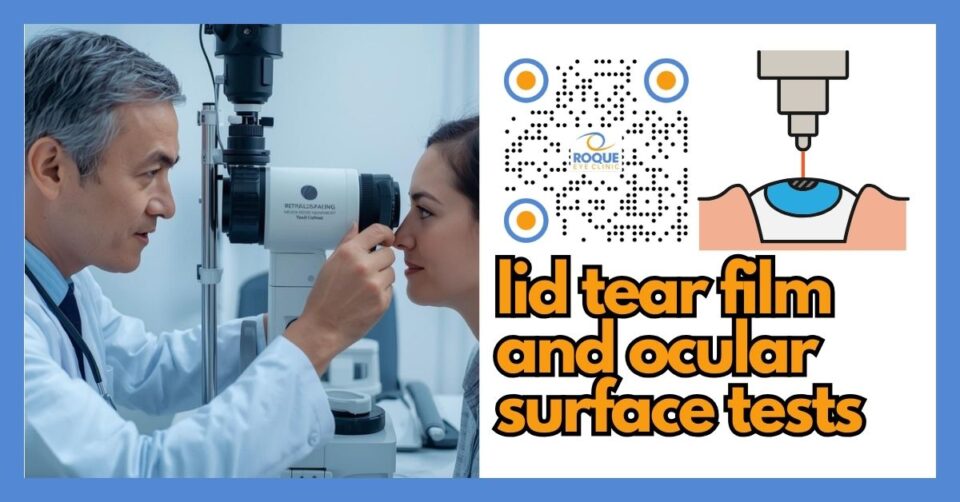
- Slit-lamp examination of the lids, lashes, lid margin, conjunctiva, cornea, and tear meniscus
- Assessment of meibomian gland openings and oil quality
- Tear breakup time or similar tear-stability testing
- Fluorescein or lissamine staining to look for surface damage
- Blink assessment and exposure assessment
- Schirmer testing in selected patients
- Photography or device-based testing in clinics that use more advanced dry-eye workups
These tests are not performed just to “collect more data.” They help determine whether the surface is good enough for dependable surgical planning.
Why Ocular Surface Disease Can Mislead Preoperative Measurements
A poor tear film can create measurement noise. One visit may show a slightly different astigmatism amount from another visit. Topography rings may look less regular. Keratometry may shift. Wavefront results may vary. This is why some patients are asked to treat the surface first and repeat measurements later. The goal is not delay for delay’s sake. The goal is better data.
In other words, if the surface is unstable, your surgeon may be measuring a moving target. Optimizing the lids and tears first can make the final treatment plan more trustworthy.
How Surface Problems Are Optimized Before Surgery
Treatment depends on the cause and severity of the problem. Common approaches may include eyelid hygiene, warm compresses, artificial tears, preservative-free lubricants, treatment of blepharitis or allergy, anti-inflammatory drops when appropriate, meibomian-gland treatment plans, environmental advice, and temporary delay of surgery until the surface becomes more stable.
Some patients improve within days or weeks. Others need longer. The important point is that optimization is part of good refractive surgery care, not a sign that something has gone wrong. In many cases, this step helps protect both comfort and outcome quality.
Which Refractive Procedures Are Most Affected?
All refractive procedures benefit from a healthy surface, but corneal laser procedures deserve especially careful surface review because the ocular surface and corneal nerves are directly involved in healing. Lens-based procedures also benefit from surface optimization because preoperative calculations and postoperative comfort can still be affected by tear instability and inflammation.
This means lid and tear-film assessment is not “only for LASIK.” It is relevant across the refractive surgery spectrum.
Who May Need Extra Caution
Patients who may need a more careful ocular surface workup include those with:
- Known dry eye disease
- Blepharitis or meibomian gland dysfunction
- Rosacea
- Allergic eye disease
- Autoimmune disease
- Diabetes
- Heavy screen use
- Long-term contact lens wear
- Previous eye surgery
- Symptoms that seem worse than the visible exam suggests
These patients are not automatically disqualified, but they often benefit from more deliberate optimization and counseling before elective surgery is scheduled.
🚨 Emergency Warning
Seek urgent eye care if redness is severe, there is marked pain, sudden drop in vision, light sensitivity with significant discomfort, corneal ulcer concern, chemical exposure, or a new surface problem after contact lens use. These problems must be addressed before any refractive surgery plan continues.
What Patients Often Notice When the Surface Is Unhealthy
Symptoms may include burning, stinging, tearing, fluctuating blur, heaviness of the lids, foreign-body sensation, itching, mucus, redness, fatigue with reading or computer work, and vision that clears temporarily after blinking. Some patients are surprised that tearing can actually be a symptom of dry eye. That happens because an irritated surface can trigger reflex tearing.
Why Treating the Surface First Is Often the Best Decision
Elective refractive surgery should be planned under the best possible conditions. Treating lid disease and tear instability before surgery can improve test quality, reduce symptom burden, and help set realistic expectations. It may also help your surgeon decide which procedure is more suitable, or whether surgery should wait.
Continue Reading
🏁 Take-Home Message
Lid, tear film, and ocular surface evaluation is one of the most important parts of refractive surgery screening. If the surface is inflamed, dry, or unstable, measurements can become less reliable and recovery can feel worse. Treating these issues first often leads to safer planning, better comfort, and a better chance of a satisfying visual result.
FAQ
1) Why do my eyelids matter before refractive surgery?
The eyelids help spread the tear film and protect the ocular surface. If the lid margins are inflamed or the oil glands are blocked, the tear film becomes unstable and measurements may become less reliable.
2) Can dry eye make me ineligible for LASIK or SMILE?
Sometimes yes, especially if the dry eye is significant and untreated. Many patients can still proceed later, but only after the surface is treated and becomes more stable.
3) Why can my measurements change if my eyes are dry?
A poor tear film creates an irregular optical surface. That can affect refraction, keratometry, and corneal mapping, which are important for treatment planning.
4) Is watery tearing always a sign that I have enough tears?
No. Reflex tearing can happen when the eye surface is irritated. Some patients with dry eye actually complain of watering rather than obvious dryness.
5) What is meibomian gland dysfunction?
It is a condition in which the eyelid oil glands do not work well. This weakens the oily layer of the tear film and allows tears to evaporate too quickly.
6) Why might my surgeon postpone surgery to treat the surface first?
This helps produce better data and better healing conditions. Treating the surface first is often a safety and quality step, not a setback.
📚 References
- American Academy of Ophthalmology. Refractive Surgery Preferred Practice Pattern®.
- American Academy of Ophthalmology. Blepharitis Preferred Practice Pattern®.
- Craig JP, Nichols KK, Akpek EK, et al. TFOS DEWS II Definition and Classification Report. Ocul Surf. 2017.
- Nair S, D’Souza S, Woreta FA, et al. Refractive surgery and dry eye - An update. Indian J Ophthalmol. 2023.
- Spangler MD, et al. Ocular surface disease following LASIK and cataract surgery. Front Med. 2025.
- National Eye Institute. Dry Eye.
🤝 Roque Eye Clinic Patient Education Series
Dr. Manolette Roque | Dr. Barbara Roque
St. Luke's Medical Center Global City | Asian Hospital Medical Center
Philippines
Medical Review: Roque Advisory Council
Last Updated: March 2026
Medical Disclaimer
This article is intended for educational purposes only and does not replace professional medical consultation.