



Dry Eye After Refractive Surgery Timeline
🧠 Quick Answer
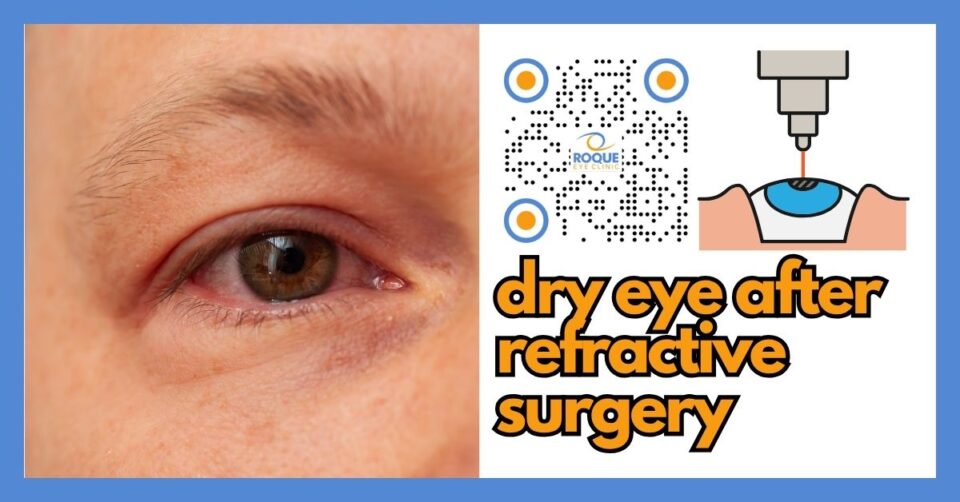
Dry eye after refractive surgery usually feels worst in the early healing period, then gradually improves over weeks to months. Many patients notice dryness, burning, fluctuating vision, or light sensitivity at first. Symptoms often improve with lubricants, time, and surface care, but some patients need longer treatment, especially if they already had dry eye before surgery.
Dry eye is one of the most common concerns after laser vision correction and other refractive procedures. Patients often ask the same question: How long will this last? The honest answer is that recovery follows a general pattern, but the exact timeline is not identical for everyone.
Some patients feel only mild dryness for a short period. Others have more noticeable burning, tearing, grittiness, fluctuating vision, or light sensitivity that lasts longer. The good news is that many cases improve as the corneal nerves recover, the tear film stabilizes, and the ocular surface heals. The important part is knowing what is expected, what is not, and when to contact your surgeon.
🧩 Focus: Timeline of dry eye symptoms after refractive surgery
👁 Goal: Explain when dry eye commonly starts, when it often improves, what symptoms are expected, and when further treatment may be needed
🛡 Evidence-Based: Preferred Practice Patterns • Standards of Care • Systematic Reviews • Meta-Analyses
REFRACTIVE SURGERY Knowledge Hub
Start with the complete guide:
🔬 Dry Eye After Refractive Surgery Anatomy Micro-Primer
- Tear film: This is the thin liquid layer covering the eye. It helps keep the surface smooth, comfortable, and optically clear.
- Corneal nerves: Tiny nerves in the cornea help trigger blinking and tear production. Refractive surgery can temporarily disrupt them, which can contribute to dryness.
- Meibomian glands: These glands in the eyelids release oil that slows tear evaporation. If they do not work well, dryness can feel worse.
- Ocular surface: This includes the cornea, conjunctiva, lids, and tear film working together as one functional system.
📘 Dry Eye After Refractive Surgery Terminology Glossary
- Dry eye disease: A condition in which the tears do not provide enough comfort or surface stability.
- Tear breakup time: A measure of how quickly the tear film becomes unstable after a blink.
- Ocular surface disease: A broad term covering problems that affect the tear film, lids, cornea, and conjunctiva.
- Neurotrophic change: Reduced corneal nerve signaling that can affect tearing and healing.
- Meibomian gland dysfunction: Poor oil gland function in the eyelids that can worsen evaporative dry eye.
- Fluctuating vision: Vision that seems clearer after blinking, then becomes blurry again as the tear film breaks up.
Quick Navigation
Related Reading
Key Learning Points
- Dry eye after refractive surgery is common enough that it should always be discussed before surgery.
- Symptoms are usually most noticeable early, then often improve over weeks to months.
- Fluctuating vision, burning, grittiness, tearing, and light sensitivity can all be part of the same dry-eye picture.
- Patients with pre-existing dry eye or meibomian gland dysfunction may need a longer recovery plan.
- Persistent symptoms do not always mean something is seriously wrong, but they do deserve reassessment and treatment adjustment.
What Dry Eye After Refractive Surgery Is
Dry eye after refractive surgery refers to temporary or persistent tear-film instability and ocular surface symptoms that appear or worsen after procedures such as LASIK, PRK, TransPRK, SMILE, and other corneal refractive surgeries. Patients may feel dryness, burning, stinging, sandy sensation, fluctuating vision, reflex tearing, or increased light sensitivity.
One important point is that watery eyes do not always mean the eyes are not dry. When the ocular surface becomes irritated, the eye may produce reflex tears. These tears may not stay on the eye well enough to solve the underlying dryness, so a patient can feel both watery and dry at the same time.
💡 Analogy
Think of the tear film like the clear coating on a camera lens. If that coating becomes patchy, the image can look less sharp and the surface can feel irritated. After refractive surgery, the eye may need time to rebuild a stable coating again.
Why Dry Eye Happens After Refractive Surgery
Several mechanisms can contribute. Corneal nerves help regulate blink reflexes and tear production. When those nerves are affected during surgery, tear signaling can temporarily drop. The ocular surface can also become inflamed during healing, and if the tear film was already borderline before surgery, symptoms may become more obvious afterward.
Surface quality matters too. Meibomian gland dysfunction, incomplete blinking, heavy screen use, air-conditioning, poor sleep, and pre-existing dry eye can all make symptoms feel stronger or last longer. In other words, surgery may be one part of the picture, but the eyelids, glands, tear film, and healing response also matter.
Dry Eye Timeline After Refractive Surgery
Before surgery
The timeline often starts before the procedure. Many patients already have mild dry eye or meibomian gland dysfunction and do not realize it until preoperative screening. That is why surface optimization before surgery can be so important. If the tear film is poor before the operation, symptoms may feel worse afterward and measurements may be less reliable.
Day 1 to Day 3
In the first few days, dryness can blend with normal early postoperative irritation. Some patients feel burning, foreign-body sensation, watering, light sensitivity, or intermittent blur. After PRK or other surface ablation procedures, the first few days can feel more uncomfortable overall because the surface is actively healing. After LASIK or SMILE, discomfort may be milder, but dryness can still be noticeable.
Week 1
During the first week, many patients still rely heavily on lubricant drops. Vision may sharpen after blinking, then fluctuate again. Dry environments, screen use, fans, and air-conditioning can make symptoms more obvious. At this stage, frequent lubrication and careful drop use are common.
Weeks 2 to 4
By this phase, many patients start to feel more stable, but symptoms can still come and go. Some say mornings feel better while afternoons feel worse. Others notice dryness during computer work, reading, or long drives. This pattern is common because tear evaporation increases when blinking becomes less complete or less frequent.
Month 1 to Month 3
This is a key phase in the timeline. For many patients, symptoms gradually improve during this period as corneal nerves begin recovering and the ocular surface settles. However, this is also the time when persistent dry-eye symptoms become clearer if the baseline surface was poor or if risk factors were present before surgery.
Month 3 to Month 6
Many patients feel substantially better by this point, especially when dry eye was mild to moderate and treatment was started early. Patients who still need frequent lubricants, experience strong light sensitivity, or have unstable vision may need a more detailed dry-eye work-up rather than simply “more time.”
Beyond 6 months
Some patients continue improving after 6 months, while a smaller group has longer-lasting symptoms. Persistent dry eye does not mean the surgery failed, but it does mean the tear film and ocular surface need continued attention. At this stage, management may expand beyond artificial tears and include more targeted therapy depending on the cause.
What Symptoms Are Common Along the Timeline?
- Dryness or a gritty sensation
- Burning or stinging
- Fluctuating or blurry vision that improves after blinking
- Watery eyes from reflex tearing
- Light sensitivity
- Eye fatigue, especially during screen use
- Discomfort in windy, cold, or air-conditioned settings
Does the Timeline Differ by Procedure?
Yes, it can. LASIK has long been associated with postoperative dry eye because the procedure affects corneal nerves. PRK and other surface procedures can also produce dryness, although their healing pattern differs because the corneal surface recovers in a different way. SMILE may be associated with less early dry-eye disturbance in some studies, but patients should not assume it eliminates the problem completely.
The safest message for patients is this: any refractive surgery can interact with the tear film. The exact timing and severity vary with the procedure, the preoperative surface, eyelid health, screen habits, and individual healing response.
Who May Recover More Slowly?
Dry eye may last longer or feel more noticeable in patients who already had dry eye before surgery, have meibomian gland dysfunction, use screens heavily, wear contact lenses for long periods, have autoimmune disease, take certain medications, or heal more slowly in general. Hormonal influences and environmental exposure can also matter.
This is why good screening is so important. The goal is not only to decide whether a patient qualifies for surgery, but also to identify who might need stronger pre-treatment and a more proactive postoperative plan.
🚨 Emergency Warning
Typical dry eye usually causes irritation, fluctuating vision, and discomfort. However, severe pain, marked redness, thick discharge, sudden major vision drop, or a white spot on the cornea are not “just dry eye” until proven otherwise. Contact your surgeon urgently if these occur.
How Dry Eye Is Usually Managed Along the Timeline
Early phase
Frequent lubricating drops are commonly used early after surgery. Some surgeons also emphasize preservative-free tears, protective eye shields during sleep, and reduced screen strain in the first days.
Short-term follow-up phase
If symptoms remain noticeable after the first few weeks, treatment may be adjusted based on what is driving the dryness. Some patients mainly need more lubrication. Others need better eyelid hygiene, warm compresses, gland treatment, or prescription dry-eye therapy.
Persistent phase
When dry eye lasts longer, the surgeon may reassess tear stability, staining, eyelid margins, meibomian gland function, blink quality, and ocular surface inflammation. Long-term cases often improve best when management is tailored rather than generic.
What Patients Can Do to Help the Timeline Go Better
- Use drops exactly as prescribed
- Blink more consciously during screen use
- Take regular breaks from computers and phones
- Avoid smoke, direct fan air, and very dry environments when possible
- Follow eyelid hygiene instructions if given
- Attend follow-up visits even if vision seems “good enough”
- Tell your surgeon if symptoms are getting worse instead of better
When Should You Worry Less—and When Should You Worry More?
Mild dryness, intermittent blur, and improvement after blinking are common during recovery. These usually fit the expected timeline. Worsening pain, worsening redness, discharge, major asymmetry between the eyes, or vision that suddenly drops are different and deserve faster review.
It also matters how dry eye affects daily life. If you are still unable to function comfortably at work, on the computer, or while driving, that is worth discussing even if the eye looks “quiet” from the outside.
Continue Reading
🏁 Take-Home Message
Dry eye after refractive surgery usually follows a recovery curve, not a straight line. Symptoms are often most noticeable early, then improve over time with healing and proper treatment. The key is not to panic over expected temporary dryness, but also not to ignore persistent or worsening symptoms. Good follow-up and surface care can make a major difference.
FAQ
1) How soon does dry eye start after refractive surgery?
It often starts immediately or within the first few days, although some patients notice it more clearly after the early surgical irritation settles.
2) Is dry eye after LASIK permanent?
Not usually. Many patients improve over weeks to months, but some need longer treatment, especially if they had dry eye or gland problems before surgery.
3) Can SMILE still cause dry eye?
Yes. Some studies suggest less early dry-eye disturbance than LASIK, but SMILE does not eliminate the possibility of postoperative dryness.
4) Why is my vision blurry even though the surgery was successful?
A patchy tear film can make vision fluctuate. If your sight sharpens after blinking and then blurs again, dry eye may be contributing.
5) Why are my eyes watery if they are dry?
Surface irritation can trigger reflex tearing. These emergency-type tears do not always stabilize the ocular surface well, so the eyes can feel watery and dry at the same time.
6) When should I contact my surgeon about dry eye?
Contact your surgeon if symptoms are worsening, lasting longer than expected, interfering heavily with daily life, or are accompanied by severe pain, redness, discharge, or a major drop in vision.
📚 References
- American Academy of Ophthalmology. Refractive Surgery Preferred Practice Pattern®. Updated 2024.
- Tear Film and Ocular Surface Society (TFOS). TFOS DEWS II Executive Summary. 2017.
- Tear Film and Ocular Surface Society (TFOS). TFOS DEWS II Iatrogenic Report. 2017.
- U.S. Food and Drug Administration. When is LASIK not for me?
- Dossari SK, et al. Post-refractive Surgery Dry Eye: A Systematic Review Exploring Pathophysiology, Risk Factors and Novel Management Strategies. 2024.
🤝 Roque Eye Clinic Patient Education Series
Dr. Manolette Roque | Dr. Barbara Roque
St. Luke's Medical Center Global City | Asian Hospital Medical Center
Philippines
Medical Review: Roque Advisory Council
Last Updated: March 2026
Medical Disclaimer
This article is intended for educational purposes only and does not replace professional medical consultation.