


Ocular Surface Optimization Before Surgery
🧠 Quick Answer
Ocular surface optimization before surgery means treating dry eye, blepharitis, meibomian gland dysfunction, allergies, and other surface problems before refractive surgery. This matters because an unhealthy tear film can blur measurements, worsen discomfort, delay healing, and reduce satisfaction. In simple terms, the eye surface should be calm and stable before surgery is planned.
Many patients focus on the laser, the lens, or the price of surgery. However, one of the most important parts of preoperative preparation is often much simpler: making sure the front surface of the eye is healthy. A smooth, stable ocular surface helps your surgeon obtain more reliable measurements and helps you recover more comfortably afterward.
If the ocular surface is inflamed, dry, irregular, or unstable, it can act like a camera lens with smudges on it. The system may still work, but the image is less reliable. In refractive surgery, that can affect refraction, keratometry, corneal topography, visual quality, and postoperative comfort.
🧩 Focus: Ocular surface optimization before refractive surgery
👁 Goal: Improve measurement accuracy, reduce postoperative symptoms, and support safer, more predictable surgery planning
🛡 Evidence-Based: Preferred Practice Patterns • Standards of Care • Systematic Reviews • Meta-Analyses
REFRACTIVE SURGERY Knowledge Hub
Start with the complete guide:
🔬 Ocular Surface Optimization Before Surgery Anatomy Micro-Primer
- Tear film: This is the thin liquid layer covering the eye. It helps keep the cornea smooth, comfortable, and optically clear.
- Corneal epithelium: This is the outer skin of the cornea. It must be healthy for accurate measurements and smooth healing.
- Meibomian glands: These oil glands in the eyelids help slow tear evaporation. When they are blocked, dry eye symptoms often worsen.
- Conjunctiva and lid margin: These tissues can become inflamed in blepharitis, allergy, or rosacea, and that inflammation can disturb the tear film.
📘 Ocular Surface Optimization Before Surgery Terminology Glossary
- Ocular surface disease: A broad term for problems affecting the tears, cornea, conjunctiva, or eyelids.
- Dry eye disease: A condition in which tears are not stable enough to keep the eye surface comfortable and healthy.
- Meibomian gland dysfunction: Poor oil-gland function in the eyelids that causes faster tear evaporation.
- Blepharitis: Inflammation of the eyelid margins, often linked with irritation, crusting, or gland blockage.
- Tear break-up time: A test that estimates how quickly the tear film becomes unstable after a blink.
- Optimization: Treatment done before surgery to make the eye surface healthier and more stable.
Quick Navigation
Related Reading
Key Learning Points
- An unhealthy tear film can make preoperative measurements less reliable.
- Dry eye, blepharitis, allergy, and meibomian gland dysfunction should be identified before surgery planning is finalized.
- Optimization may include lubricants, lid hygiene, anti-inflammatory treatment, allergy control, and gland-directed care.
- Some patients need repeat measurements after the eye surface stabilizes.
- Delaying surgery to treat the surface first can improve comfort, planning accuracy, and long-term satisfaction.
What Ocular Surface Optimization Means
Ocular surface optimization means treating the front surface of the eye before surgery so that the tear film, eyelids, and cornea are as healthy and stable as possible. It is not an optional cosmetic step. It is part of quality control. A stable surface helps the surgeon measure the eye more accurately and helps the patient recover with less irritation and fewer surprises.
This is especially important in refractive surgery because these procedures are designed to fine-tune vision. If the eye surface is unstable, the measurements used to plan that fine-tuning can also become unstable. Even a small amount of fluctuation can matter when the goal is high visual precision.
💡 Analogy
Planning refractive surgery on a dry, inflamed eye surface is like measuring fabric while a fan keeps blowing it around. You may still get a number, but it may not be the best number to trust for a precise final result.
Why Ocular Surface Optimization Matters Before Surgery
The ocular surface influences comfort, measurement quality, healing, and satisfaction. If the surface is unhealthy before surgery, patients may already have burning, tearing, fluctuating vision, contact lens intolerance, foreign-body sensation, or light sensitivity. Refractive surgery can then feel harder to tolerate, and postoperative dryness may become more noticeable.
Surface disease also matters because it can affect refraction, corneal topography, keratometry, and visual quality. When those measurements are unstable, a surgeon may need to repeat testing after treatment rather than proceed immediately. Taking more time up front can reduce the chance of frustration later.
What Surface Problems Can Interfere With Refractive Surgery Planning
1) Dry eye disease
Dry eye disease is one of the most common issues in refractive surgery candidates. Some patients already know they are dry. Others only notice fluctuating vision, nighttime blur, or contact lens discomfort. Even mild dryness can affect measurements in a precision-based surgery work-up.
2) Meibomian gland dysfunction
If the eyelid oil glands are blocked or producing poor-quality oil, tears evaporate faster. This can leave the eye surface unstable even when tear volume seems acceptable. MGD is common and often underrecognized.
3) Blepharitis and lid-margin inflammation
Crusting, redness, irritation, or bacterial overgrowth along the lid margin can inflame the surface and worsen tear-film quality. Lid disease often needs treatment before surgery.
4) Ocular allergy
Allergic eye disease can cause itching, rubbing, redness, and inflammation. Patients who rub their eyes a lot may worsen surface symptoms and may also complicate corneal safety discussions.
5) Epithelial irregularity or surface staining
If the corneal surface shows punctate staining or epithelial disruption, it may be a sign that the surface is not ready for final surgical planning.
6) Contact lens-related surface stress
Long-term contact lens wear can disturb the corneal surface and corneal shape. Some patients need a break from contact lenses, plus surface treatment, before repeat measurements are dependable.
How Surgeons Evaluate the Ocular Surface
A good preoperative evaluation usually includes both symptom review and objective findings. The surgeon may ask about dryness, burning, tearing, foreign-body sensation, fluctuating clarity, screen use, contact lens intolerance, allergy, rosacea, prior eye surgery, and systemic conditions that affect the tear film.
On examination, the doctor may assess the tear meniscus, tear break-up time, corneal staining, conjunctival staining, eyelid position, blink quality, meibomian gland function, lid-margin inflammation, and surface regularity. Many practices also use questionnaires, meibography, osmolarity, or inflammatory markers depending on the clinic and technology available.
How the Ocular Surface Is Optimized Before Surgery
Lubrication
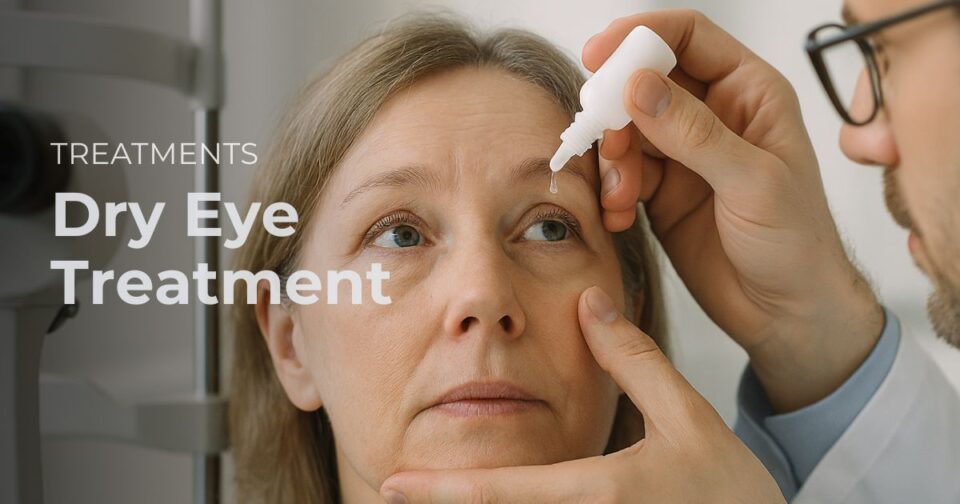
Artificial tears are often the starting point. Preservative-free lubricants are commonly preferred when drops are used frequently or when the surface is already sensitive.
Lid hygiene and warm compresses
For blepharitis or MGD, careful lid care may help reduce debris, improve oil flow, and stabilize the tear film. This simple step can make a meaningful difference in many patients.
Anti-inflammatory treatment
When the surface is inflamed, doctors may prescribe short-term or longer-term anti-inflammatory treatment depending on the case. The exact medicine varies by the patient’s findings, severity, and risk factors.
MGD-directed care
Some patients need gland expression, thermal treatment, oral medication in selected cases, or a broader rosacea-oriented lid strategy. Treating the glands can be just as important as treating the tears.
Allergy control
If allergy is part of the problem, itching and eye rubbing should be addressed before surgery. Surface calmness matters, and repeated rubbing is not helpful in a refractive surgery candidate.
Contact lens holiday and repeat testing
Many patients need time out of contact lenses, followed by repeat measurements after the surface becomes more stable. It is better to repeat the work-up than to pretend a distorted scan is good enough.
When Surgery May Need to Wait
Surgery may need to be delayed when the tear film is very unstable, staining is significant, the lid margin is inflamed, allergic symptoms are active, or diagnostic measurements do not agree well with each other. Waiting can feel frustrating, but it is often the safer and more accurate choice.
In practical terms, delaying surgery does not necessarily mean “you are not a candidate.” It may simply mean “your eye surface needs preparation first.” That distinction matters. Many patients become better candidates after treatment.
🚨 Emergency Warning
If you develop severe eye pain, marked redness, significant light sensitivity, sudden drop in vision, discharge, or a corneal white spot during surface treatment or contact lens wear, seek urgent ophthalmic care. These are not routine “dry eye only” symptoms.
How Patients Can Help With Ocular Surface Optimization
- Follow contact lens stop instructions carefully before testing.
- Use prescribed drops exactly as directed.
- Perform lid hygiene consistently if advised.
- Tell your surgeon about screen-heavy work, allergies, rosacea, autoimmune disease, or previous dry eye treatment.
- Avoid underreporting symptoms just to speed up surgery scheduling.
- Return for repeat measurements if your surgeon recommends it.
Why This Step Improves Satisfaction
Patients usually care about the final result: clearer vision, less dependence on glasses, and a smooth recovery. Ocular surface optimization helps all of those goals by improving planning quality and lowering avoidable discomfort. In other words, it is not a delay away from surgery. It is part of getting surgery right.
Common Real-World Scenarios
- Contact lens intolerant patient: Sometimes the patient wants surgery because the surface is already dry from lens wear. That dryness still needs treatment before planning.
- Screen-heavy office worker: Reduced blink rate can worsen dryness and fluctuation, so symptoms should be taken seriously.
- Patient with allergy and rubbing: Itching and inflammation need control before surgery is finalized.
- Patient with MGD but minimal symptoms: A patient can still have clinically important gland dysfunction even when complaints seem mild.
Continue Reading
🏁 Take-Home Message
Ocular surface optimization before surgery is a safety and quality step, not an optional extra. A dry, inflamed, or unstable surface can distort measurements and worsen comfort. Treating the tear film, eyelids, and surface first can lead to better planning, smoother healing, and a more satisfying refractive surgery experience.
FAQ
1) Why does dry eye matter before refractive surgery?
Dry eye can make the tear film unstable, which can affect measurements, visual quality, comfort, and healing. That is why many surgeons treat dryness before finalizing surgery planning.
2) Can I still have surgery if I have meibomian gland dysfunction?
Possibly, yes. Many patients with MGD can still proceed, but treatment is often needed first so the ocular surface becomes more stable.
3) Why did my surgeon ask me to repeat my scans after using drops?
Because an unhealthy surface can distort test results. Repeat measurements after treatment may be more reliable and may improve the accuracy of planning.
4) Is ocular surface optimization only for severe dry eye?
No. Even mild or moderate surface instability can matter in precision refractive surgery, especially when the goal is high-quality vision.
5) Does delaying surgery mean I am not a candidate?
Not necessarily. In many cases, it simply means your eyes need treatment first before a safer and more accurate decision can be made.
6) What are common treatments used before surgery?
Common treatments include preservative-free artificial tears, lid hygiene, warm compresses, anti-inflammatory therapy, allergy control, MGD-directed treatment, and time out of contact lenses when needed.
📚 References
- American Academy of Ophthalmology. Refractive Surgery Preferred Practice Pattern®. Updated 2024.
- U.S. Food and Drug Administration. LASIK Surgery Checklist.
- Jones L, Downie LE, Korb D, et al. TFOS DEWS II Management and Therapy Report. Ocul Surf. 2017;15(3):575-628.
- Craig JP, Nichols KK, Akpek EK, et al. TFOS DEWS II Definition and Classification Report. Ocul Surf. 2017;15(3):276-283.
- Nair S, Nair SS. Refractive surgery and dry eye - An update. Indian J Ophthalmol. 2023.
- Schechter BA, et al. Optimization of the Ocular Surface Through Treatment of Ocular Surface Disease Before Ophthalmic Surgery: A Review. Clin Ophthalmol. 2022.
🤝 Roque Eye Clinic Patient Education Series
Dr. Manolette Roque | Dr. Barbara Roque
St. Luke's Medical Center Global City | Asian Hospital Medical Center
Philippines
Medical Review: Roque Advisory Council
Last Updated: March 2026
Medical Disclaimer
This article is intended for educational purposes only and does not replace professional medical consultation.