



Dry Eye Treatment: What Actually Helps and What Usually Comes Next
🧠 Dr. Roque’s Quick Answer
Dry eye treatment is not one single drop. It is usually a step-by-step plan based on why your eyes are dry. Some people mainly need artificial tears and better eyelid care. Others need treatment for meibomian gland dysfunction, inflammation, allergy, poor blinking, screen-related dryness, or an exposure problem. The goal is not only to make your eyes feel better. The goal is to make the tear film healthier, more stable, and more comfortable over time.
Many patients assume dry eye treatment means buying random eye drops and hoping one works. That is usually the wrong strategy. Dry eye is often a tear film problem, an eyelid oil gland problem, an inflammation problem, or a combination of all three. Because of that, the right treatment plan depends on the pattern we see during your examination.
Think of your tear film like the clear protective coating on a camera lens. If that coating is unstable, the image becomes smeared, uncomfortable, and inconsistent. You may blink and feel briefly better, then blurry again. That pattern is very common in dry eye.
🎯 Focus
Treat the cause of dry eye, not just the symptom of dryness.
🧩 Goal
Improve comfort, reduce fluctuating blur, and protect the ocular surface.
🛡️ Evidence-Based
Management usually starts with lubrication, lid care, and trigger control, then escalates when inflammation, gland disease, or persistent symptoms are present.
ROQUE Eye Clinic Dry Eye Diseases Knowledge Hub
This page explains how dry eye is treated. For the broader condition overview, start here:
👁️ Anatomy Micro-Primer
Your eye surface stays comfortable because of a thin tear film. That tear film is supported by three major parts working together:
- The tear-producing glands, which supply the watery part of tears.
- The meibomian glands in the eyelids, which produce an oily layer that slows evaporation.
- The ocular surface, including the cornea and conjunctiva, which must stay smooth and protected.
If one part fails, the whole system becomes unstable. That is why dry eye treatment often includes both the eye surface and the eyelids.
🧩 Terminology Glossary
- Dry eye disease – a problem where tears are not sufficient or not working properly.
- Tear film instability – tears break apart too quickly after blinking.
- Meibomian gland dysfunction – blocked or unhealthy eyelid oil glands.
- Evaporative dry eye – tears dry up too quickly, often because the oil layer is poor.
- Aqueous-deficient dry eye – the eyes do not make enough watery tears.
- Ocular surface inflammation – irritation and inflammatory damage on the eye surface.
- Punctal occlusion – blocking tear drainage to keep tears on the eye longer.
What are the main goals of dry eye treatment?
A serious dry eye plan should do four things:
- Reduce symptoms such as burning, irritation, grittiness, redness, tearing, and fluctuating blur.
- Improve tear film quality and stability.
- Calm inflammation when inflammation is part of the problem.
- Protect the eye surface so the problem does not keep cycling.
That last point matters. Many people with dry eye enter a vicious cycle: unstable tears cause irritation, irritation causes inflammation, inflammation worsens tear quality, and then symptoms worsen again. Good treatment tries to interrupt that cycle.
Step 1: Start with the basics, but do them correctly
The first layer of treatment is often simple, but many patients do it inconsistently or use the wrong products.
Artificial tears
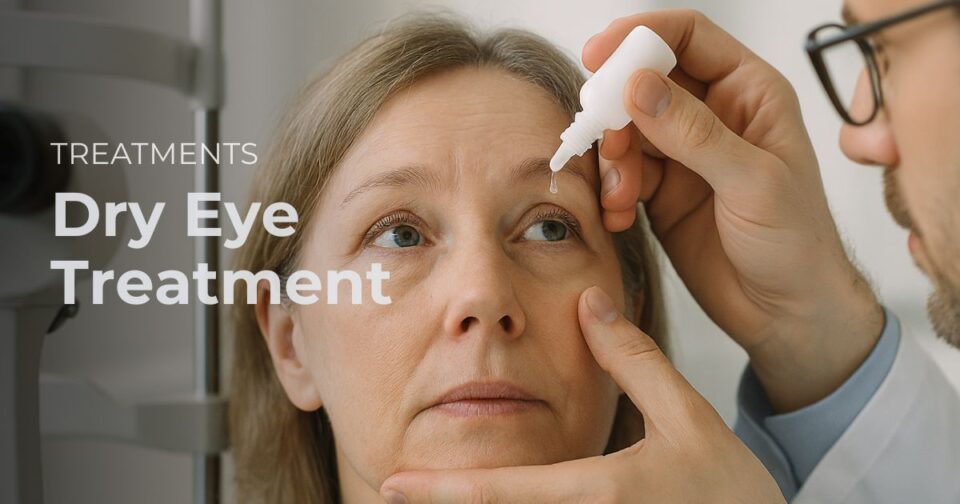
Artificial tears are often the starting point, especially for mild dry eye. They do not cure every cause of dry eye, but they can improve comfort and reduce friction on the eye surface. In patients who use drops frequently, preservative-free options are often better tolerated.
Lubricating gels or ointments
These are especially useful at night if you wake up with dryness, pain, sticky lids, or morning blur. They stay on the eye longer than ordinary drops, but they can blur vision temporarily.
Environmental control
Dry air, direct fans, prolonged air-conditioning, smoke, dust, and long screen hours can make dry eye much worse. Sometimes the simplest improvement is to reduce the triggers that keep destabilizing the tear film every day.
Blinking better during screen use
When you stare at a monitor, you usually blink less and blink less completely. That means the tear film is not being spread properly across the eye. Many patients with office-based work have dry eye that is aggravated by digital behavior more than by a dramatic tear deficiency.
Step 2: Treat the eyelids when the oil glands are part of the problem
A large number of dry eye patients do not mainly have a “not enough tears” problem. They have an oil layer problem. If the meibomian glands are not producing good oil, tears evaporate too quickly.
Warm compresses
Warm compresses help soften thickened oil inside the eyelid glands. The key is consistency and proper technique. A quick lukewarm compress for one minute usually does very little. The treatment needs enough warmth and enough time to help liquefy the gland contents.
Lid hygiene
If there is blepharitis, debris, crusting, or lid margin inflammation, cleaning the eyelid margins becomes important. This reduces the inflammatory load and helps the gland openings function better.
In-office gland-directed treatment
Some patients need more than home care. When gland blockage is significant, in-office treatment may be considered to improve gland expression and eyelid health. This depends on examination findings, symptom severity, prior treatment response, and available technology.
💡 Dr. Roque’s Analogy
Artificial tears alone can be like pouring water on a road while the road drain is still blocked and oil is still leaking. You may get temporary relief, but the surface stays unstable. When dry eye comes from meibomian gland dysfunction, the eyelids are part of the treatment, not an optional extra.
Step 3: Calm inflammation when dryness is not just dryness
Some dry eye cases stay symptomatic because the eye surface has become inflamed. In that situation, lubrication alone may not be enough.
Prescription anti-inflammatory treatment
Your ophthalmologist may recommend prescription treatment when symptoms persist, the surface looks inflamed, or the pattern suggests chronic disease. This part of treatment is individualized. It depends on severity, cause, response to prior therapy, and ocular surface findings.
Short-term rescue treatment
Some patients need a short, carefully supervised treatment phase to calm a flare. That is not something to self-prescribe. Steroid eye drops, for example, can be helpful in selected cases, but they are not routine long-term self-medication because they can raise eye pressure or create other problems in the wrong setting.
Why this matters
Once inflammation becomes part of the cycle, patients often describe a frustrating pattern: they keep using more drops, but the eyes still burn, sting, fluctuate, and feel tired. That is usually the clue that the plan needs to be smarter, not just heavier.
Step 4: Keep tears on the eye longer when drainage is part of the issue
If the ocular surface is dry because tears are draining away too quickly, punctal occlusion may be considered in selected patients. This is a way to reduce tear drainage so the tears you do produce stay on the eye longer.
This is not the right choice for everyone. If the lids are inflamed or the tear film is poor quality, trapping unhealthy tears may not be the best first move. That is why punctal plugs make sense only after the dry eye pattern is properly evaluated.
Step 5: Find and treat the cause behind the dryness
Dry eye is often a final common pathway, not the first diagnosis. Good treatment means asking what is driving it.
Common contributors
- Meibomian gland dysfunction
- Blepharitis
- Allergy
- Lagophthalmos or incomplete lid closure
- Screen overuse and poor blink pattern
- Contact lens wear
- Medications that worsen dryness
- Hormonal factors and aging
- Autoimmune disease in selected patients
- Post-surgical ocular surface instability
If the real problem is unrecognized blepharitis, untreated allergy, exposure, or an inflammatory condition, the patient may keep “failing” dry eye treatment when the actual issue is that the treatment plan was incomplete.
When dry eye treatment needs to be stronger
You likely need a more structured evaluation when any of these are happening:
- Your symptoms keep returning despite regular drops.
- Your vision fluctuates, especially when reading or using screens.
- Your eyes are painful, light-sensitive, or significantly red.
- You are preparing for cataract surgery, LASIK, SMILE, or lens replacement.
- You are using drops many times a day and still not doing well.
- You suspect your lids, glands, or allergies are part of the problem.
This point matters before refractive or cataract measurements. If the ocular surface is unstable, your measurements can become less reliable, and that can affect planning.
🚨 Dr. Roque’s Emergency Warning
Dry eye usually causes discomfort, irritation, fluctuating blur, and redness. However, severe pain, marked light sensitivity, sudden vision loss, trauma, a white spot on the cornea, thick discharge, or a clearly one-sided painful red eye should not be dismissed as “just dry eye.” Those symptoms may point to a different and more urgent problem.
How I usually explain the treatment ladder to patients
- Protect the surface with the right lubricants.
- Improve the eyelids and glands if evaporation is the main issue.
- Reduce inflammation when the ocular surface is chronically irritated.
- Keep tears on the eye longer when drainage is excessive.
- Correct the trigger such as allergy, exposure, medications, digital strain, or underlying disease.
That is how dry eye treatment becomes rational. We stop guessing and start matching therapy to mechanism.
🧠 Dr. Roque’s Key Learning Points
- Dry eye treatment works best when it targets the cause, not just the symptom.
- Artificial tears help many patients, but they are not the whole plan in moderate or chronic disease.
- Meibomian gland dysfunction is one of the most common reasons treatment fails when eyelid care is ignored.
- Inflammation may need prescription treatment in selected patients.
- Punctal plugs can help some patients, but they are not the right first step for everyone.
- Dry eye should be stabilized before important eye measurements and elective eye surgery.
- Not every red, painful, or blurry eye is dry eye. Red flags still matter.
Related Reading
✅ Dr. Roque’s Take-Home Message
If your eyes keep feeling dry, tired, irritated, watery, or blurry, do not keep switching random drops forever. Dry eye treatment should be based on the reason your tear film is failing. In many patients, the eyelids, oil glands, inflammation level, and daily visual habits matter just as much as the tears themselves. Once we identify the pattern, treatment becomes more logical, more targeted, and usually much more effective.
Frequently Asked Questions
1. What is the best treatment for dry eye?
There is no single best treatment for everyone. The best treatment depends on whether your main problem is poor tear production, rapid evaporation, meibomian gland dysfunction, inflammation, exposure, allergy, or a combination of these.
2. Are artificial tears enough?
They may be enough for mild cases, but many patients need more than lubrication alone. If symptoms keep recurring, the plan often needs eyelid treatment, anti-inflammatory therapy, trigger control, or a more complete workup.
3. Why do my eyes water if I have dry eye?
Dry eye can trigger reflex tearing. The eye becomes irritated and responds by producing more watery tears, but those tears are often poor quality and do not stabilize the surface well.
4. Can warm compresses really help?
Yes, especially when meibomian gland dysfunction is present. Warm compresses can help soften thickened oil and improve gland function, but they need to be done properly and consistently.
5. When do I need prescription treatment?
You may need prescription treatment if symptoms persist, the eye surface is inflamed, gland disease is significant, or over-the-counter treatment is no longer enough.
6. Are punctal plugs good for all dry eye patients?
No. They can help selected patients, but they are not ideal in every situation. The tear film quality, inflammation level, and lid condition must be considered first.
7. Can screen time make dry eye worse?
Yes. Screen use often reduces blink frequency and blink completeness, which makes the tear film break up faster.
8. Can dry eye affect cataract or LASIK planning?
Yes. An unstable ocular surface can affect important measurements. Dry eye should be assessed and treated properly before elective procedures and before finalizing surgical plans.
9. Is dry eye permanent?
Dry eye is often chronic, but it is usually manageable. Many patients do well once the correct mechanism is identified and the treatment plan is tailored to that pattern.
10. When should I seek urgent care instead of assuming it is dry eye?
Seek urgent evaluation for severe pain, marked light sensitivity, trauma, sudden vision loss, a white spot on the cornea, or a clearly painful one-sided red eye.
References
- American Academy of Ophthalmology. Dry Eye Syndrome Preferred Practice Pattern®. 2023.
- National Eye Institute. Dry Eye. Updated August 6, 2025.
- Craig JP, Nichols KK, Akpek EK, et al. TFOS DEWS II Definition and Classification Report. The Ocular Surface. 2017.
- Jones L, Downie LE, Korb D, et al. TFOS DEWS II Management and Therapy Report. The Ocular Surface. 2017.
- TFOS Lifestyle Workshop Executive Summary. Tear Film & Ocular Surface Society.
ROQUE Eye Clinic Patient Education Series
Reviewed by the Roque Advisory Council
Dr. Manolette Roque | Dr. Barbara Roque
St. Luke’s Medical Center Global City | Asian Hospital Medical Center
Philippines
Medical Disclaimer: This page is for patient education and decision support. It does not replace an in-person eye examination. Symptoms such as persistent redness, pain, light sensitivity, sudden blur, trauma, or one-sided worsening should be assessed by an eye doctor. Online information cannot confirm the cause of a red or uncomfortable eye.