
Vision Testing Before Refractive Surgery
🧠 Dr. Roque's Quick Answer
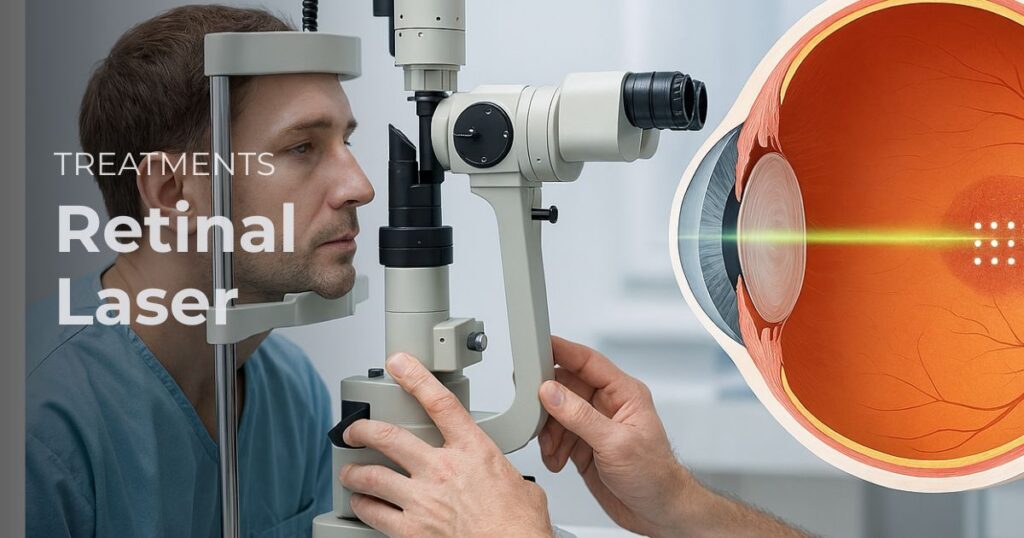
Vision testing before refractive surgery is the part of screening that confirms your true glasses or contact lens prescription, checks whether it is stable, and helps match you with the safest procedure. It usually includes visual acuity testing, refraction, and often cycloplegic refraction, along with other measurements that show how clearly and consistently your eyes focus.
Before LASIK, PRK, SMILE, ICL, or lens-based vision correction, your surgeon needs more than a recent eyeglasses prescription. The goal is not just to know whether you are nearsighted, farsighted, or astigmatic. The real goal is to understand how your eyes focus, whether your prescription is stable, how much vision improves with correction, and whether the measured numbers make sense when compared with your symptoms, corneal imaging, and overall eye health.
That is why vision testing before refractive surgery is so important. If the measured prescription is inaccurate or incomplete, treatment planning may be off. Even a technically perfect procedure can disappoint if it is based on the wrong numbers.
🧩 Focus: Preoperative vision testing for refractive surgery planning
👁 Goal: Explain the main vision tests used before refractive surgery and why they matter for safety, candidacy, and treatment accuracy
🛡 Evidence-Based: Preferred Practice Patterns • Standards of Care • Systematic Reviews • Meta-Analyses
ROQUE REFRACTIVE SURGERY Knowledge Hub
Start with the complete guide:
🔬 Vision Testing Anatomy Micro-Primer
- Cornea: The clear front window of the eye. Its shape strongly affects focusing power and refractive error.
- Lens: The natural lens fine-tunes focus. In younger patients it can change focus actively, which is why some prescriptions are “hidden” until cycloplegic drops are used.
- Retina: This light-sensitive tissue at the back of the eye receives the image. Refractive surgery aims to focus light more precisely onto it.
- Pupil: The black opening in the center of the iris. It affects how much light enters the eye and can influence night-vision symptoms and test interpretation.
📘 Vision Testing Terminology Glossary
- Visual acuity: How clearly you can see letters or symbols at a set distance.
- Manifest refraction: The prescription measured during the standard “Which is better, one or two?” exam.
- Cycloplegic refraction: A refraction done after drops temporarily relax focusing muscles, helping uncover hidden prescription.
- Best-corrected visual acuity: Your sharpest vision with the best prescription found during testing.
- Refraction stability: Whether your glasses or contact lens prescription has stayed essentially unchanged over time.
- Dominant eye: The eye your brain tends to prefer for certain visual tasks, which can matter in some treatment plans.
Quick Navigation
Related Reading
Dr. Roque's Key Learning Points
- Preoperative vision testing is not just about finding your current glasses prescription. It is about planning safe and accurate surgery.
- Manifest refraction, best-corrected vision, and prescription stability are central to treatment planning.
- Cycloplegic refraction can be very important, especially in younger patients or in eyes with active focusing effort.
- Dry eye, contact lens wear, and unstable refraction can make test results misleading.
- The best refractive surgery plan matches vision testing with corneal imaging, ocular surface findings, and the patient’s real-world visual needs.
What Vision Testing Before Refractive Surgery Includes
Vision testing before refractive surgery includes a group of exams that confirm how well you see now, how much your vision improves with correction, and what prescription best represents your eye’s optical error. These tests are often done more carefully and in more detail than a routine glasses visit because refractive surgery changes the eye permanently.
At its simplest, this part of the work-up answers several key questions:
- How blurry is your vision without correction?
- What is your best-corrected prescription today?
- Has that prescription remained stable?
- Do the numbers make sense when compared with your age, symptoms, and anatomy?
- Will the planned procedure treat the right amount of refractive error?
💡 Dr. Roque's Analogy
Planning refractive surgery without precise vision testing is like tailoring a formal suit from an old clothing label instead of fresh body measurements. Even if the fabric and sewing are excellent, the final fit can still be wrong if the measurements are off.
Why Accurate Vision Testing Matters
The excimer laser or lens-based treatment plan depends on numbers. If those numbers are wrong, the treatment can be underpowered, overpowered, or poorly matched to the patient’s real focusing error. That is why refractive surgeons do not rely blindly on an old eyeglasses prescription, an autorefractor printout, or a single quick refraction.
Accurate testing also helps detect eyes that may not be ready for surgery yet. A prescription that is still changing may signal refractive instability. In younger patients, active focusing can mask hyperopia or distort the measured result. In dry-eye patients, unstable tear film can make refraction and topography fluctuate from one reading to the next.
The Main Vision Tests Before Refractive Surgery
1) Uncorrected visual acuity
This measures how well you see without glasses or contact lenses. It gives a baseline and helps the surgeon understand the functional effect of your refractive error in daily life.
2) Best-corrected visual acuity
This measures how clearly you can see with the best prescription found during the exam. It is important because refractive surgery is generally intended to reduce dependence on glasses or contacts, not to overcome eye disease that limits vision for other reasons. If best-corrected vision is lower than expected, the surgeon must understand why.
3) Manifest refraction
This is the familiar “Which is better, one or two?” test. It refines sphere, cylinder, and axis to determine the prescription that gives the clearest and most comfortable vision while you are awake and focusing naturally. Manifest refraction is one of the cornerstones of corneal laser planning.
4) Cycloplegic refraction
This is performed after drops temporarily relax the eye’s focusing muscles. It is especially useful in younger patients, patients with suspected latent hyperopia, variable refractions, or cases where the surgeon wants to verify whether accommodation is masking the true prescription. It can reveal refractive error that a standard refraction may underestimate.
5) Autorefraction
An autorefractor provides a machine-based estimate of the prescription. It can be helpful as a starting point, but it should not replace a careful subjective refraction. Surgery planning should not rely only on a machine printout.
6) Dominant eye testing
This may be important when discussing monovision or presbyopia-correction strategies. Eye dominance can influence how different near-and-distance plans are tolerated.
7) Pupil and visual quality assessment
Although not a standard refraction test in the narrowest sense, pupil size and visual-quality questions matter in preoperative vision testing. Night-driving symptoms, glare sensitivity, contrast concerns, and higher-order optical issues can affect counseling and procedure choice.
Why Cycloplegic Refraction Matters
Not every patient needs the exact same testing sequence, but cycloplegic refraction can be very important. In younger eyes, the natural lens can keep adjusting focus during testing. This active focusing ability may hide part of a farsighted prescription or influence the measured endpoint. When that happens, a manifest refraction alone may not tell the full story.
A simple way to think about it is this: the manifest refraction shows what the eye is doing while it is actively helping itself focus, while the cycloplegic refraction helps show what the eye’s optical system looks like when that extra effort is temporarily switched off.
Why Prescription Stability Matters
Refractive surgery is usually best planned when the prescription has been stable. If your glasses or contact lens numbers changed significantly over the past year, the eye may still be changing. Treating an unstable prescription increases the chance that the eye will continue to shift after surgery, which can reduce satisfaction and may increase the need for enhancement or continued correction.
Instability can be more likely in younger patients, during pregnancy or breastfeeding, when hormones fluctuate, in some patients with diabetes, and in people taking medications that affect vision. This is one reason a full medical and refractive history matters as much as the day-of-testing numbers.
How Contact Lenses Can Affect Vision Testing
Contact lenses can temporarily alter the shape of the cornea and change the surface measurements of the eye. If patients arrive for testing too soon after contact lens wear, the refraction and corneal imaging may not reflect the eye’s natural state. This can make surgery planning less reliable.
The time needed out of contact lenses depends on the lens type, wearing schedule, and how your surgeon interprets the measurements. This is why clinics often give specific instructions before the screening visit.
Common Reasons Vision Test Results May Be Unreliable
- Dry eye or unstable tear film
- Recent contact lens wear
- Active focusing or accommodative spasm
- Fatigue or poor concentration during testing
- Large fluctuations in prescription
- Ocular surface disease, blepharitis, or meibomian gland dysfunction
- Early lens changes that affect clarity or quality of vision
What Surgeons Look for in the Test Results
Surgeons do not look at the refraction in isolation. They look for consistency. For example, does the patient’s manifest refraction make sense when compared with visual acuity, corneal curvature, topography, symptoms, and age? Does the cylinder axis match the corneal astigmatism? Does the patient see as well as expected with correction? If not, is there dry eye, amblyopia, cataract, irregular astigmatism, or retinal disease affecting the result?
This cross-checking is important because the best refractive surgery plans come from agreement between the numbers and the eye, not from any single test alone.
🚨 Dr. Roque's Emergency Warning
If vision testing is accompanied by sudden vision loss, flashes, many new floaters, severe pain, marked redness, or a curtain-like shadow over vision, do not treat it as routine refractive screening. These symptoms can signal urgent eye problems that need immediate assessment.
Why Good Vision Testing Improves Procedure Choice
Accurate preoperative vision testing does more than confirm whether you are a LASIK candidate. It helps guide the overall decision. A patient with stable moderate myopia and healthy corneal measurements may be a straightforward corneal laser candidate. Another patient with fluctuating refraction, latent hyperopia, dry eye, or presbyopic needs may need a different strategy. In some cases, the best decision is to delay surgery until the measurements become more reliable.
Questions Patients Should Ask About Their Vision Testing
- Is my prescription stable enough for surgery?
- Did you perform cycloplegic refraction, and if not, why not?
- Do my refraction results match my corneal measurements?
- Is dry eye or contact lens wear affecting my test results?
- What is my best-corrected vision, and does anything limit it?
- Do my test results suggest LASIK, PRK, SMILE, ICL, or a different plan?
Continue Reading
🏁 Dr. Roque's Take-Home Message
Vision testing before refractive surgery is not a minor step. It is one of the foundations of safe planning. Accurate refraction, confirmation of prescription stability, and careful interpretation of the results help surgeons avoid wrong treatments, choose the right procedure, and set realistic expectations. In refractive surgery, good numbers matter—but only when those numbers truly reflect your eyes.
FAQ
1) Why can’t my surgeon just use my current glasses prescription?
Your glasses prescription may be outdated, influenced by contact lens wear, or incomplete for surgery planning. Refractive surgery requires a fresh and carefully confirmed measurement.
2) What is the difference between manifest refraction and cycloplegic refraction?
Manifest refraction measures your prescription while you are focusing naturally. Cycloplegic refraction uses drops to relax focusing muscles so hidden prescription can be uncovered more reliably.
3) Do all refractive surgery patients need cycloplegic refraction?
Not every patient needs it in exactly the same way, but it can be especially useful in younger patients, variable refractions, suspected latent hyperopia, or cases where accommodation may be affecting the result.
4) Why do I need to stop contact lenses before testing?
Contact lenses can temporarily change the shape of the cornea and affect both refraction and corneal imaging. Stopping them helps your surgeon measure your eye more accurately.
5) What if my prescription changed in the past year?
Your surgeon may advise waiting before surgery. Refractive surgery is usually planned more safely when the prescription is stable.
6) Can dry eye affect my refraction?
Yes. Dry eye can make your vision fluctuate and can reduce the reliability of both refraction and other preoperative measurements.
📚 References
- American Academy of Ophthalmology. Refractive Surgery Preferred Practice Pattern®. Updated 2024.
- U.S. Food and Drug Administration. When is LASIK not for me?
- U.S. Food and Drug Administration. What is LASIK?
- National Eye Institute. Refractive Errors.
- National Eye Institute. Types of Refractive Errors.
🤝 Roque Eye Clinic Patient Education Series
Dr. Manolette Roque | Dr. Barbara Roque
St. Luke's Medical Center Global City | Asian Hospital Medical Center
Philippines
Medical Review: Roque Advisory Council
Last Updated: March 2026
Medical Disclaimer
This article is intended for educational purposes only and does not replace professional medical consultation.