
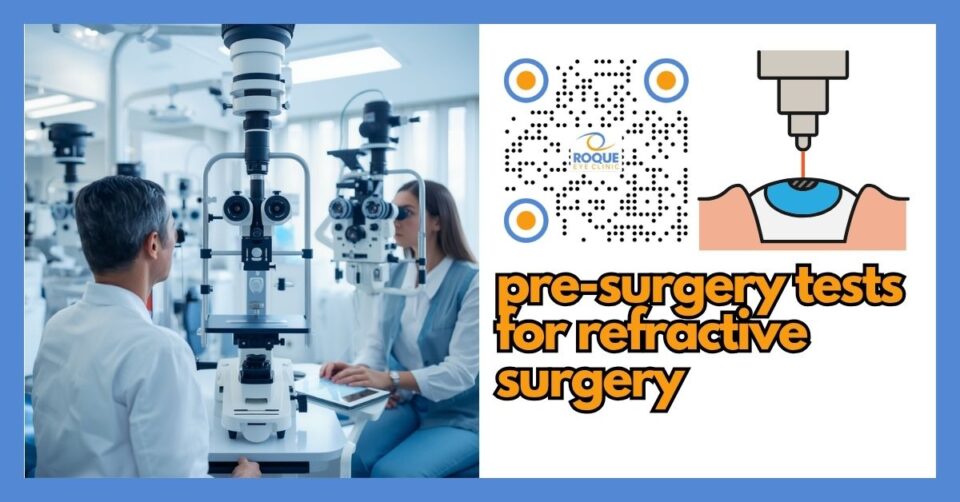
Pre-Surgery Tests
🧠 Quick Answer
Pre-surgery tests are the detailed eye measurements and health checks done before refractive surgery. They help your surgeon confirm your true prescription, assess your cornea, tear film, lens, eye pressure, and retina, and decide whether surgery is safe, which procedure fits best, or whether treatment should be delayed or avoided.
Many patients think pre-surgery testing is just about checking whether they are nearsighted or astigmatic. In reality, the tests are designed to answer deeper questions. Is the cornea strong enough? Is the prescription stable? Is the ocular surface healthy enough for accurate measurements? Is the retina safe? Is there an early cataract that makes lens-based surgery more logical? These are the kinds of answers that prevent poor choices and reduce avoidable complications.
Good refractive surgery starts long before the laser or the operating room. It starts with careful measurement, careful interpretation, and careful decision-making. In simple terms, pre-surgery tests are the safety map for your eye.
🧩 Focus: Preoperative testing before refractive surgery
👁 Goal: Explain the common tests done before laser and lens-based vision correction, why they matter, and how they influence candidacy and safety
🛡 Evidence-Based: Preferred Practice Patterns • Standards of Care • Systematic Reviews • Meta-Analyses
REFRACTIVE SURGERY Knowledge Hub
Start with the complete guide:
🔬 Pre-Surgery Tests Anatomy Micro-Primer
- Cornea: The clear front window of the eye. Laser procedures reshape this tissue, so its thickness, curvature, and stability matter.
- Tear film: The thin moisture layer covering the eye. If it is unstable, measurements can be inaccurate and postoperative dryness can feel worse.
- Lens: The natural lens behind the pupil. Early lens changes may shift the decision away from corneal laser surgery and toward lens-based treatment.
- Retina: The light-sensitive tissue at the back of the eye. Retinal tears, holes, or weak areas can affect safety planning and must not be missed.
📘 Pre-Surgery Tests Terminology Glossary
- Manifest refraction: The standard glasses test that finds the prescription you see best with during the exam.
- Cycloplegic refraction: A refraction done after drops relax the focusing muscles, helping reveal hidden prescription or latent hyperopia.
- Topography: A map of the front surface curvature of the cornea.
- Tomography: A more detailed 3D-style analysis of corneal shape and structure, including front and back surfaces.
- Pachymetry: Measurement of corneal thickness.
- Dilated fundus examination: A retinal examination performed after dilating drops widen the pupil.
Quick Navigation
Related Reading
Key Learning Points
- Pre-surgery tests do far more than confirm a glasses prescription.
- They help detect dry eye, corneal weakness, unstable refraction, retinal problems, and early lens changes.
- Cycloplegic refraction and a dilated fundus examination can be very important in proper refractive surgery work-up.
- A patient may qualify for one procedure but not another based on these test results.
- The safest screening process can lead to five outcomes: proceed, treat first, change procedure, postpone, or do not proceed.
What Pre-Surgery Tests Are
Pre-surgery tests are the measurements and health checks performed before LASIK, PRK, TransPRK, SMILE, ICL, refractive lens exchange, and related procedures. Their purpose is not only to measure the amount of myopia, hyperopia, astigmatism, or presbyopia. Their real purpose is to determine whether surgery is safe, whether the measurement is reliable, and whether the chosen procedure matches the anatomy and goals of the patient.
A helpful analogy is building a house. You do not begin with paint color. You begin with the soil, foundation, structure, and engineering. In refractive surgery, pre-surgery tests are the engineering survey of the eye.
💡 Analogy
Asking for refractive surgery without proper testing is like ordering a custom suit using only your height. The result may look acceptable at first glance, but the fit can still be wrong because the rest of the measurements were ignored.
Why Pre-Surgery Tests Matter
These tests matter because a clear prescription does not automatically mean a safe eye for surgery. A patient may see well with trial lenses but still have a cornea at risk for ectasia, significant ocular surface disease, or a retinal lesion that needs treatment. The tests help prevent surgery on the wrong eye, at the wrong time, or with the wrong procedure.
They also help set expectations. Some patients want “perfect vision,” but the better goal is often safe, functional, and realistic vision. Pre-surgery measurements help your surgeon explain whether your eye is suited for flap-based laser surgery, surface ablation, SMILE, ICL, lens replacement, or no surgery at all.
Common Pre-Surgery Tests
1) Visual acuity testing
This measures how well you see without correction and with correction. It is basic, but it is still important because it establishes the starting point and shows how much vision improves with glasses or contact lens power.
2) Manifest refraction
This is the familiar “Which is clearer, one or two?” test. It identifies the prescription that gives the best subjective vision during the exam. It is one of the core steps in planning refractive correction.
3) Cycloplegic refraction
This test uses eye drops to temporarily relax the focusing muscles. It can uncover hidden hyperopia, focusing spasm, or prescription instability that may not be obvious during an ordinary refraction. In some patients, skipping this step can lead to an incomplete understanding of the true refractive error.
4) Keratometry
Keratometry measures the curvature of the cornea. This helps assess astigmatism and supports treatment planning, especially when the surgeon is comparing multiple procedures.
5) Corneal topography
Topography creates a map of the front corneal surface. It helps detect irregular astigmatism and suspicious patterns that may suggest keratoconus or another structural concern.
6) Corneal tomography
Tomography goes deeper than topography. It helps analyze the front and back corneal surfaces and gives a more complete view of corneal shape and thickness distribution. This is especially valuable when screening for subtle ectasia risk.
7) Pachymetry
Pachymetry measures corneal thickness. This matters because laser ablation removes tissue. The surgeon must estimate how much tissue will remain after treatment and whether that amount stays in a safe range.
8) Tear-film and ocular surface evaluation
Dry eye, blepharitis, and meibomian gland dysfunction are common and can make measurements less reliable. If the ocular surface is unstable, surgery planning may also become unstable. Many patients benefit from treatment first, then repeat testing later.
9) Slit-lamp examination
This microscope exam checks the eyelids, conjunctiva, cornea, anterior chamber, iris, and lens. It can reveal inflammation, scarring, infection risk, epithelial disease, cataract change, or other issues that influence candidacy.
10) Intraocular pressure measurement
Pressure testing helps assess glaucoma risk and creates an important baseline. This is especially relevant in patients with optic nerve cupping, family history, steroid response, or ocular hypertension.
11) Pupil assessment
Pupil size may influence night-vision counseling, glare symptoms, and overall expectations. It is not the only factor, but it can matter in the full context of the case.
12) Wavefront or aberrometry
These tests help identify higher-order aberrations and visual quality issues that ordinary glasses power does not fully explain. They may be helpful in selected patients, especially when visual symptoms and measured prescription do not fully match.
13) Anterior chamber measurements
For ICL candidates, the surgeon may measure anterior chamber depth and other dimensions needed for sizing and safety planning. A patient may be unsuitable for one lens-based approach if the anterior segment anatomy is not favorable.
14) Biometry and lens evaluation
In older patients or those with early lens changes, lens-based measurements can become more important than corneal laser measurements. Sometimes the pre-surgery tests show that refractive lens exchange or cataract surgery planning makes more sense than LASIK or PRK.
15) Dilated fundus examination
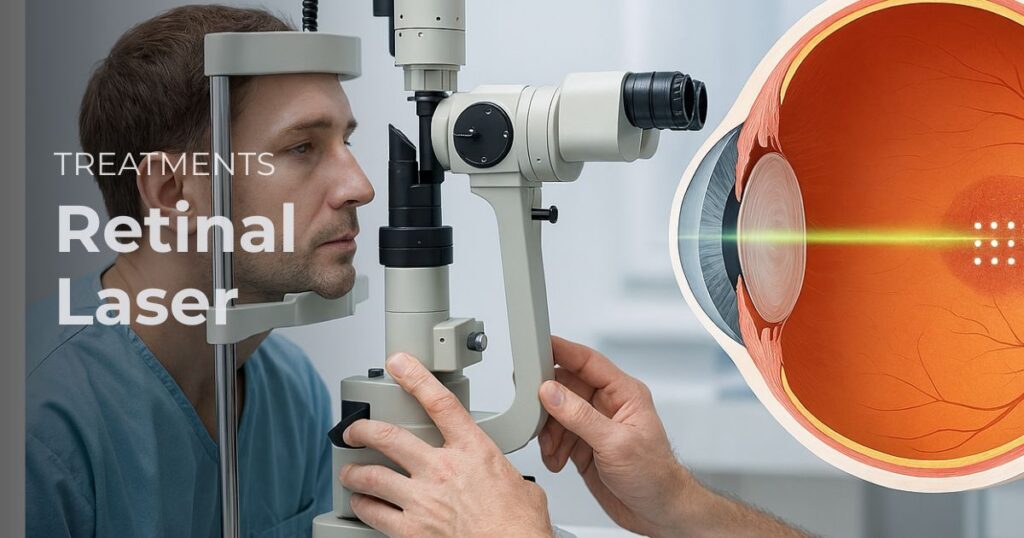
This retinal exam is one of the most important parts of proper preoperative assessment. Dilation helps the surgeon check the retina, optic nerve, and peripheral fundus for tears, holes, lattice degeneration, detachments, and other disease that may need treatment or co-management before refractive surgery.
Why Cycloplegic Refraction and Dilated Retinal Examination Matter
These two areas deserve special emphasis. In refractive surgery counseling, patients often focus on the laser, but a careful surgeon also focuses on what can be missed. A cycloplegic refraction can reveal whether the measured prescription is being affected by active focusing effort. This matters especially in younger patients, in hyperopia, or in cases where subjective refraction seems inconsistent.
A dilated fundus examination matters because the back of the eye can contain important findings even when the front of the eye looks healthy. Myopic patients, in particular, may have peripheral retinal changes that deserve attention before surgery. If pre-surgery testing ignores the retina, the patient may walk into elective surgery with an unrecognized retinal risk.
🚨 Emergency Warning
If pre-surgery testing reveals sudden flashes, a shower of new floaters, a curtain-like shadow, painful red eye, or a sudden drop in vision, urgent eye assessment comes first. Elective refractive surgery should not take priority over possible retinal or inflammatory emergencies.
How Pre-Surgery Test Results Can Change the Plan
Many patients assume the tests only confirm whether they can proceed. In reality, the tests can change the entire plan. Examples include:
- Unstable refraction: Surgery may need to be postponed.
- Dry eye or lid disease: The ocular surface may need treatment before repeating measurements.
- Thin or suspicious cornea: LASIK may be avoided and another procedure considered, or surgery may be ruled out.
- Large refractive error: ICL may be more suitable than corneal laser treatment.
- Early cataract or dysfunctional lens: Lens-based surgery may make more sense than corneal refractive surgery.
- Retinal pathology: Retinal treatment or co-management may be needed before moving forward.
In this way, pre-surgery tests do not just approve surgery. They help your surgeon choose the safest and most logical path for your specific eye.
How to Prepare for Pre-Surgery Testing
- Ask when to stop contact lens wear before measurements.
- Expect that your pupils may be dilated, which can blur reading vision and increase light sensitivity for several hours.
- Bring your glasses and any old prescriptions if available.
- Tell your surgeon about prior eye surgery, dry eye symptoms, medications, autoimmune disease, pregnancy, or breastfeeding.
- Allow enough time for a full exam rather than treating it like a quick optical visit.
Why Good Testing Protects Patients
A strong preoperative work-up can be disappointing for patients who want a fast yes, but that careful process is exactly what protects them. Sometimes the safest result is not immediate surgery. Sometimes it is ocular surface treatment first, retinal care first, a different procedure, or no surgery at all. That is not failure. That is good refractive judgment.
Continue Reading
🏁 Take-Home Message
Pre-surgery tests are not a formality. They are one of the most important parts of refractive surgery planning. The right tests help confirm your true prescription, detect corneal or retinal risk, identify dry eye and lens problems, and guide the surgeon toward the safest recommendation. A careful work-up may lead to surgery, delay, a different procedure, or a decision not to operate—and all of those outcomes can be the right one for your eye.
FAQ
1) Why do I need so many tests before refractive surgery?
Because one test does not answer every safety question. Different tests measure your prescription, corneal structure, tear quality, lens status, eye pressure, and retinal health.
2) Is a regular eyeglasses check enough before LASIK or PRK?
No. A simple glasses refraction alone is not enough. Proper preoperative work-up usually includes additional structural and health testing.
3) Why is cycloplegic refraction important?
It relaxes the focusing muscles and can reveal hidden prescription findings that may otherwise be missed, especially in younger patients or hyperopes.
4) Why do I need a dilated fundus examination if I only want laser vision correction?
Because refractive surgery is elective, and retinal problems should not be missed before elective surgery. Dilation helps the surgeon examine the retina and peripheral fundus more thoroughly.
5) Can dry eye affect my test results?
Yes. A poor tear film can distort measurements and may also make postoperative recovery more uncomfortable. Many patients need ocular surface treatment before repeating tests.
6) Can the tests show that I need a different procedure than I expected?
Yes. Some patients who expect LASIK may be steered toward PRK, SMILE, ICL, lens replacement, or no surgery at all based on the findings.
📚 References
- American Academy of Ophthalmology. Refractive Surgery Preferred Practice Pattern®.
- National Eye Institute. Surgery for Refractive Errors.
- National Eye Institute. Refractive Errors.
- National Eye Institute. Get a Dilated Eye Exam.
- U.S. Food and Drug Administration. Summary of Safety and Effectiveness Data and patient cautions for refractive laser surgery.
🤝 Roque Eye Clinic Patient Education Series
Dr. Manolette Roque | Dr. Barbara Roque
St. Luke's Medical Center Global City | Asian Hospital Medical Center
Philippines
Medical Review: Roque Advisory Council
Last Updated: March 2026
Medical Disclaimer
This article is intended for educational purposes only and does not replace professional medical consultation.