


Medical Tourism for Refractive Surgery
🧠 Quick Answer
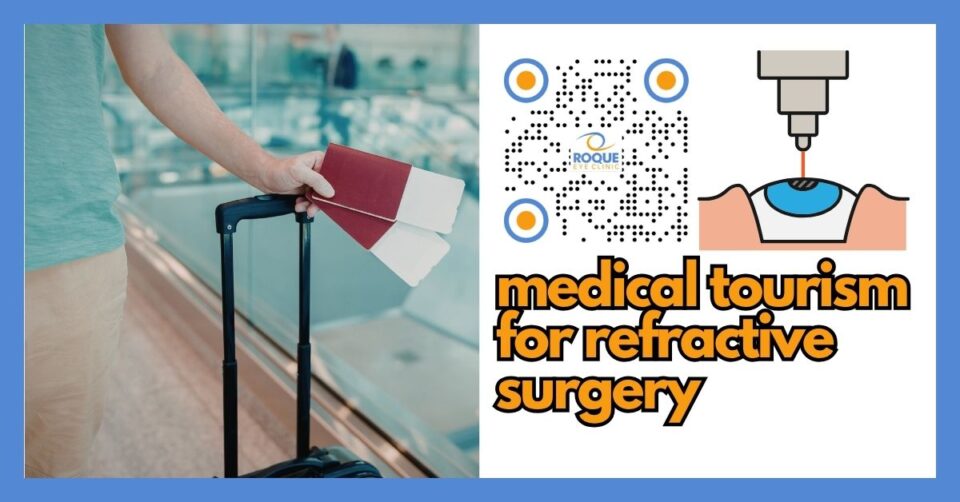
Medical tourism for refractive surgery means traveling to another city or country for LASIK, PRK, SMILE, ICL, or lens-based vision correction. It can be appealing because of price, access, or convenience. However, safety depends on proper screening, surgeon and facility quality, clear communication, and a realistic plan for follow-up if problems happen after you return home.
Many patients compare refractive surgery prices across countries and quickly notice that fees can look lower elsewhere. That can make medical tourism seem simple: fly in, have the procedure, rest for a day or two, then go home with better vision. Real life is more complicated. Refractive surgery is not only about the laser or the implant. It also depends on candidacy screening, accurate measurements, sterile technique, emergency access, continuity of care, and the ability to manage complications if they happen.
This article explains what medical tourism for refractive surgery means, why some patients consider it, what the advantages and risks may be, and how to think about safety before making a decision.
🧩 Focus: Traveling for refractive surgery such as LASIK, PRK, SMILE, ICL, or lens-based vision correction
👁 Goal: Help patients weigh cost, convenience, surgeon quality, facility standards, travel logistics, and follow-up safety before booking care away from home
🛡 Evidence-Based: Preferred Practice Patterns • Travel Medicine Guidance • Standards of Care • Peer-Reviewed Safety Principles
ROQUE REFRACTIVE SURGERY Knowledge Hub
Start with the complete guide:
🔬 Medical Tourism for Refractive Surgery Anatomy Micro-Primer
- Cornea: This clear front window of the eye is treated in LASIK, PRK, TransPRK, and SMILE. Accurate measurements and safe tissue planning are critical before any laser procedure.
- Lens: The natural lens matters in ICL and lens-based vision correction. Its condition, your age, and your anterior chamber measurements affect procedure choice.
- Retina: Patients with high myopia may have retinal weak spots, tears, or degeneration that should be identified before refractive surgery.
- Tear film: A healthy tear layer helps produce accurate scans and supports healing. Dry eye can affect both comfort and visual quality after surgery.
📘 Medical Tourism for Refractive Surgery Terminology Glossary
- Medical tourism: Traveling away from home to receive medical care.
- Candidacy screening: The full evaluation used to decide whether surgery is safe and suitable for your eyes.
- Continuity of care: Ongoing follow-up before, during, and after treatment, including management of complications.
- Accreditation: Formal recognition that a facility meets certain quality or safety standards.
- Antimicrobial resistance: Germs becoming harder to treat with standard antibiotics or antifungal medicines.
- Enhancement: An additional refractive procedure done when the first result leaves residual error or later regression occurs.
Quick Navigation
Related Reading
Dr. Roque's Key Learning Points
- Lower advertised price does not automatically mean better value.
- Refractive surgery safety depends on screening, measurements, surgeon skill, facility standards, and follow-up.
- Travel adds extra issues such as communication barriers, infection risk, delayed follow-up, and travel during recovery.
- You should know exactly who will perform your surgery, where it will be done, and who will manage you if something goes wrong.
- If you cannot arrange reliable follow-up, medical tourism for refractive surgery may be a poor choice even if the price looks attractive.
What Medical Tourism for Refractive Surgery Is
Medical tourism for refractive surgery means traveling outside your usual local care network to have vision correction done. This may involve going to another country, or simply flying to another city because a center advertises lower prices, newer technology, or faster scheduling.
The procedures involved may include LASIK, PRK, TransPRK, SMILE, ICL, refractive lens exchange, or premium lens-based surgery. From a patient’s point of view, the idea sounds straightforward. But refractive surgery is not a one-day retail transaction. It is a medical process that starts with screening and ends only after healing is stable and follow-up is complete.
💡 Analogy
Booking refractive surgery far from home based only on price is like choosing a pilot by the cheapest ticket without checking the aircraft, weather, route, or emergency plan. The procedure itself matters, but the whole safety system around it matters just as much.
Why Patients Consider It
Patients usually consider medical tourism for four main reasons: cost, convenience, access, and perceived technology advantage. Some see package deals that include hotel transfers and feel reassured by a polished website. Others have family in another country and want surgery while visiting. Some are told a procedure is unavailable locally, or believe another location has better surgeons or more advanced machines.
Those reasons can be understandable. However, glossy marketing is not the same as proven quality. A decision about your cornea, lens, retina, and long-term visual quality should never rest on price alone.
Possible Benefits
- Lower fees: Some centers advertise substantially lower treatment costs.
- Access: Patients may find shorter wait times or access to a specific technology or surgeon.
- Geographic convenience: Surgery may be combined with travel, family visits, or work trips.
- Bundled arrangements: Some packages offer testing, surgery, transportation, and hotel stay in one plan.
These benefits are real only if the medical side is solid. A low price loses its value quickly if the patient later needs repeat scans, unexpected treatment, emergency care, or prolonged management back home.
Main Risks and Trade-Offs
1) Incomplete or rushed screening
Good refractive surgery depends on full preoperative work-up. If a center rushes patients through screening, skips cycloplegic refraction when needed, ignores dry eye, does not perform a proper dilated retinal examination, or fails to study corneal imaging carefully, the “cheap” procedure may carry hidden risk.
2) Quality and infection-control variation
Not all countries and facilities use the same systems for licensure, credentialing, accreditation, infection control, or device quality. A patient may not easily know whether standards match what they would expect at home.
3) Communication problems
Misunderstandings about consent, risks, medications, follow-up, or activity restrictions can happen when the patient and team are not fully fluent in the same language.
4) Weak continuity of care
This is one of the biggest problems in medical tourism. If healing is slower than expected, if an epithelial defect persists, if a flap issue develops, if there is a pressure spike, or if residual refractive error appears, who will manage it? A local ophthalmologist may not know the original treatment plan or may be reluctant to take over complex postoperative care from another center.
5) Travel during recovery
Traveling while still early in recovery can be inconvenient and medically stressful. Dry cabin air, delayed review, long periods sitting still, and the simple difficulty of getting urgent care away from the operating surgeon can all complicate recovery.
🚨 Emergency Warning
Do not fly home or delay medical review if you develop severe pain, marked redness, worsening vision, discharge, a white corneal spot, flashes, a curtain over vision, or sudden major blur after refractive surgery. These symptoms may signal infection, corneal complications, retinal problems, or other urgent conditions.
Safety Checklist Before You Book
Before committing to medical tourism for refractive surgery, patients should get clear answers to these questions:
- Who exactly will perform the surgery?
- What are the surgeon’s training, credentials, and experience with the exact procedure being offered?
- What diagnostic tests are included before surgery?
- Will you receive a copy of all scans, measurements, prescriptions, and operative notes?
- Is the facility accredited, and by whom?
- What technology platform is being used?
- Who will review you the next day, the next week, and the next month?
- What happens if you have a complication after returning home?
- Are enhancement policies clear, written, and realistic?
- Is there transparent pricing for medicines, postoperative visits, add-on tests, and complication care?
When Medical Tourism May Be Especially Risky
Medical tourism may be a poor idea when you have high myopia, borderline corneal findings, significant dry eye, previous eye surgery, glaucoma concerns, retinal disease, unstable refraction, or a medical condition that could affect healing. It may also be risky if you cannot stay long enough for early follow-up, cannot easily return if needed, or do not have a trusted local ophthalmologist willing to review you after you come home.
Follow-Up and Returning Home
Refractive surgery does not end when you leave the operating room. Your recovery may involve medication adjustment, dry-eye care, pressure checks, epithelial healing review, bandage contact lens removal, repeat refraction, and counseling about work, exercise, driving, and screen use. If surgery is done far from home, every step becomes harder to coordinate.
A safer medical-tourism setup is one in which the patient already has a clear follow-up pathway before traveling. Ideally, this includes written records, direct contact details for the operating center, and a local ophthalmologist who agrees in advance to help with review if needed.
Questions Patients Should Ask Themselves
- Am I choosing this mainly because of price?
- Would I still pick this center if the cost were the same as home?
- Do I fully understand the procedure, alternatives, and risks?
- Can I stay long enough for proper early follow-up?
- Can I afford care if a complication happens after I return?
- Do I have copies of my records and scans?
Continue Reading
🏁 Dr. Roque's Take-Home Message
Medical tourism for refractive surgery can look attractive, but the real question is not “How cheap is it?” The real question is “How safe, well-screened, well-documented, and well-supported is it from start to finish?” The best decision is the one that protects your eyes not only on surgery day, but also during healing and long-term follow-up.
FAQ
1) Is medical tourism for LASIK always unsafe?
No. The problem is not travel itself. The problem is poor screening, unclear credentials, weak infection control, rushed consent, or bad follow-up planning. Some patients do well, but safety depends on the whole system around the surgery.
2) Why is follow-up such a big issue in refractive surgery tourism?
Because refractive surgery results are shaped by healing, not just the procedure. If pain, infection, pressure rise, flap problems, dry eye, regression, or residual refractive error develop, you need quick access to informed postoperative care.
3) Can I just see any eye doctor at home if something goes wrong?
Sometimes yes, but not always smoothly. A local doctor may need your records, scans, operative notes, medication details, and treatment plan. Complication management is easier when records are complete and follow-up has been discussed in advance.
4) Is a lower price worth it?
Sometimes, but only if quality is high and follow-up is reliable. A lower surgical fee can become more expensive overall if complications, repeat visits, missed work, or extra treatment are needed later.
5) What documents should I ask for before leaving the surgery center?
Ask for your refraction, corneal scans, operative report, lens or laser details, medication list, postoperative instructions, emergency contact details, and the planned follow-up schedule.
6) Who should avoid medical tourism for refractive surgery?
Patients with complicated eyes, significant dry eye, high myopia, prior surgery, glaucoma concerns, retinal disease, or limited access to follow-up should be especially cautious.
📚 References
- Centers for Disease Control and Prevention. Medical Tourism: Travel to Another Country for Medical Care.
- Centers for Disease Control and Prevention. CDC Yellow Book: Medical Tourism.
- Centers for Disease Control and Prevention. CDC Yellow Book: The Pre-Travel Consultation.
- American Academy of Ophthalmology. Refractive Surgery Preferred Practice Pattern®.
- Centers for Disease Control and Prevention. Travelers’ Health resources on obtaining healthcare abroad.
🤝 Roque Eye Clinic Patient Education Series
Dr. Manolette Roque | Dr. Barbara Roque
St. Luke's Medical Center Global City | Asian Hospital Medical Center
Philippines
Medical Review: Roque Advisory Council
Last Updated: March 2026
Medical Disclaimer
This article is intended for educational purposes only and does not replace professional medical consultation.