
What Can Go Wrong With Refractive Surgery
🧠 Dr. Roque's Quick Answer
What can go wrong with refractive surgery depends on the procedure and the patient’s eye, but known problems include dry eye, glare and halos, blurry or fluctuating vision, healing problems, undercorrection, overcorrection, infection, corneal ectasia, cataract or retinal issues, and disappointment when expectations do not match the final result. Good screening lowers risk, but no surgery is risk-free.
Refractive surgery can be life-changing for the right patient. Many people become less dependent on glasses or contact lenses and are very happy with their results. Still, patients deserve a clear answer to an important question: What can actually go wrong?
The honest answer is that problems can happen before surgery, during surgery, early in recovery, or months to years later. Some issues are mild and temporary. Others are uncommon but serious. The goal of good counseling is not to frighten patients. It is to help them make a careful, informed decision.
🧩 Focus: Complications, side effects, disappointments, and real-world risks of refractive surgery
👁 Goal: Explain what can go wrong with LASIK, PRK, SMILE, ICL, and lens-based refractive surgery in clear patient-friendly language
🛡 Evidence-Based: Preferred Practice Patterns • Standards of Care • Systematic Reviews • Meta-Analyses
ROQUE REFRACTIVE SURGERY Knowledge Hub
Start with the complete guide:
🔬 Refractive Surgery Risk Anatomy Micro-Primer
- Cornea: The clear front window of the eye. Most laser refractive procedures reshape this tissue, so thickness, curvature, and stability matter.
- Tear film: This thin moisture layer covers the eye surface. If it is unstable, vision can fluctuate and dryness can feel worse after surgery.
- Lens: The natural lens sits behind the iris. In lens-based surgery, the lens or an implanted lens can affect visual quality, glare, and future treatment options.
- Retina: This is the light-sensitive tissue at the back of the eye. Retinal holes, tears, or detachments are separate problems that refractive surgery does not prevent.
📘 Refractive Surgery Risk Terminology Glossary
- Undercorrection: The eye is improved but still needs some prescription afterward.
- Overcorrection: The treatment goes past the target and leaves a new residual prescription.
- Regression: Vision drifts back over time after an initially good result.
- Ectasia: Progressive corneal weakening and bulging after corneal refractive surgery.
- Dysphotopsia: Visual symptoms such as glare, halos, starbursts, ghosting, or unwanted light effects.
- Enhancement: A second procedure done to fine-tune the refractive result.
Quick Navigation
Related Reading
Dr. Roque's Key Learning Points
- Refractive surgery can go wrong in different ways: side effects, complications, poor visual quality, or unmet expectations.
- Some problems are temporary, such as early dryness and fluctuating vision. Some are uncommon but potentially serious, such as infection or ectasia.
- Good screening helps lower risk, but it cannot reduce the risk to zero.
- Different procedures have different failure patterns. LASIK, PRK, SMILE, ICL, and lens replacement do not share exactly the same risk profile.
- The best protection is careful screening, realistic counseling, appropriate procedure choice, and reliable follow-up care.
The Big Picture: “Wrong” Does Not Always Mean Disaster
When patients ask what can go wrong with refractive surgery, they often imagine only the worst-case scenario. In real life, “wrong” can mean many things. It may mean a small residual prescription. It may mean vision that is technically sharp on the chart but not as comfortable as expected at night. It may mean dry eye, glare, slower healing, or needing an enhancement. In rare cases, it may mean a serious complication that threatens vision.
A helpful way to think about this is to separate problems into four groups: screening mistakes, healing problems, optical quality problems, and rare sight-threatening complications.
💡 Dr. Roque's Analogy
Refractive surgery is like tailoring a suit from expensive fabric. If the measurements are wrong, if the fabric behaves unexpectedly, or if the wearer expects a different fit than planned, the final result may disappoint even when the tailor did many things correctly.
What Can Go Wrong Before Surgery
1) Wrong patient selection
One of the biggest preventable causes of poor outcome is operating on the wrong eye or the wrong patient. Examples include unstable prescription, suspicious corneal tomography, unrecognized dry eye, poor tear film, early cataract, retinal disease, unrealistic expectations, or medical factors that affect healing.
2) Underestimating dry eye and ocular surface disease
Dry eye can make measurements unstable before surgery and can make recovery feel much worse afterward. It can also create fluctuating blur that makes patients think the laser result is poor when the main problem is actually the ocular surface.
3) Missing corneal instability risk
Some corneas look normal on basic screening but have subtle signs of weakness. If that risk is missed, postoperative ectasia may develop later. This is one reason modern screening is more advanced than a simple refraction and slit-lamp check.
4) Choosing the wrong procedure
Sometimes the problem is not surgery itself, but the type of surgery chosen. A patient may have been better suited to PRK instead of LASIK, ICL instead of corneal laser surgery, or lens-based surgery instead of another corneal procedure.
What Can Go Wrong Early After Surgery
Dry eye and fluctuating vision
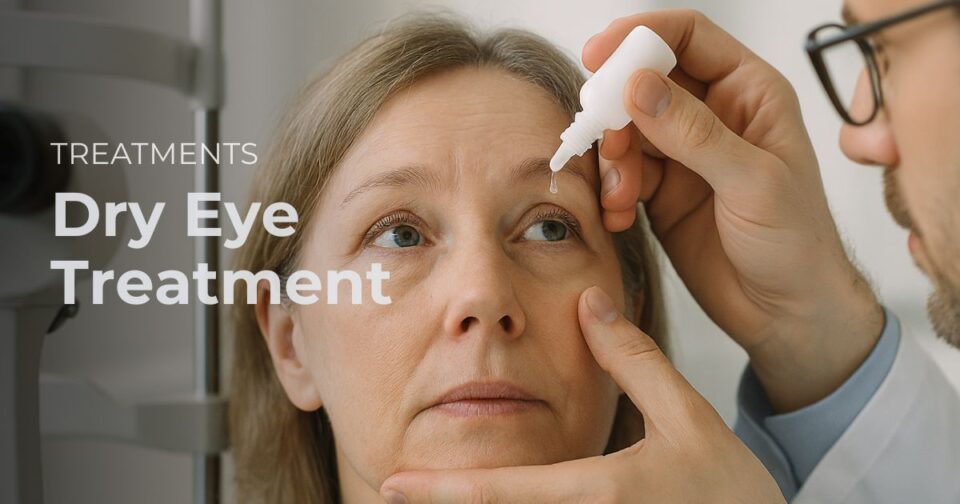
Dry eye is one of the most common postoperative complaints after corneal refractive surgery. Patients may notice burning, stinging, foreign-body sensation, blur that changes during the day, and increased discomfort with screen use or air-conditioned environments.
Pain and slower healing
This is especially relevant after surface ablation procedures such as PRK and TransPRK. The corneal surface needs time to heal, and the first few days may be uncomfortable.
Glare, halos, ghosting, and night-vision symptoms
Some patients see rings around lights, starbursts, ghost images, or more scatter at night. These symptoms may improve with time, but they can be very disturbing when patients were not prepared for them.
Infection
Infection is uncommon, but it is one of the complications patients should take seriously. Corneal infection after refractive surgery can threaten vision and needs urgent care.
Inflammation or healing irregularity
Some patients heal more aggressively or less predictably than others. This can contribute to haze after surface ablation, interface inflammation after LASIK, or delayed recovery of crisp vision.
🚨 Dr. Roque's Emergency Warning
Seek urgent ophthalmic review if you develop rapidly worsening pain, marked redness, pus-like discharge, a white spot on the cornea, a sudden major drop in vision, new flashes or a curtain over vision, or severe symptoms that feel much worse instead of better.
What Can Go Wrong Later
Undercorrection, overcorrection, or regression
The eye may heal in a way that leaves a small residual prescription. Sometimes vision initially looks good but drifts later. This is one reason some patients still need glasses occasionally or may later consider enhancement.
Persistent dry eye
Dryness often improves over time, but some patients continue to have ocular surface symptoms for much longer. Persistent dryness can affect comfort, reading, screen tolerance, and overall quality of vision.
Loss of visual quality despite “good numbers” on the chart
A patient may read the chart well but still dislike the quality of vision. Common complaints include low-contrast blur, night-driving difficulty, glare, halos, or a sense that vision feels less natural than expected.
Corneal ectasia
Post-refractive ectasia is uncommon, but it is one of the most feared corneal complications. The cornea gradually weakens and bulges forward, causing irregular astigmatism and worsening vision. This is why ectasia-risk screening matters so much before corneal laser procedures.
Dissatisfaction and expectation mismatch
Sometimes the biggest “failure” is not a damaged eye but an unhappy patient whose expectations were unrealistic. Examples include expecting permanent perfect vision at all distances, no night symptoms, no need for future glasses, or no age-related changes such as presbyopia.
Procedure-Specific Problems
LASIK
- Flap-related issues such as striae, displacement, incomplete flaps, or interface problems
- Dry eye and nighttime symptoms
- Residual refractive error or regression
PRK / Surface Ablation
- More early pain and slower recovery
- Delayed epithelial healing
- Corneal haze in selected cases
SMILE
- Residual astigmatism or refractive surprise
- Interface or cap-related issues
- Need for enhancement planning that may differ from LASIK
ICL
- Vault-related problems
- Raised eye pressure
- Cataract formation in some cases
- Need for future lens management or repositioning in selected situations
Lens Replacement / Refractive Lens Surgery
- Residual refractive error
- Dysphotopsias such as glare and halos, especially with some premium IOL designs
- Posterior capsule opacity later on
- Retinal risk, especially in highly myopic eyes
What Patients Often Mean by “Something Went Wrong”
Patients do not always mean blindness or severe damage. Often, they mean one of the following:
- “I still need glasses sometimes.”
- “My night vision is worse than expected.”
- “My eyes feel dry all the time.”
- “My vision is sharp, but it does not feel crisp.”
- “The result is good, but not as perfect as I imagined.”
This matters because informed consent should discuss both medical complications and quality-of-life disappointments.
How Risk Is Reduced
- Thorough refractive surgery screening
- Careful corneal tomography and ectasia-risk review
- Dry-eye and lid-disease treatment before surgery
- Choosing the right procedure for the right eye
- Avoiding surgery in unstable or high-risk cases
- Clear counseling about trade-offs, healing time, and realistic goals
- Reliable follow-up and prompt management of symptoms
Questions Patients Should Ask Before Surgery
- What are the most likely side effects in my case?
- What are the rare but serious risks?
- What would make you advise against surgery for me?
- Am I more likely to have dry eye, halos, or regression?
- If I am not an ideal candidate for this procedure, what is safer?
- If the result is not ideal, what are the next steps?
Continue Reading
🏁 Dr. Roque's Take-Home Message
What can go wrong with refractive surgery is not a single answer. Problems range from temporary dryness and glare to residual prescription, healing issues, ectasia, infection, retinal events, or unhappy expectations. The safest approach is not to chase the most popular procedure. It is to choose the right procedure for the right eye after a careful, honest screening process.
FAQ
1) What is the most common thing that goes wrong after refractive surgery?
Common complaints include dryness, fluctuating vision, glare, halos, and small residual prescription. These are usually much more common than severe sight-threatening complications.
2) Can refractive surgery go wrong even if the surgery itself was done correctly?
Yes. Healing varies from person to person. A technically smooth procedure can still be followed by dryness, haze, regression, night-vision symptoms, or dissatisfaction if the healing response or expectations are different than expected.
3) Does “20/20” guarantee that nothing went wrong?
No. A patient may read the chart well and still dislike glare, halos, contrast loss, or dry-eye symptoms. Visual quality matters, not just chart numbers.
4) What is the most serious complication patients should know about?
Serious complications vary by procedure, but they can include infection, corneal ectasia, major flap problems, severe pressure rise, retinal complications, or permanent loss of vision in rare cases.
5) Can problems appear months or years later?
Yes. Regression, chronic dryness, ectasia, cataract progression, posterior capsule opacity, or age-related changes such as presbyopia can become more noticeable later on.
6) How can I lower my risk?
Have a thorough screening exam, be honest about symptoms and goals, treat dry eye before surgery, choose a procedure based on your anatomy rather than marketing, and attend proper follow-up visits.
📚 References
- American Academy of Ophthalmology. Refractive Surgery Preferred Practice Pattern®. Available at: https://www.aao.org/Assets/d2a71fff-34e7-4b77-9553-f6ac33860074/638592360994900000/refractive-surgery-ppp-updated-2024-
- U.S. Food and Drug Administration. What are the risks and how can I find the right doctor for me? Available at: https://www.fda.gov/medical-devices/lasik/what-are-risks-and-how-can-i-find-right-doctor-me
- U.S. Food and Drug Administration. When is LASIK not for me? Available at: https://www.fda.gov/medical-devices/lasik/when-lasik-not-me
- National Eye Institute. Surgery for Refractive Errors. Available at: https://www.nei.nih.gov/eye-health-information/eye-conditions-and-diseases/refractive-errors/surgery-refractive-errors
- Dossari SK, et al. Post-refractive Surgery Dry Eye: A Systematic Review Exploring Pathophysiology, Risk Factors and Novel Management Strategies. 2024. Available at: https://pmc.ncbi.nlm.nih.gov/articles/PMC11194137/
🤝 Roque Eye Clinic Patient Education Series
Dr. Manolette Roque | Dr. Barbara Roque
St. Luke’s Medical Center Global City | Asian Hospital Medical Center
Philippines
Medical Review: Roque Advisory Council
Last Updated: March 2026
Medical Disclaimer
This article is intended for educational purposes only and does not replace professional medical consultation.