



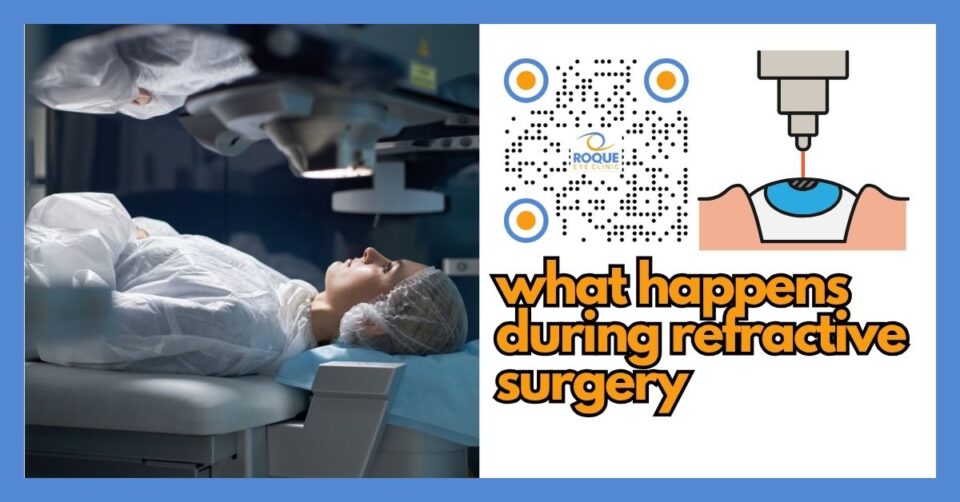
What Happens During Refractive Surgery
🧠 Dr. Roque's Quick Answer
What happens during refractive surgery depends on the procedure, but most treatments follow the same basic pattern: your eye is numbed with drops, your eyelids are kept open, the surgeon uses a laser or lens-based technique to correct focus, and you go home the same day. Most procedures are quick, but the exact steps differ for LASIK, PRK, SMILE, ICL, and lens replacement surgery.
Many patients worry that refractive surgery is mysterious, painful, or frightening because they cannot see exactly what is happening. In reality, most refractive procedures follow a clear sequence. You arrive, your eyes are prepared, the surgeon performs the planned steps, and you recover under close instructions. The experience is usually brief, but understanding the flow can make the day feel much less stressful.
This guide explains what happens during refractive surgery in patient-friendly language. It focuses on what you are likely to feel, what the surgeon is doing, how different procedures compare, and what usually happens immediately after the treatment.
🧩 Focus: What patients experience during refractive surgery
👁 Goal: Explain the step-by-step experience of laser and lens-based refractive surgery in simple language
🛡 Evidence-Based: Preferred Practice Patterns • Standards of Care • Systematic Reviews • Meta-Analyses
ROQUE REFRACTIVE SURGERY Knowledge Hub
Start with the complete guide:
🔬 Refractive Surgery Anatomy Micro-Primer
- Cornea: The clear front window of the eye. LASIK, PRK, TransPRK, and SMILE work mainly by changing the cornea’s shape.
- Lens: The natural lens sits behind the iris. ICL and lens replacement procedures involve the space around or in place of this lens.
- Retina: The retina lines the back of the eye and receives focused light. Refractive surgery aims to improve how light lands on the retina.
- Pupil: The pupil is the dark opening in the center of the eye. During surgery, the surgeon works through the clear front structures while your eyelids are kept open.
📘 Refractive Surgery Terminology Glossary
- Lid speculum: A small instrument that keeps your eyelids open during surgery.
- Excimer laser: A laser used to reshape the cornea in procedures such as LASIK and PRK.
- Femtosecond laser: A laser used to create precise tissue cuts, such as a LASIK flap or the lenticule in SMILE.
- Lenticule: A thin disc-shaped piece of corneal tissue created and removed during SMILE.
- ICL: Implantable collamer lens, a lens inserted inside the eye without removing the natural lens.
- Phacoemulsification: A lens-removal technique commonly used in lens replacement surgery.
Quick Navigation
Related Reading
Dr. Roque's Key Learning Points
- Most refractive procedures are done with numbing drops and are usually completed on the same day.
- During surgery, you may feel pressure, water, bright lights, or movement, but sharp pain is not typical.
- LASIK, PRK, SMILE, ICL, and lens replacement all correct focusing, but they do so in different ways.
- The most important difference is not how dramatic the procedure looks, but which procedure fits your eye safely.
- Knowing what happens step by step often helps reduce fear and improves cooperation during surgery.
Before You Enter the Procedure Room
Most refractive surgery days begin quietly. Your identity, treatment plan, and correct eye or eyes are verified. Staff may place more eye drops, clean the area around your eye, and review instructions again. Depending on the procedure, you may wear a cap, shoe covers, or protective coverings over your clothing. If mild sedation is planned, this is usually discussed and given according to the clinic or hospital protocol.
You are then brought into the treatment room. Most patients are surprised by how ordinary the room looks. It may resemble a specialized clinic room rather than a dramatic operating theater. The laser machine or operating microscope is positioned over the treatment bed.
💡 Dr. Roque's Analogy
For many patients, refractive surgery feels less like a long hospital operation and more like a carefully choreographed technical procedure. It is a bit like having a very precise camera adjustment performed on the front of your eye.
The General Sequence of Refractive Surgery
Although different procedures have different technical steps, most refractive surgeries follow the same broad pattern:
- The eye is numbed with drops.
- The eyelids are held open with a lid speculum so you do not have to worry about blinking.
- The surgeon centers and aligns the treatment.
- The refractive correction is performed with a laser or an intraocular lens technique.
- The eye is checked, protective treatment is applied if needed, and you are discharged with instructions.
During most procedures, patients are asked to look at a light or fixation target. Vision may blur at certain points. This is normal and expected. Many people fear they will “move too much” and ruin the surgery, but modern systems are designed with alignment and safety measures. The surgeon also guides you step by step throughout the procedure.
What Happens During LASIK
LASIK has two major parts: flap creation and laser reshaping. After numbing drops are placed, the eye is cleaned and the lids are held open. A thin flap is created in the cornea, usually with a femtosecond laser or, less commonly today, a microkeratome. The surgeon lifts this flap to expose the underlying corneal tissue. An excimer laser then reshapes the cornea based on the programmed treatment. When the laser portion is complete, the flap is carefully repositioned.
What the patient feels during LASIK is usually not sharp pain. More commonly, patients notice pressure, temporary dimming or blackout of vision during one step, blinking lights, clicking sounds, or the smell of tissue interaction during laser treatment. Once the flap is returned to position, the surgeon checks alignment and the procedure is finished. Because the surface layer remains largely intact, visual recovery is often faster than with surface ablation.
What Happens During PRK and TransPRK
PRK and TransPRK are surface procedures, so there is no LASIK flap. In standard PRK, the epithelial surface layer is removed first, then the excimer laser reshapes the cornea. In TransPRK, the laser may perform the epithelial removal and refractive treatment in an all-laser sequence depending on the platform and protocol. At the end of surgery, a bandage contact lens is usually placed to protect the healing surface.
During PRK or TransPRK, patients usually see bright lights and may notice some pressure or irrigation fluid, but pain is usually limited during the procedure because numbing drops are used. The bigger difference comes after surgery: since the front surface has to heal, early discomfort and blurry vision are usually more noticeable than in LASIK.
What Happens During SMILE
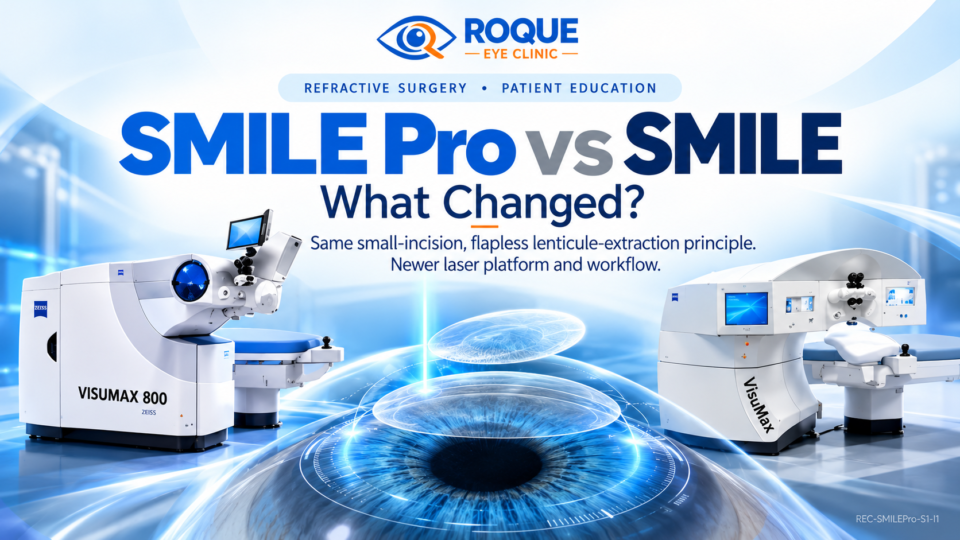
SMILE, or small incision lenticule extraction, uses a femtosecond laser to create a thin disc-shaped piece of tissue inside the cornea, called a lenticule. The surgeon then removes that lenticule through a small incision. No large flap is created. This changes the corneal shape and corrects the refractive error.
From the patient’s point of view, SMILE also involves numbing drops, eyelid holding, fixation on a light, and temporary pressure or changes in vision during docking and laser delivery. The surgical sensations are often described as brief and manageable. Because the incision is small and there is no broad flap, many patients are interested in SMILE for specific lifestyle or corneal reasons.
What Happens During ICL Surgery
ICL surgery is different because it does not reshape the cornea with an excimer laser. Instead, the surgeon inserts a specially selected lens inside the eye, usually in front of the natural lens and behind the iris. Numbing drops are used, and in some settings additional sedation may be used depending on the facility and patient needs.
During ICL surgery, the surgeon makes a small incision, inserts the folded lens, unfolds and positions it in the correct place, then checks alignment and stability. Patients may see bright light, shadow, water, or movement, but the procedure is typically brief. Because this is intraocular surgery, the setting, sterility, and postoperative care are different from corneal laser surgery.
What Happens During Lens Replacement Surgery
Lens replacement surgery, also called refractive lens exchange or refractive cataract surgery depending on the situation, is another intraocular procedure. The natural lens is removed and replaced with an artificial intraocular lens. The surgeon usually makes a tiny incision, opens the lens capsule, breaks the lens into smaller pieces with phacoemulsification or a related method, removes it, and places the selected implant.
Patients generally feel pressure, fluid, light, and movement rather than pain. Because the natural lens is replaced, this procedure can also address issues such as presbyopia or early lens dysfunction in suitable patients. As with ICL, this is not the same kind of experience as corneal laser surgery, even though both are forms of refractive surgery.
What You Usually See and Feel During Surgery
Patients often ask whether they will “see instruments coming toward the eye.” Vision during refractive surgery is usually blurred, bright, watery, or shadowy rather than sharply detailed. You may notice:
- Bright lights or fixation targets
- Temporary fogging or dimming of vision
- Pressure on the eye
- Cold fluid or drops
- A mild burning smell during excimer laser treatment
- Voices giving steady instructions
Many patients are relieved to learn that the most intense part is often anticipation, not the procedure itself. The surgery is usually over faster than expected.
🚨 Dr. Roque's Emergency Warning
Urgent review is needed if, after surgery, you develop severe worsening pain, marked redness, sudden major vision loss, pus-like discharge, flashes with a curtain over vision, or intense nausea with eye pain. These are not normal recovery symptoms and need prompt assessment.
What Happens Right After Surgery
After the procedure, the surgeon or staff checks the eye and reviews your instructions. You may be given drops, protective shields, sunglasses, or a bandage contact lens depending on the procedure. Most patients go home the same day. Vision may already seem different, but it may also be blurry, watery, hazy, or fluctuating at first.
LASIK patients often notice earlier visual improvement, while PRK and related surface procedures usually require more patience during early healing. Lens-based procedures have their own recovery pattern. In all cases, what happens after surgery matters almost as much as what happens during it. Following instructions about drops, rubbing, hygiene, and follow-up visits is essential.
Why Understanding the Procedure Helps
Fear often comes from uncertainty. Patients who know what to expect during refractive surgery usually cooperate more easily and feel less distressed by normal sensations such as pressure, lights, temporary blur, or the lid holder. A good surgeon and team will keep talking to you throughout the case so you know what is happening.
The real goal is not only to “get through surgery,” but to go through it calmly, safely, and with realistic expectations. The more clearly the experience is explained beforehand, the less frightening it tends to feel on the actual day.
Continue Reading
🏁 Dr. Roque's Take-Home Message
What happens during refractive surgery is usually more organized and less frightening than patients imagine. Your eye is numbed, the treatment is guided step by step, and the procedure is usually brief. The exact details differ between LASIK, PRK, SMILE, ICL, and lens replacement, but in every case the goal is the same: safer, more accurate focus with careful planning and follow-up.
FAQ
1) Are you awake during refractive surgery?
Yes, most patients are awake. Numbing drops are usually used, and some patients may also receive mild sedation depending on the procedure and setting.
2) Do they hold your eye open during surgery?
Yes. A small instrument called a lid speculum holds your eyelids open so you do not need to worry about blinking during the procedure.
3) Can you see what is happening during refractive surgery?
You may see lights, shadows, blur, or movement, but usually not sharp details. Vision often becomes temporarily cloudy during key steps.
4) How long does the actual surgery take?
The actual treatment is usually brief, but total time in the room varies depending on the procedure, preparation, and safety checks.
5) Is LASIK the same experience as PRK?
No. Both are laser procedures, but LASIK involves flap creation while PRK treats the surface. PRK usually has slower early recovery and more early discomfort.
6) What is the biggest difference between laser surgery and lens-based refractive surgery?
Laser procedures mainly reshape the cornea, while lens-based procedures place a lens inside the eye or replace the natural lens entirely.
📚 References
- American Academy of Ophthalmology. Refractive Surgery Preferred Practice Pattern®. Updated 2024.
- National Eye Institute. Surgery for Refractive Errors.
- U.S. Food and Drug Administration. What should I expect before, during, and after surgery?
- U.S. Food and Drug Administration. FDA-Approved Lasers for PRK and Other Refractive Surgeries.
- U.S. Food and Drug Administration. SMILE Patient Information Booklet.
🤝 Roque Eye Clinic Patient Education Series
Dr. Manolette Roque | Dr. Barbara Roque
St. Luke's Medical Center Global City | Asian Hospital Medical Center
Philippines
Medical Review: Roque Advisory Council
Last Updated: March 2026
Medical Disclaimer
This article is intended for educational purposes only and does not replace professional medical consultation.