

Advanced Surface Ablation (PRK, TransPRK, LASEK, Epi-LASIK) Guide
🧠 Quick Answer
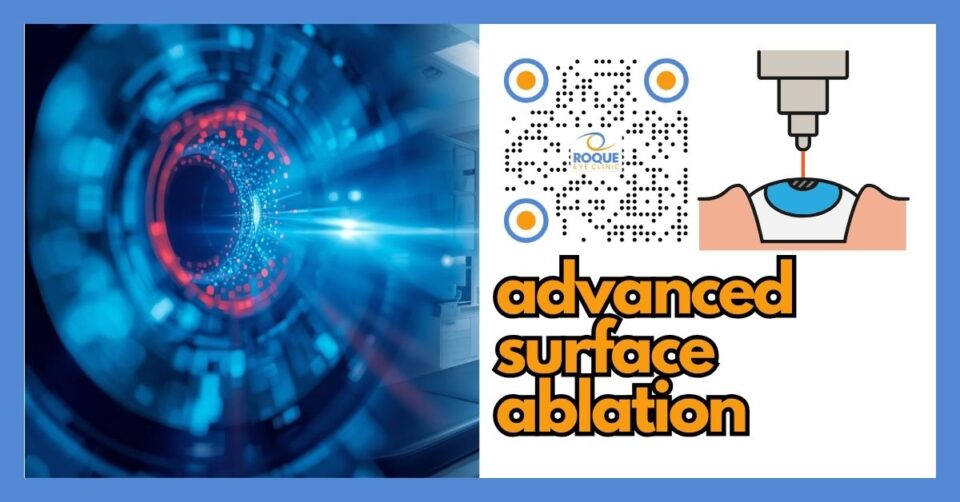
Advanced surface ablation is a group of laser vision correction procedures that reshape the cornea without creating a LASIK flap. It includes PRK, TransPRK, LASEK, and Epi-LASIK. These procedures can be excellent options for suitable patients, especially when flap-free treatment is preferred, but recovery is usually slower and the first few days are often less comfortable than LASIK.
Advanced surface ablation is one of the most important families of refractive surgery. In many clinics, LASIK gets more public attention because vision often clears faster after surgery. However, surface ablation remains highly relevant because it avoids a corneal flap and can be a very useful option for patients with certain corneal, occupational, sports, or lifestyle considerations.
In simple terms, these procedures use an excimer laser to reshape the front of the cornea after the surface epithelial layer is removed, loosened, or treated differently depending on the technique used. The goal is the same as other corneal refractive procedures: to reduce dependence on glasses or contact lenses by changing how light focuses on the retina.
🧩 Focus: Advanced surface ablation for refractive error correction
👁 Goal: Explain PRK, TransPRK, LASEK, and Epi-LASIK in patient-friendly language, including candidacy, benefits, trade-offs, recovery, and safety
🛡 Evidence-Based: Preferred Practice Patterns • Standards of Care • Systematic Reviews • Meta-Analyses
REFRACTIVE SURGERY Knowledge Hub
Start with the complete guide:
🔬 Advanced Surface Ablation Anatomy Micro-Primer
- Corneal epithelium: This is the thin outer skin of the cornea. Surface ablation works at this level before the laser reshapes the tissue underneath.
- Corneal stroma: This is the main structural layer of the cornea. The excimer laser reshapes this layer to correct refractive error.
- Bowman’s layer: This thin layer sits just below the epithelium. Some surface procedures interact near this area during treatment.
- Tear film: A healthy tear layer helps with accurate measurements, comfort, surface healing, and quality of vision after surgery.
📘 Advanced Surface Ablation Terminology Glossary
- PRK: Photorefractive keratectomy, the original surface ablation procedure.
- TransPRK: Transepithelial PRK, an all-laser form of surface ablation in which the laser also removes the epithelium.
- LASEK: Laser-assisted subepithelial keratectomy, which loosens the epithelium with alcohol before laser treatment.
- Epi-LASIK: A surface procedure that separates the epithelial layer mechanically rather than with alcohol.
- Corneal haze: Mild scarring or loss of corneal clarity that can affect vision after healing.
- Bandage contact lens: A temporary soft lens placed after surgery to protect the healing corneal surface.
Quick Navigation
Related Reading
Key Learning Points
- Advanced surface ablation includes PRK, TransPRK, LASEK, and Epi-LASIK.
- These are flap-free laser vision correction techniques that reshape the cornea’s surface layers and underlying stroma.
- They may be attractive when a surgeon wants to avoid a LASIK flap, but early recovery is usually slower and less comfortable.
- Results can be very good in properly selected patients, but careful screening still matters.
- Patients must understand the trade-off: no flap, but usually more early discomfort and slower visual recovery.
What Advanced Surface Ablation Is
Advanced surface ablation is a category of excimer laser vision correction performed on the corneal surface without creating a LASIK flap. PRK was the first excimer-laser corneal refractive procedure to gain wide use, and later techniques such as TransPRK, LASEK, and Epi-LASIK were developed to modify how the epithelial layer is handled while keeping the core surface-ablation concept. The laser reshapes the corneal stroma to correct myopia, hyperopia in selected settings, and astigmatism.
Think of the cornea like a car windshield with a thin outer film on top. In surface ablation, the surgeon first deals with that outer film, then carefully reshapes the glass underneath using the excimer laser. In LASIK, by contrast, a flap is created and lifted. That flap difference is one of the main reasons surface ablation remains relevant for certain patients.
💡 Analogy
If LASIK is like opening a hinged cover before doing work underneath, advanced surface ablation is like working directly from the top surface without creating that hinged layer. That can be useful in the right eye, but the exposed surface takes longer to heal.
The Main Types of Advanced Surface Ablation
1) PRK
PRK, or photorefractive keratectomy, is the classic surface ablation technique. The epithelium is removed, the excimer laser reshapes the cornea, and a bandage contact lens is usually placed while the surface heals. PRK remains an important and well-studied option in refractive surgery.
2) TransPRK
TransPRK, also called transepithelial PRK, uses the laser to remove the epithelium and perform the refractive treatment in a no-touch or all-laser sequence, depending on the platform. Many surgeons and patients are interested in TransPRK because it can simplify epithelial removal and may offer a streamlined treatment flow.
3) LASEK
LASEK uses dilute alcohol to loosen the epithelium. The surgeon moves that epithelial sheet aside, performs the laser treatment, and then repositions the epithelium. In practice, the replaced epithelium does not always behave like a perfect protective flap, but the technique is intended to preserve surface tissue while avoiding a stromal LASIK flap.
4) Epi-LASIK
Epi-LASIK separates the epithelial layer mechanically with a dedicated instrument instead of alcohol. It is another flap-free surface approach designed to avoid a stromal flap while handling the epithelium differently from PRK or LASEK.
What These Procedures Have in Common
- All are surface-based corneal refractive procedures.
- All avoid creation of a LASIK stromal flap.
- All typically involve more early discomfort than LASIK.
- All usually have slower early visual recovery than LASIK.
- All depend heavily on good preoperative screening, healing response, and careful postoperative care.
Who May Be a Good Candidate for Advanced Surface Ablation
A surface-ablation approach may be attractive when a patient wants laser vision correction but flap creation is less desirable. Common reasons include borderline corneal structural considerations, occupations or sports where eye trauma is a concern, or surgeon preference based on the measured anatomy and risk profile. Surface ablation is also commonly discussed when ectasia risk assessment makes a surgeon more cautious about LASIK.
That said, candidacy is never based on one feature alone. Your surgeon still needs a full work-up that may include refraction, cycloplegic refraction when appropriate, corneal topography or tomography, pachymetry, tear-film assessment, ocular surface evaluation, pupil review, and a retinal examination. A patient can be a good PRK candidate yet still be a poor candidate for refractive surgery overall if the cornea is unstable or the retina needs urgent treatment.
When Surface Ablation May Be Preferred Over LASIK
- When the surgeon wants to avoid a corneal flap
- When contact sports or trauma risk matter
- When corneal anatomy pushes decision-making toward a flap-free option
- When the patient accepts slower recovery in exchange for avoiding a flap
- When the overall ectasia-risk discussion favors more conservative corneal tissue management
Potential Benefits of Advanced Surface Ablation
No stromal flap
The biggest conceptual advantage is simple: there is no LASIK flap. That means there are no flap-related complications such as flap displacement, flap striae, or flap-interface issues.
Strong role in selected corneas
Surface ablation continues to have an important role in modern refractive surgery because flap-free treatment can be attractive in selected eyes after careful screening.
Good visual outcomes in suitable patients
When patients are well selected and treatment planning is appropriate, surface ablation procedures can be safe, effective, and predictable. Published reviews generally support good refractive outcomes across PRK, TransPRK, LASEK, and Epi-LASIK, although technique-specific trade-offs still matter.
Limitations and Trade-Offs
More early discomfort
Because the corneal surface has to heal, the first few postoperative days are often more uncomfortable than after LASIK. Burning, tearing, light sensitivity, foreign-body sensation, and fluctuating vision are common early experiences.
Slower visual recovery
Patients often need more patience after surface ablation. Vision may be blurry or variable early on, and crisp recovery may take longer than LASIK.
Haze and regression remain part of counseling
Modern technique, medication protocols, and case selection have improved outcomes, but corneal haze and regression still belong in informed consent discussions, especially in higher corrections or healing-prone eyes.
What Recovery Usually Feels Like
The first three to five days are often the hardest part. Many patients describe soreness, tearing, light sensitivity, and fluctuating vision while the epithelium heals under a bandage contact lens. Once the surface closes, comfort usually improves. However, visual sharpening can continue for weeks and sometimes months depending on the case, the degree of correction, and the individual healing response.
This slower recovery does not automatically mean the final result will be poor. It simply means the recovery pattern is different. Patients who expect LASIK-speed clarity may feel anxious unless they are counseled well beforehand.
🚨 Emergency Warning
Urgent review is needed if you develop rapidly worsening pain after the expected early postoperative period, marked redness, discharge, sudden severe drop in vision, or a white spot on the cornea. These may signal infection, delayed healing, or another complication that should not be ignored.
Risks and Complications to Discuss
- Pain and discomfort during early healing
- Delayed epithelial healing
- Dry eye symptoms and fluctuating vision
- Corneal haze
- Undercorrection, overcorrection, or regression
- Glare, halos, reduced contrast, or night-vision complaints
- Infection, though uncommon, can be serious
- Residual refractive error that may still require glasses, contact lenses, or enhancement
PRK, TransPRK, LASEK, and Epi-LASIK: Are They Equally Good?
In real-world practice, the answer is nuanced. Surface-ablation techniques share the same basic goal, and comparative literature often shows broadly similar efficacy and safety in appropriate candidates. Still, specific details matter: how the epithelium is removed, how the laser platform is programmed, whether mitomycin-C is used in selected cases, and how the surface is managed after surgery can all influence the patient experience and healing pattern.
That is why the best question is often not “Which technique is universally best?” but “Which technique makes the most sense for this eye, on this platform, in this surgeon’s hands, with this patient’s healing profile and goals?”
How Surgeons Decide Among These Techniques
- The type and amount of refractive error
- Corneal thickness and shape
- Risk tolerance for flap-related issues
- Sports, work, and trauma exposure
- Ocular surface health and dry eye status
- Laser platform and surgical workflow
- Surgeon experience and preference
- Patient expectations about comfort and recovery speed
What Patients Should Ask Before Choosing Surface Ablation
- Why are you recommending a surface procedure instead of LASIK or SMILE for me?
- Which of the four techniques do you prefer in my case, and why?
- How much pain or light sensitivity should I expect in the first week?
- How long before I can work, drive, and use screens comfortably?
- What is my personal risk of haze, regression, or dry eye?
- What would happen if my result is undercorrected or overcorrected?
Continue Reading
🏁 Take-Home Message
Advanced surface ablation remains a valuable part of modern refractive surgery. PRK, TransPRK, LASEK, and Epi-LASIK can offer excellent flap-free vision correction in the right patient. The main trade-off is usually slower recovery and more early discomfort than LASIK. The safest choice depends on careful screening, realistic expectations, and matching the procedure to your eye—not just to a trend.
FAQ
1) What is the difference between advanced surface ablation and LASIK?
The main difference is that advanced surface ablation does not create a LASIK flap. The laser treatment is still used to reshape the cornea, but the surface healing is slower and early discomfort is usually greater.
2) Is PRK older than LASIK?
Yes. PRK was the first excimer-laser corneal refractive procedure to become established, and later surface variants such as LASEK, Epi-LASIK, and TransPRK were developed.
3) Is TransPRK better than PRK?
Not automatically. TransPRK can be appealing because it uses an all-laser surface approach, but the best option depends on the laser platform, the surgeon’s experience, and your eye’s measurements.
4) Why would a surgeon recommend PRK or another surface procedure instead of LASIK?
Common reasons include a desire to avoid a corneal flap, occupational or sports considerations, or corneal findings that make a flap-free approach more attractive after screening.
5) Do PRK, LASEK, and Epi-LASIK hurt?
Most patients experience more discomfort in the first few days than with LASIK. Light sensitivity, tearing, burning, and a gritty feeling are common early in recovery.
6) How long does vision take to recover after advanced surface ablation?
Surface healing usually improves over several days, but sharp and stable vision may take longer than LASIK. Some patients notice ongoing visual refinement over weeks or longer.
📚 References
- American Academy of Ophthalmology. Refractive Surgery Preferred Practice Pattern®. Updated 2024.
- U.S. Food and Drug Administration. What is LASIK?
- U.S. Food and Drug Administration. FDA-Approved Lasers for PRK and Other Refractive Surgeries.
- Steinert RF. Surface Ablation: Photorefractive Keratectomy, LASEK, Epi-LASIK, and Epi-LASEK. American Academy of Ophthalmology.
- Way C, et al. Transepithelial Photorefractive Keratectomy—Review. 2024.
🤝 Roque Eye Clinic Patient Education Series
Dr. Manolette Roque | Dr. Barbara Roque
St. Luke's Medical Center Global City | Asian Hospital Medical Center
Philippines
Medical Review: Roque Advisory Council
Last Updated: March 2026
Medical Disclaimer
This article is intended for educational purposes only and does not replace professional medical consultation.