
Special Considerations in Refractive Errors
Special considerations in refractive errors include age, prescription stability, dry eye, corneal shape, cataract, lifestyle, work demands, and the difference between the two eyes. These factors matter because blurred vision is not always “just a glasses problem.” They help determine whether glasses, contact lenses, laser vision correction, ICL, or lens-based surgery is the safest and most suitable option.
Refractive errors are common, but they are not always simple. Two people may both say, “My vision is blurry,” yet the safest solution can be completely different. One person may only need updated glasses. Another may have early cataract, dry eye disease, keratoconus, presbyopia, or a prescription that is still changing. A careful evaluation looks beyond the eyeglass number and asks a more important question: why is the vision blurry, and what is the safest way to improve it?
This article explains the special considerations that matter when evaluating myopia, hyperopia, astigmatism, and presbyopia, especially for patients thinking about refractive surgery. The goal is to help patients understand why the same refractive error does not always lead to the same treatment plan.
Start with the complete guide:
- Cornea: the clear front window of the eye. It bends most of the incoming light.
- Lens: the natural focusing structure inside the eye. It helps adjust focus, especially for near tasks, but stiffens with age.
- Retina: the light-sensitive tissue at the back of the eye. Light must focus clearly here for sharp vision.
- Axial length: the front-to-back length of the eye. Eyes that are too long often become myopic, while shorter eyes tend toward hyperopia.
- Stable refraction: a prescription that is no longer changing significantly over time.
- Anisometropia: a meaningful difference in prescription between the two eyes.
- Accommodation: the eye’s ability to change focus from far to near.
- Presbyopia: age-related loss of near focusing ability.
- Corneal ectasia: weakening and bulging of the cornea that can cause distorted vision.
- Ocular surface disease: problems involving the tear film, eyelids, or eye surface that can affect comfort and measurements.
- The same refractive error can behave differently depending on age, eye shape, tear film quality, and lens status.
- A changing prescription is a warning sign that the eyes may not yet be ready for refractive surgery.
- Dry eye, irregular corneas, and early cataract can make measurements less reliable and affect outcomes.
- High myopia, high hyperopia, and large prescription differences between the eyes often require more detailed planning.
- Work demands, hobbies, and expectations matter as much as the prescription number.
- The safest treatment is not always the most popular one; it is the option that best matches the patient’s eye and lifestyle.
What special considerations in refractive errors really mean
“Special considerations” are the extra factors that can change diagnosis, treatment, or surgical suitability. In simple terms, they are the reasons why an eye doctor does not look only at the eyeglass prescription. These considerations help explain whether the blur is straightforward, whether surgery is safe, and what kind of result a patient can realistically expect.
For example, a 22-year-old with mild myopia and a stable prescription may be very different from a 48-year-old with hyperopia, early presbyopia, dry eye, and a beginning cataract. On paper, both may want less dependence on glasses. In practice, the correct approach may be very different.
Think of refractive error like a shoe size. Knowing the size matters, but it is not enough. You also need to know the shape of the foot, the activity, the terrain, and the comfort needs. In the same way, the prescription matters, but so do corneal health, age, tear film, lens changes, and lifestyle.
Why special considerations matter before treatment
These details matter because they can affect safety, comfort, healing, and long-term satisfaction. A patient may technically see 20/20 after surgery and still feel disappointed if glare, dryness, poor near vision, or unmet expectations were not discussed early. Good refractive care is not only about making numbers smaller. It is about matching treatment to the whole patient.
Special considerations are especially important when a patient is considering LASIK, PRK, SMILE, ICL, or lens-based surgery. They help answer practical questions such as:
- Is the prescription stable enough?
- Is the cornea healthy enough?
- Is the eye too dry for accurate measurements today?
- Is the blur coming from refractive error alone, or is cataract already contributing?
- Will the chosen treatment fit the patient’s reading needs, occupation, and hobbies?
Major special considerations in refractive errors
1. Age and natural lens changes
Age matters because the eye changes over time. Younger adults are more likely to have pure refractive error. Middle-aged adults often begin to notice presbyopia, which affects near tasks like reading text messages, medicine labels, and menus. Older adults may also develop cataract, which can cause blur, glare, frequent prescription changes, and night driving problems. In these patients, simply “fixing the cornea” may not be the best long-term answer.
2. Prescription stability
A prescription that is still changing deserves caution. Progressive myopia, shifting astigmatism, or frequent spectacle changes may mean that the eye has not stabilized or that another eye condition is influencing the measurements. Refractive surgery is usually best considered only after reasonable stability has been documented.
3. High myopia, high hyperopia, and high astigmatism
Higher prescriptions often need more careful planning. High myopia may be associated with thinner corneas, longer eyes, and sometimes retinal concerns. High hyperopia may be more sensitive to age-related focusing issues and can be less straightforward to correct with some procedures. Higher astigmatism may raise questions about corneal regularity, treatment centration, and whether the patient may benefit more from one technique than another.
4. Presbyopia
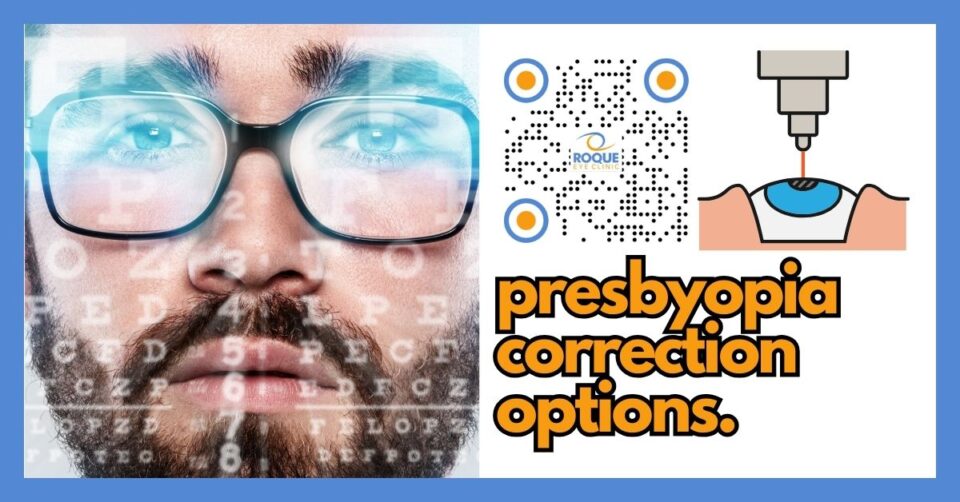
Presbyopia is not the same as hyperopia. Many patients in their 40s and 50s think their distance prescription is “coming back,” when the real issue is age-related near focusing loss. This matters because distance-only laser treatment will not stop the normal aging of the natural lens. Some patients may do better with monovision, blended vision strategies, or lens-based options, depending on their goals.
5. Anisometropia and binocular vision balance
When the two eyes have significantly different prescriptions, treatment planning becomes more nuanced. Large differences can affect comfort, depth perception, and the ability of the brain to blend images. In children, anisometropia can even lead to amblyopia if not detected early. In adults, it may affect adaptation when trying monovision or mixed correction strategies.
6. Ocular surface disease and dry eye
Dry eye can blur vision, create fluctuating measurements, and worsen postoperative discomfort if not treated before surgery. It can also make patients feel that vision is inconsistent even when the refractive result is technically good. Tear film quality, lid margin health, and meibomian gland function should be optimized before making permanent surgical decisions.
7. Corneal shape problems and ectasia risk
Not every astigmatism pattern is routine. Some patients have irregular corneas, keratoconus, forme fruste keratoconus, scars, or other structural concerns. These conditions are major special considerations because laser reshaping can be unsafe in eyes with biomechanical weakness. In such cases, delaying surgery, choosing another procedure, or treating the cornea first may be wiser.
8. Cataract or lens-based blur
When a patient over 45 or 50 reports changing vision, glare, halos, and difficulty with night driving, the natural lens must be evaluated carefully. Early cataract can mimic or worsen refractive complaints. If the lens is already becoming cloudy, lens-based surgery may provide a more durable solution than corneal laser treatment.
9. Occupation, hobbies, and environment
Lifestyle matters. Pilots, athletes, heavy digital-device users, night drivers, swimmers, and patients working in dusty or air-conditioned environments may have different comfort and visual priorities. A person who reads all day may value near vision differently from a patient whose priority is crisp distance vision for driving or sports.
10. Expectations and personality
Some patients want “less dependence on glasses.” Others expect “perfect vision at all distances in all lighting without compromise.” These are not the same expectation. One of the most important special considerations is whether the desired result is realistic for the actual eye being treated.
Diagnosis and tests that help clarify these considerations
A careful evaluation may include:
- Detailed refraction and vision testing
- Cycloplegic refraction when appropriate
- Corneal topography or tomography
- Pachymetry and structural safety assessment
- Tear film and ocular surface evaluation
- Pupil assessment
- Dilated retinal examination
- Lens assessment for early cataract
- Discussion of occupation, hobbies, and reading needs
These tests are not “extras.” They are often the difference between a rushed decision and a safe, individualized plan.
Treatment planning: matching the solution to the patient
Treatment can include glasses, contact lenses, ocular surface treatment, myopia control in selected younger patients, corneal cross-linking when ectasia risk is relevant, laser vision correction, phakic IOL surgery such as ICL, or lens replacement surgery. The right choice depends on the whole picture.
Real-world examples help:
- A 24-year-old with stable myopia and a healthy cornea may be a reasonable laser candidate after full screening.
- A 29-year-old with high myopia and a thin cornea may be better served by ICL rather than corneal laser treatment.
- A 47-year-old with hyperopia and presbyopia may need a discussion about near vision trade-offs, monovision, blended vision, or lens-based options.
- A 55-year-old with glare and changing refraction may actually need cataract-based planning rather than LASIK.
- A patient with dry eye and fluctuating measurements may need treatment first and surgery later, not surgery now.
Blurred vision is not always a simple refractive problem. Seek urgent eye evaluation if vision loss is sudden, painful, associated with redness, flashes, floaters, a curtain-like shadow, severe headache, nausea, or trauma.
Prevention and practical tips
- Get regular eye examinations instead of relying only on old spectacle prescriptions.
- Do not assume every vision change means you “just need stronger glasses.”
- Tell your ophthalmologist if your vision fluctuates through the day.
- Treat dry eye and lid disease before finalizing refractive surgery plans.
- Bring your work and lifestyle goals into the consultation.
- Ask whether your blur is coming from the cornea, the lens, the retina, or a combination.
- Understand that the safest procedure is the one that fits your eye, not the one most heavily advertised.
A refractive error is only the starting point. Age, dry eye, corneal shape, lens status, lifestyle, and expectations can completely change the best treatment plan. The safest next step is a full eye evaluation that identifies the real cause of blur before choosing glasses, contact lenses, laser surgery, ICL, or lens-based surgery.
FAQ
1. Can two people with the same eyeglass prescription need different treatments?
Yes. The prescription number is only one part of the story. Corneal health, dry eye, age, presbyopia, cataract, and lifestyle can all change the best treatment recommendation.
2. Why does my prescription keep changing even though I am already an adult?
Prescription changes can happen because of natural refractive shifts, dry eye, early cataract, blood sugar fluctuation, or other eye conditions. A full examination is important before considering surgery.
3. Is presbyopia the same as hyperopia?
No. Hyperopia is a refractive error related to how light focuses in the eye. Presbyopia is an age-related loss of near focusing ability caused by changes in the natural lens.
4. Why does dry eye matter if I am thinking about LASIK or SMILE?
Dry eye can make measurements less accurate and can worsen comfort and vision quality after surgery. Treating the ocular surface first often improves both safety and satisfaction.
5. Can early cataract be mistaken for a refractive problem?
Yes. Early cataract can cause blur, glare, halos, and frequent prescription changes. In some patients, lens-based surgery may make more sense than corneal refractive surgery.
6. What if my two eyes have very different prescriptions?
That condition is called anisometropia. It can affect comfort, binocular balance, and adaptation to treatment. It needs individualized planning, especially if surgery or monovision is being considered.
7. Does having myopia or astigmatism automatically make me a refractive surgery candidate?
No. You still need screening for corneal thickness, topography, ocular surface status, retinal health, and prescription stability. Eligibility depends on the whole eye, not just the refractive error.
8. What is the most important step before deciding on surgery?
The most important step is a complete refractive surgery evaluation with discussion of risks, benefits, alternatives, and realistic expectations based on your specific eye findings.
📚 References
- American Academy of Ophthalmology. Refractive Surgery Preferred Practice Pattern®. Updated 2024.
- American Academy of Ophthalmology. Refractive Errors Preferred Practice Pattern®. Updated 2025.
- National Eye Institute. Refractive Errors. Updated 2025.
- National Eye Institute. Presbyopia. Updated 2024.
- Nair S, et al. Refractive surgery and dry eye - An update. 2023.
- American Association for Pediatric Ophthalmology and Strabismus. Anisometropia. Updated 2025.
- EyeWiki. Preoperative Evaluation for LASIK Surgery. Updated 2023.
- Abing AA, et al. Surgical options and clinical outcomes for high myopia. Curr Opin Ophthalmol. 2024.
Dr. Manolette Roque | Dr. Barbara Roque
St. Luke's Medical Center Global City | Asian Hospital Medical Center
Philippines
Medical Review: Roque Advisory Council
Last Updated: March 2026
Medical Disclaimer: This article is intended for educational purposes only and does not replace professional medical consultation.
BOOK AN APPOINTMENT
It takes less than 5 minutes to complete your online booking. Alternatively, you may call our BGC Clinic, or our Alabang Clinic for assistance.