

Secondary Vision Correction After Refractive Surgery
🧠 Dr. Roque's Quick Answer
Secondary vision correction after refractive surgery means a second step used when vision is still not clear enough, changes over time, or new eye problems develop. Depending on the reason, the solution may be glasses, contact lenses, laser enhancement, lens-based surgery, or treatment of dry eye, cataract, or corneal surface problems. The safest choice depends on careful re-evaluation, not guesswork.
Many patients assume refractive surgery is a one-time event that permanently solves every vision problem forever. In reality, eyes continue to age. Healing responses vary. Small residual prescriptions can remain. Some patients later develop regression, dry eye, cataract, presbyopia, or visual quality complaints. When that happens, the next step is called secondary vision correction.
This does not always mean another surgery. Sometimes the best “secondary correction” is as simple as lubricating drops, updated glasses for a specific task, or contact lenses. In other cases, a second procedure may help. The key is to understand why vision is unsatisfactory before deciding how to improve it.
🧩 Focus: Secondary vision correction options after prior refractive surgery
👁 Goal: Explain why patients may need additional correction after refractive surgery and how surgeons decide among glasses, contact lenses, laser enhancement, and lens-based solutions
🛡 Evidence-Based: Preferred Practice Patterns • Standards of Care • Systematic Reviews • Meta-Analyses
ROQUE REFRACTIVE SURGERY Knowledge Hub
Start with the complete guide:
🔬 Secondary Vision Correction Anatomy Micro-Primer
- Cornea: The clear front window of the eye. LASIK, PRK, TransPRK, SMILE, and other corneal procedures reshape this tissue to reduce glasses dependence.
- Lens: The natural lens sits behind the iris. Even after earlier refractive surgery, this lens can later develop presbyopia or cataract, which may change the best correction plan.
- Tear film: The smooth tear layer over the eye is essential for sharp vision. Dry eye can mimic “failed surgery” even when the corneal treatment itself is structurally fine.
- Retina: The retina receives the focused image. A patient can have an excellent corneal result but still see poorly if retinal disease is present.
📘 Secondary Vision Correction Terminology Glossary
- Residual refractive error: A remaining glasses prescription after surgery.
- Regression: Partial return of nearsightedness, farsightedness, or astigmatism over time.
- Enhancement: An additional procedure done to improve vision after earlier refractive surgery.
- Irregular astigmatism: Distortion caused by an uneven optical surface, which can reduce sharpness and increase glare or ghosting.
- Presbyopia: Age-related difficulty focusing up close, usually becoming more noticeable in the 40s and beyond.
- Secondary correction: Any later measure used to improve vision after an earlier refractive procedure.
Quick Navigation
Related Reading
Dr. Roque's Key Learning Points
- Secondary vision correction after refractive surgery is not always another surgery.
- The first question is why vision is unsatisfactory: residual refractive error, regression, dry eye, cataract, irregularity, or another eye disease.
- Common options include glasses, contact lenses, laser enhancement, lens-based procedures, or treatment of the ocular surface.
- Retreatment should wait until the eye is stable and fully re-evaluated.
- The safest plan depends on corneal thickness, topography, prior procedure type, age, lens status, symptoms, and expectations.
What Secondary Vision Correction Means
Secondary vision correction after refractive surgery refers to any later strategy used to improve vision after a previous refractive procedure. That earlier procedure may have been LASIK, PRK, TransPRK, LASEK, Epi-LASIK, SMILE, ICL, or lens replacement surgery. The secondary correction may be simple and non-surgical, or it may involve an enhancement or another intervention.
Think of the first procedure as the main renovation and the second step as a later adjustment. Sometimes a room needs only better lighting. Sometimes it needs repainting. Sometimes a deeper structural change is needed. Eyes are similar. The right correction depends on what exactly changed and why.
💡 Dr. Roque's Analogy
If refractive surgery is like tuning a camera lens, secondary correction is what happens when the image later becomes slightly off because of healing, aging, or a new problem in the system. The solution is not always a second “laser tune-up.” Sometimes the issue is the lens, the surface, or the lighting—not the original setting.
Why Secondary Vision Correction May Be Needed
1) Residual refractive error
Some patients are left with a small remaining prescription after healing. This may be mild myopia, hyperopia, astigmatism, or a mix. Even a small residual error can matter if the patient expects crisp unaided vision for driving, computer use, or sports.
2) Regression over time
In some eyes, part of the refractive effect fades over time. This is called regression. It does not always mean something went wrong; it can reflect healing behavior, original prescription level, age, biomechanics, or ongoing changes in the eye.
3) Presbyopia or age-related lens change
A patient may have done well after earlier refractive surgery but later develop difficulty reading up close. That may be presbyopia, not a failure of the earlier treatment. Later on, cataract or dysfunctional lens change can also become the main cause of blur.
4) Dry eye or ocular surface disease
Fluctuating blur, ghosting, or discomfort can come from tear-film instability and ocular surface disease. Before planning another procedure, the ocular surface must be evaluated carefully because untreated dry eye can make both measurements and symptoms worse.
5) Irregular optics or corneal quality issues
Some eyes develop irregular astigmatism, epithelial remodeling, mild haze, decentered ablation effects, or other optical quality problems. These cases need more caution because the problem is not just “power” but also “shape.”
6) New unrelated eye disease
Blur after earlier refractive surgery can also come from retina problems, glaucoma, cataract, or other eye disease. In such cases, the correct next step is not a refractive enhancement but treatment of the underlying condition.
How the Eye Is Re-Evaluated Before Any Secondary Correction
A patient asking for “another procedure” should not be rushed back into surgery. The eye needs a fresh diagnostic work-up. This usually includes refraction, best-corrected vision, corneal thickness, topography or tomography, tear-film assessment, slit-lamp examination, pupil review, lens assessment, and retinal evaluation when needed.
The surgeon also needs to know exactly what was done before. Was it LASIK, PRK, SMILE, ICL, or lens replacement? Was there a flap? How much tissue was treated? Were there prior complications? Has the refraction stabilized? This history matters because the safest secondary option after LASIK is not always the safest option after SMILE or ICL.
Secondary Vision Correction Options
1) Glasses
Glasses remain a valid and often overlooked solution. A patient may only need them for night driving, prolonged computer use, or reading. Choosing glasses does not mean the earlier refractive surgery “failed.” It may simply be the safest way to fine-tune vision for a specific task.
2) Contact lenses
Soft contact lenses may help with small residual refractive errors. Rigid gas permeable or scleral lenses can also help selected patients with irregular corneas or visual distortion because they create a smoother optical surface over the eye.
3) Laser enhancement
A laser enhancement may be considered when the main problem is stable residual refractive error or regression and the cornea still has a safe profile for retreatment. Depending on the case, the secondary procedure may be surface ablation or a flap-related approach. The exact plan depends on the earlier surgery, corneal measurements, and surgeon judgment.
4) Lens-based surgery
If the patient is older, has presbyopia, or has developed cataract or dysfunctional lens change, a lens-based solution may make more sense than another corneal laser procedure. This could include cataract surgery, refractive lens exchange, or other lens strategies depending on the eye and the patient’s goals.
5) ICL-related secondary options
Patients who already have an ICL may need a different pathway, such as observation, glasses, contact lenses, laser fine-tuning in selected cases, or lens-based management if the natural lens later changes. The logic is case-specific and should not be generalized casually.
6) Ocular surface treatment before anything else
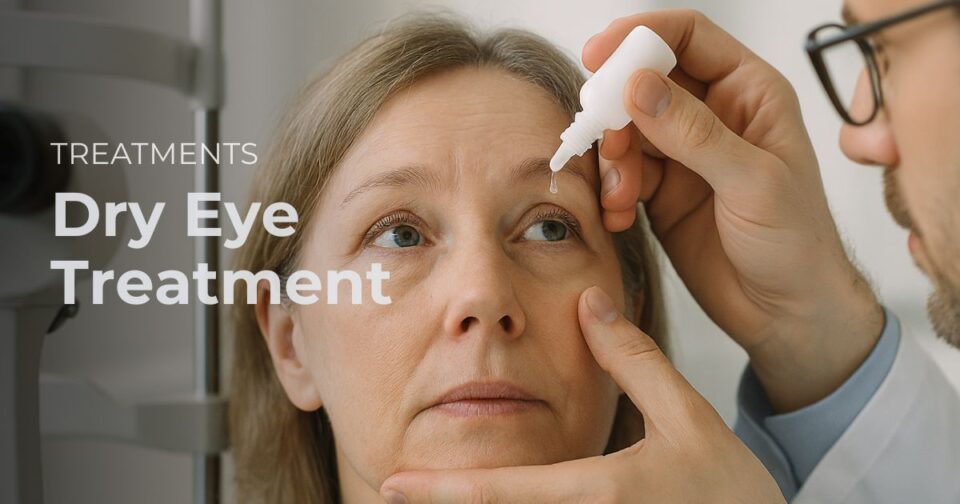
In some patients, the best secondary correction is not refractive surgery at all. It may be treatment of dryness, meibomian gland dysfunction, inflammation, blepharitis, or epithelial instability. Once the surface improves, vision often improves and measurements become more reliable.
When Laser Enhancement May Make Sense
Laser enhancement is often discussed when the main issue is a small stable residual refractive error and the corneal structure remains safe enough for another corneal treatment. The surgeon must assess tissue reserve, corneal shape, ocular surface health, and whether the patient’s symptoms truly match a refractive problem rather than an irregularity or dryness problem.
Enhancement is best thought of as a carefully selected option, not a routine “touch-up” that everyone can safely have. FDA device documents and professional guidance both reinforce that retreatment requires caution and case-by-case judgment.
When Another Corneal Procedure May Be a Bad Idea
- Unstable refraction or ongoing healing change
- Insufficient corneal tissue reserve
- Abnormal topography or ectasia risk
- Irregular astigmatism where the issue is not simple power
- Significant dry eye or ocular surface disease
- Cataract or lens dysfunction as the real cause of symptoms
- Unrealistic expectations or poor tolerance for trade-offs
🚨 Dr. Roque's Emergency Warning
Seek urgent ophthalmic care if vision suddenly drops, pain rapidly worsens, the eye becomes very red, new flashes or a curtain over vision appear, or you develop significant trauma after earlier refractive surgery. Do not assume every new symptom is just “regression.”
Why Not Every Patient Should Have Another Surgery
Patients understandably want crisp vision, but more surgery is not always better surgery. The safest answer may be a task-specific pair of glasses, a contact lens, cataract planning later on, or treatment of dry eye. A second or third procedure only helps when it targets the true cause of the visual problem without creating greater risk than benefit.
Sometimes the most responsible recommendation is to avoid more corneal surgery. That can feel disappointing, but it may protect the patient from worsening quality of vision, instability, or structural complications.
Timing and Expectations
Secondary correction should not be rushed. The eye should be stable enough for decision-making. If measurements are fluctuating, the surface is unhealthy, or the visual complaint is evolving, waiting may be wiser than intervening. Good surgeons usually prefer a stable, well-understood problem over a hurried fix.
Patients should also understand that the goal of secondary correction is not perfection in every lighting condition at every distance for every task. The realistic goal is better, safer, and more functional vision based on the anatomy and stage of life of the eye.
Risks and Cautions
- Another intervention can worsen dry eye or surface symptoms
- Corneal retreatment may not be safe in every previously treated eye
- Visual quality issues such as glare, halos, or reduced contrast may persist even if the power improves
- Retreatment can still leave residual refractive error
- Some eyes are better served by lens-based planning rather than repeated corneal modification
- If the real problem is retinal or optic nerve disease, refractive correction alone will not solve it
Questions Worth Asking Your Surgeon
- What exactly is causing my blur now: power, surface, lens, or retina?
- Is my problem stable enough to consider another procedure?
- Would you recommend glasses, contact lenses, laser enhancement, or lens surgery for my case?
- What are the risks of another corneal procedure in my specific eye?
- Could presbyopia or cataract be the real reason my vision changed?
- What improvement is realistic, and what symptoms may still remain?
Continue Reading
🏁 Dr. Roque's Take-Home Message
Secondary vision correction after refractive surgery is a broad concept, not just a “touch-up laser.” The right next step depends on why vision changed. Some patients need only lubrication, glasses, or contact lenses. Others may benefit from enhancement or lens-based surgery. The safest plan starts with a full re-evaluation and a realistic discussion of benefits, limits, and long-term eye health.
FAQ
1) Does needing secondary vision correction mean my first refractive surgery failed?
No. Vision can change later because of regression, aging, presbyopia, cataract, dry eye, or a small residual prescription. A later correction need does not automatically mean the original surgery was a failure.
2) Is secondary vision correction always another surgery?
No. It may be glasses, contact lenses, dry-eye treatment, or observation. Surgery is only one of several possible solutions.
3) Can I have another laser treatment after LASIK or PRK?
Sometimes, yes—but only after a careful re-evaluation confirms that the cornea, refraction, and overall eye health make retreatment safe and appropriate.
4) What if the real problem is presbyopia or cataract?
Then another corneal laser treatment may not be the best answer. Lens-based planning may be more logical if age-related lens change is the main cause of symptoms.
5) Why do surgeons treat dry eye before discussing enhancement?
Dry eye can blur vision, distort measurements, and make outcomes less predictable. Treating the surface first helps reveal the true refractive situation.
6) Can irregular astigmatism be fixed with a simple enhancement?
Not always. Irregular corneal optics are more complex than a simple leftover glasses number, so management may require specialty lenses, topography-guided planning in selected cases, or other individualized strategies.
📚 References
- American Academy of Ophthalmology. Refractive Surgery Preferred Practice Pattern®. Updated 2024.
- U.S. Food and Drug Administration. Summary of Safety and Effectiveness Data for LASIK platforms, including potential adverse effects and secondary surgical intervention language.
- American Academy of Ophthalmology. PRK for the Correction of Refractive Errors after LASIK and Other Current Insight resources on retreatment.
- Management reviews on residual refractive error after LASIK and PRK in peer-reviewed ophthalmology literature.
- Professional guidance on evaluation of residual refractive error, irregular astigmatism, ocular surface disease, and lens status before enhancement planning.
🤝 Roque Eye Clinic Patient Education Series
Dr. Manolette Roque | Dr. Barbara Roque
St. Luke's Medical Center Global City | Asian Hospital Medical Center
Philippines
Medical Review: Roque Advisory Council
Last Updated: March 2026
Medical Disclaimer
This article is intended for educational purposes only and does not replace professional medical consultation.