


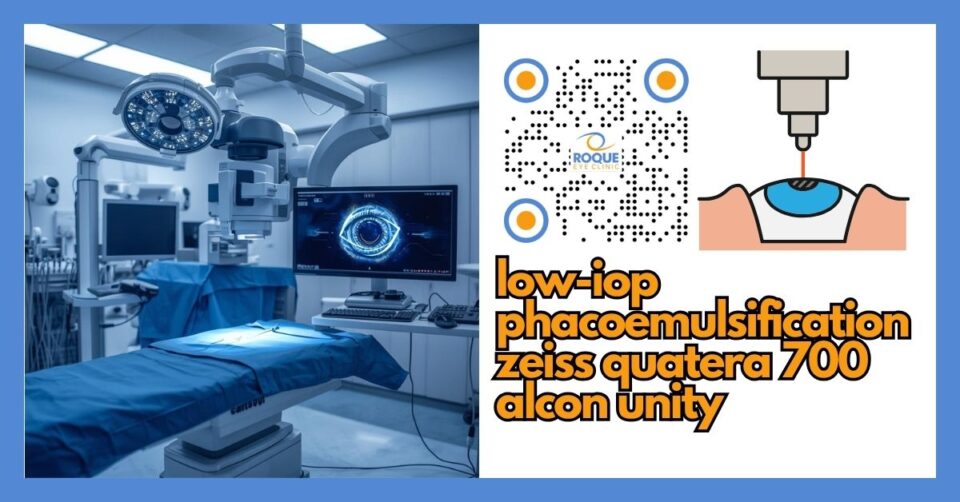
Low-IOP Phacoemulsification Systems (Zeiss QUATERA and Alcon UNITY)
🧠 Quick Answer
Low-IOP phacoemulsification systems are cataract surgery platforms designed to help surgeons maintain a more stable anterior chamber and more controlled fluidics during surgery. Systems such as the Zeiss QUATERA 700 and Alcon UNITY CS/VCS aim to improve chamber stability, efficiency, and surgical control, but the best choice still depends on the surgeon, the eye, and the overall treatment plan.
Modern cataract surgery is no longer only about removing a cloudy lens. It is also about how smoothly the fluidics system behaves during surgery, how stable the front chamber stays, how energy is delivered, and how consistently the machine responds when dense lens material is being removed. That is why many cataract surgeons pay close attention to the phacoemulsification platform they use.
In recent years, newer machines have been promoted around concepts such as chamber stability, surge control, more physiologic pressure, workflow integration, and smarter ultrasound delivery. Two systems often discussed in this space are the Zeiss QUATERA 700 and the Alcon UNITY cataract platform.
🧩 Focus: Low-IOP phacoemulsification systems and modern cataract fluidics technology
👁 Goal: Help patients understand what Zeiss QUATERA and Alcon UNITY are, why fluidics matter, and how these systems may affect cataract surgery planning
🛡 Evidence-Based: Preferred Practice Patterns • Standards of Care • Systematic Reviews • Meta-Analyses • Official device information • FDA clearance summaries
REFRACTIVE SURGERY Knowledge Hub
Start with the complete guide:
🔬 Low-IOP Phacoemulsification Systems Anatomy Micro-Primer
- Anterior chamber: The fluid-filled space at the front of the eye between the cornea and the iris. During cataract surgery, surgeons want this chamber to remain stable.
- Cornea: The clear front window of the eye. Cataract surgery is done through tiny corneal incisions, so fluidics and incision leakage can influence chamber behavior.
- Lens capsule: The thin natural bag that holds the cataract. Surgeons usually remove the cloudy lens while preserving the capsule for the new intraocular lens.
- Posterior capsule: The delicate back portion of the lens capsule. Chamber instability, surge, or sudden shallowing can increase stress on this structure.
📘 Low-IOP Phacoemulsification Systems Terminology Glossary
- Phacoemulsification: A cataract surgery method that uses ultrasound energy to break up and remove the cloudy lens.
- IOP: Intraocular pressure, or the pressure inside the eye.
- Fluidics: The system that controls irrigation, aspiration, pressure, and flow during surgery.
- Surge: A sudden drop in fluid or chamber stability that can happen when occlusion breaks during phacoemulsification.
- Anterior vitrectomy: Removal of vitreous from the front part of the eye if needed during anterior segment surgery.
- Workflow integration: Digital and hardware features that help the surgeon and operating room team work more efficiently together.
Quick Navigation
Related Reading
Key Learning Points
- “Low-IOP phacoemulsification” generally refers to machines and settings designed to support more stable, controlled cataract surgery fluidics.
- For patients, the main practical goal is a stable surgical environment, not just a newer machine name.
- Zeiss QUATERA 700 emphasizes its QUATTRO Pump, workflow integration, and Power on Demand ultrasound features.
- Alcon UNITY CS/VCS is marketed around newer platform design, efficiency, and advanced phaco technology, with FDA clearance in the United States.
- A great outcome still depends on surgeon judgment, patient selection, ocular anatomy, lens density, and postoperative care—not on the machine alone.
What “Low-IOP Phacoemulsification” Means
The term low-IOP phacoemulsification is often used to describe cataract surgery systems or settings designed to operate with more controlled intraocular pressure and greater chamber stability during surgery. In practical terms, this means the surgeon wants the eye to feel less “pressurized” and less prone to sudden instability while the cataract is being broken up and removed.
This matters because cataract surgery happens in a very small space. If the anterior chamber becomes unstable, tissues may move in ways that increase surgical difficulty. Modern phaco platforms therefore focus heavily on how they manage inflow, aspiration, occlusion, surge, and ultrasound delivery.
💡 Analogy
Think of cataract surgery like working inside a small water-filled tent. The surgeon wants the tent to stay well-shaped while removing material from inside. A good phaco machine helps keep that tiny surgical space steady instead of letting it suddenly collapse or overfill.
Why Fluidics Matter in Cataract Surgery
Patients often focus on the lens implant, laser assistance, or premium add-ons. Those matter, but the fluidics platform matters too. During phacoemulsification, the machine is constantly balancing irrigation flowing into the eye and aspiration pulling fluid and lens material out. That balance influences chamber depth, tissue movement, and how calmly the case progresses.
A well-controlled system can help the surgeon work in a more predictable environment. In dense cataracts, weak zonules, shallow chambers, small pupils, pseudoexfoliation, or premium lens cases where precision matters, surgeons often value systems that maintain better chamber behavior and controlled energy delivery.
Why Patients May Hear About These Systems
- They may be mentioned during refractive cataract surgery counseling.
- They may be part of a clinic’s explanation of its surgical technology.
- Patients researching premium cataract surgery may compare platforms online.
- Some patients assume a newer machine always means a better result, which is not always true.
Zeiss QUATERA 700
The Zeiss QUATERA 700 is an FDA-cleared phacoemulsification platform intended for cataract removal and anterior segment vitrectomy. ZEISS markets the system around three major themes: its QUATTRO Pump, a digitally integrated surgical workflow, and Power on Demand ultrasound management.
ZEISS states that the QUATTRO Pump is designed to minimize surge and support chamber stability. The company also highlights leakage compensation, shared surgical viewing in the operating room, and digital access to relevant patient data through its broader cataract workflow ecosystem. Its Power on Demand feature is marketed as an ultrasound technology that activates only when needed, particularly upon occlusion.
For patients, the main takeaway is not that the machine is “magic,” but that it is designed to help the surgeon maintain a more controlled surgical environment. Stability and efficiency can be especially meaningful when the cataract is dense, the eye is crowded, or the surgeon is trying to minimize unnecessary stress on intraocular structures.
What patients may appreciate about QUATERA
- Focus on chamber stability and surge control
- Integrated operating room workflow features
- Automated ultrasound concepts intended to reduce unnecessary energy delivery
- Use in anterior segment surgery, including cataract removal and anterior vitrectomy when needed
Alcon UNITY CS and UNITY VCS
The Alcon UNITY platform includes two related systems: the UNITY CS for anterior segment cataract surgery and the UNITY VCS, which combines vitreoretinal and cataract functions. The FDA-cleared indications state that UNITY CS is intended for anterior segment ophthalmic surgery, including phacoemulsification and cataract removal, while UNITY VCS also covers posterior segment vitreoretinal use when paired with compatible components.
Alcon announced U.S. FDA 510(k) clearance for UNITY VCS and UNITY CS in June 2024 and described the platform as part of its next-generation surgical portfolio. Alcon’s official materials emphasize workflow efficiencies compared with earlier systems, while later company materials also highlight UNITY 4D phaco technology and more physiologic IOP during cataract surgery.
For patients, the UNITY message is similar in spirit to other advanced phaco systems: a newer platform designed to improve control, efficiency, and surgical flow. It is important, however, to separate marketing language from guaranteed patient outcomes. A more advanced platform may help the surgeon, but it does not replace surgical planning, capsule management, corneal health, proper IOL choice, or surgeon experience.
What patients may appreciate about UNITY
- Modern platform architecture for cataract surgery
- FDA-cleared UNITY CS and VCS systems
- Integration of cataract and, in the VCS version, vitreoretinal capabilities
- Company emphasis on workflow efficiency and controlled phaco performance
How Patients Should Think About Comparisons
Patients often want a simple answer like, “Which machine is better?” In reality, that question is too narrow. The better question is: Which system does your surgeon use well, in which type of eye, for which type of cataract, and within what surgical plan?
A machine may offer excellent fluidics, but if the patient has advanced ocular surface disease, a small pupil, pseudoexfoliation, weak zonules, corneal guttata, or retinal comorbidity, the final result still depends on much more than the machine. Likewise, a surgeon who knows one platform deeply may perform beautifully with it even if another system has impressive new marketing language.
Questions Patients Can Ask Their Surgeon
- Why do you use this cataract surgery system for my case?
- Does my eye anatomy make chamber stability especially important?
- Is my cataract dense, soft, or complicated in a way that changes your machine settings or strategy?
- Does this platform help with premium lens surgery or difficult eyes?
- What matters more in my case: the machine, the lens implant, or the overall surgical plan?
Limits of Machine-Based Marketing
It is reasonable for patients to value advanced technology. But it is not wise to assume that one machine alone determines success. Cataract surgery outcomes are influenced by many factors:
- accuracy of measurements and calculations
- corneal health and ocular surface optimization
- lens density and surgical complexity
- capsular support and zonular strength
- surgeon experience and judgment
- IOL selection and centration
- retinal and optic nerve health
- postoperative healing and follow-up care
So while advanced phaco systems may support safer, calmer, or more efficient surgery, they should be viewed as important tools, not as independent guarantees of perfect vision.
🚨 Emergency Warning
If you have severe eye pain, sudden marked vision loss, increasing redness, flashing lights, many new floaters, nausea with eye pain, or a dramatic decline in vision after cataract surgery, seek urgent ophthalmic review. These symptoms matter far more than which machine was used.
Who May Especially Benefit From a Stable Phaco Environment
Although the surgeon decides the platform and settings, patients may especially benefit from excellent chamber control in cases involving dense cataracts, borderline corneal endothelium, shallow chambers, premium intraocular lenses, pseudoexfoliation, small pupils, or any situation in which stable surgical behavior is especially valuable. The purpose is to make the procedure more controlled, not to advertise a machine for its own sake.
The Real Patient Takeaway
If your surgeon mentions QUATERA or UNITY, the message you should hear is this: your team is thinking carefully about surgical control and fluidics. That is a good thing. Still, the bigger issue is whether the surgeon has chosen the right operation, the right lens, and the right perioperative plan for your eye.
Continue Reading
🏁 Take-Home Message
Zeiss QUATERA and Alcon UNITY represent modern cataract surgery platforms designed to support more stable, controlled phacoemulsification. That can be helpful, especially in demanding cases. But the most important factor is still the overall quality of your cataract surgery plan: proper evaluation, the right procedure, the right lens choice, and an experienced surgeon using technology wisely.
FAQ
1) What is a low-IOP phacoemulsification system?
It generally refers to a cataract surgery platform designed to help maintain more controlled intraocular pressure and chamber stability during surgery.
2) Is Zeiss QUATERA used for cataract surgery?
Yes. QUATERA 700 is an FDA-cleared system intended for cataract removal and anterior segment vitrectomy when used with compatible components.
3) What is the difference between Alcon UNITY CS and UNITY VCS?
UNITY CS is the cataract-focused anterior segment system, while UNITY VCS combines cataract and vitreoretinal capabilities when used with compatible devices and accessories.
4) Does a newer phaco machine guarantee better vision?
No. It may support the surgeon with better control or efficiency, but final vision still depends on the eye, the cataract, the lens implant, ocular health, and surgical judgment.
5) Why do surgeons care about chamber stability?
A stable anterior chamber can make cataract surgery calmer and more predictable, which may help reduce stress on delicate intraocular structures.
6) Should patients choose a clinic based only on the phaco machine?
No. Technology matters, but it should be considered together with surgeon experience, diagnostics, IOL planning, safety systems, and postoperative care.
📚 References
- ZEISS. ZEISS QUATERA 700. Official product information.
- U.S. Food and Drug Administration. 510(k) Summary K230858: QUATERA 700.
- Alcon. UNITY® VCS and UNITY® CS official product and media information.
- U.S. Food and Drug Administration. 510(k) Summary K233876: UNITY VCS and UNITY CS.
- Ganesh S, Brar S, Sriganesh S, Bhavsar H. Comparative Clinical Study of Surgical Performance of Quatera 700 versus Centurion and Signature Pro Phacoemulsification Systems. Clin Ophthalmol. 2024;18:2685-2695.
🤝 Roque Eye Clinic Patient Education Series
Dr. Manolette Roque | Dr. Barbara Roque
St. Luke's Medical Center Global City | Asian Hospital Medical Center
Philippines
Medical Review: Roque Advisory Council
Last Updated: March 2026
Medical Disclaimer
This article is intended for educational purposes only and does not replace professional medical consultation.