



YAG Capsulotomy
If your vision became cloudy again after cataract surgery, a YAG capsulotomy may help. This quick laser treatment opens the cloudy membrane behind your lens implant so light can pass through clearly again.
🧠 Dr. Roque’s Quick Answer
A YAG capsulotomy is a laser procedure done after cataract surgery when the thin capsule holding your lens implant turns cloudy. Patients often describe it as feeling like the cataract came back, but the lens implant itself is usually still clear. The laser creates an opening in that cloudy membrane, which often restores sharper vision and reduces glare. It is usually quick, done in the clinic, and does not involve reopening the eye.
🎯 Focus
Explain what YAG capsulotomy is, when it is needed, what it feels like, and what recovery and risks patients should realistically expect.
🧭 Goal
Help patients decide whether cloudy vision after cataract surgery sounds like posterior capsule opacification and whether laser treatment is the logical next step.
🛡️ Evidence-Based
YAG capsulotomy is the standard laser treatment for posterior capsule opacification and is commonly performed as an outpatient procedure to improve vision when the capsule becomes cloudy.
Quick Navigation
ROQUE Eye Clinic Lens and Cataract Knowledge Hub
YAG capsulotomy usually belongs to the post-cataract treatment pathway. These pages help patients understand the bigger picture:
👁️ Anatomy Micro-Primer
During cataract surgery, the cloudy natural lens is removed, but the thin capsule that used to hold that lens is usually left behind. That capsule acts like a clear bag that supports the artificial lens implant.
Months or years later, that capsule can become cloudy. When this happens, light no longer passes through cleanly. A YAG capsulotomy uses laser energy to create a clear opening in the central part of that capsule so vision can become clearer again.
🧩 Terminology Glossary
- Posterior capsule opacification (PCO): Clouding of the thin membrane behind the lens implant after cataract surgery.
- YAG laser: A specific type of laser used to create an opening in the cloudy capsule.
- Capsulotomy: Making an opening in the capsule.
- Glare: Trouble seeing because light scatters, especially from headlights or bright sunlight.
- Floaters: Small moving spots, threads, or cobweb-like shadows in your vision.
Why can vision get cloudy again after cataract surgery?
Many patients worry that their cataract has grown back. In most cases, that is not what happened. A true cataract cannot grow back once the natural lens has been removed. What usually happens is that the thin capsule behind the implant becomes cloudy. This is called posterior capsule opacification, or PCO.
Think of it like this: after cataract surgery, your new lens implant sits in a clear plastic wrap-like support bag. If that bag becomes hazy, your vision can become blurred again even if the implant itself is perfectly fine.
Patients commonly notice:
- blurred or hazy vision
- increased glare, especially at night
- reduced contrast or washed-out vision
- difficulty reading fine print
- the feeling that cataract surgery helped at first, then vision slipped again later
Who may need YAG capsulotomy?
Not every patient with mild capsule clouding needs immediate laser treatment. I usually think about YAG capsulotomy when the clouding is actually affecting real-life function, not just when it looks visible on examination.
A patient may be a good candidate if:
- vision has become cloudy after previously successful cataract surgery
- glare is interfering with driving, reading, or computer use
- the degree of posterior capsule opacification matches the symptoms
- there is no better explanation for the reduced vision
That last point matters. YAG capsulotomy is not the right answer for every blurry eye after cataract surgery. If the real problem is dry eye, macular disease, glaucoma, corneal irregularity, refractive error, cystoid macular edema, or retinal disease, laser treatment alone will not fix that.
🚨 Dr. Roque’s Emergency Warning
YAG capsulotomy is not an emergency treatment for sudden severe vision loss, severe eye pain, new flashes, a shower of floaters, a curtain over the vision, or marked redness with light sensitivity.
Those symptoms can point to a retinal tear, retinal detachment, acute pressure rise, inflammation, infection, or other urgent eye problems. If those happen, you need an urgent eye examination rather than waiting for a routine laser schedule.
What happens before and during the procedure?
YAG capsulotomy is usually done in the clinic, not in the operating room. In many cases, the visit is straightforward, but it still deserves proper evaluation.
Before the laser
- Your vision is checked.
- Your pupil is often dilated.
- Your eye pressure may be measured.
- The back of the eye should be examined to look for other causes of blurred vision and to assess retinal risk.
- The doctor confirms that the capsule clouding is significant enough to justify treatment.
During the laser
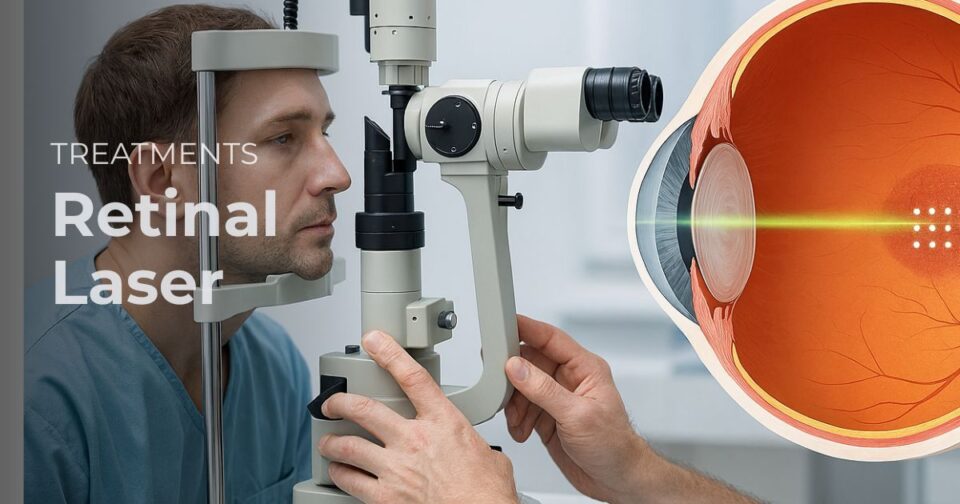
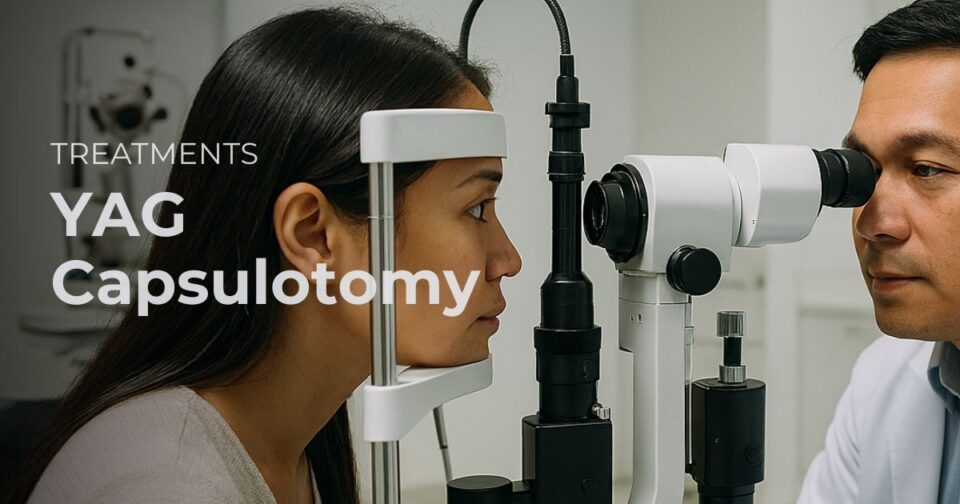
- You sit at a machine similar to the one used for a slit-lamp eye exam.
- Numbing drops are placed in the eye.
- A special contact lens may or may not be used.
- The laser makes a central opening in the cloudy capsule behind the lens implant.
- You may hear clicking sounds and see flashes of light.
Most patients tolerate the procedure well. It is usually quick. The laser itself lasts only a short time, although the whole visit can take longer because of preparation, dilation, and pressure checks.
What are the benefits of YAG capsulotomy?
The main benefit is better visual clarity when posterior capsule opacification is truly the cause of the problem.
- clearer vision
- less glare and less haze
- improved reading, screen use, and daily function
- no surgical incision in the usual sense
- fast treatment in an outpatient setting
In the right patient, the improvement can feel dramatic. In the wrong patient, the result can disappoint because the clouded capsule was only part of the story. That is why correct diagnosis matters more than speed.
💡 Dr. Roque’s Analogy
Imagine cataract surgery replaced a dirty camera lens, but the clear plastic cover behind it later became foggy. YAG capsulotomy does not replace the camera again. It clears a clean viewing window through that foggy cover so the image becomes sharp again.
What are the risks and possible complications?
YAG capsulotomy is usually safe, but safe does not mean risk-free. Patients deserve the real answer, not the sales version.
Possible risks can include:
- temporary floaters after the laser
- temporary rise in eye pressure
- inflammation
- damage or pitting of the lens implant
- cystoid macular edema
- retinal tear or retinal detachment in susceptible eyes
- incomplete symptom improvement if another eye problem is also present
Risk is not the same for every eye. A patient with high myopia, retinal pathology, prior vitreoretinal disease, inflammation, or complicated cataract surgery may need more careful judgment before and after treatment.
When should a doctor delay or avoid YAG capsulotomy?
I would be cautious if the cause of vision loss is still uncertain, if the capsule clouding is mild and not functionally significant, or if the retina has not been properly assessed in a high-risk eye. I would also think carefully before proceeding when active inflammation, uncontrolled eye pressure, or other more important causes of blur remain untreated.
The failure mode here is simple: doing the right procedure for the wrong diagnosis.
What should patients expect after the procedure?
Some patients notice clearer vision quickly. Others need a little more time, especially if the pupil is still dilated or if there are temporary floaters. Your doctor may prescribe drops depending on the eye and the treatment pattern.
Common short-term expectations:
- mild blur for a few hours
- temporary floaters
- light sensitivity from the dilation drops
- a brief post-laser pressure check in some cases
Call your eye doctor promptly if you develop:
- worsening pain
- marked redness
- rapidly worsening vision
- new flashing lights
- a sudden shower of floaters
- a dark curtain or shadow in the vision
Does YAG capsulotomy fix every case of blurred vision after cataract surgery?
No. That assumption gets patients into trouble. YAG capsulotomy works well when posterior capsule opacification is the real cause of the symptoms. It does not fix every blurry eye after cataract surgery.
Other causes can include:
- dry eye disease
- uncorrected refractive error or astigmatism
- posterior segment disease such as macular degeneration or diabetic macular edema
- glaucoma-related visual loss
- corneal problems
- lens implant decentration or other optical issues
🧠 Dr. Roque’s Key Learning Points
- YAG capsulotomy treats clouding of the capsule behind a cataract lens implant, not a new cataract.
- It is usually a quick outpatient laser procedure.
- Patients often seek it because of blurred vision, glare, or a “film” over the vision after cataract surgery.
- Careful examination matters because not every blurry eye after cataract surgery is caused by PCO.
- The procedure is commonly effective, but complications can still occur.
- New flashes, many floaters, a curtain in the vision, severe pain, or marked redness need urgent evaluation.
Related Reading
Frequently Asked Questions
1. Is YAG capsulotomy painful?
No, most patients do not describe it as painful. You may feel bright light, mild pressure, or brief surprise from the clicking sounds, but numbing drops are typically used.
2. Did my cataract grow back?
Usually no. What commonly happens is clouding of the capsule behind the lens implant, not regrowth of the original cataract.
3. How long does the procedure take?
The laser part is usually short, but the full visit may take longer because of examination, drops, and pressure checks.
4. Will my vision improve immediately?
Some patients notice improvement quickly. Others improve more gradually over hours to days, especially if they still have dilation blur or temporary floaters.
5. Can I drive right after YAG capsulotomy?
That depends on your vision after the procedure and whether your eye was dilated. Many patients should arrange for someone else to drive them home.
6. Can the capsule become cloudy again after YAG?
The central opening usually stays open. Most patients do not need the same treatment repeated, although special situations can vary.
7. Is there an age limit for this procedure?
No fixed age limit exists. What matters more is whether the capsule clouding is causing meaningful symptoms and whether the eye is otherwise suitable.
8. What if my vision stays blurry after the laser?
That means another factor may also be affecting the eye. Dry eye, retinal disease, glaucoma, corneal problems, or refractive error still need to be considered.
9. Is YAG capsulotomy safer than another surgery?
It is generally much less invasive than intraocular surgery because it is usually done in the clinic without reopening the eye, but it still has real risks and should not be treated casually.
10. When should I seek urgent care after YAG?
Seek urgent assessment if you develop severe pain, marked redness, rapidly worsening vision, flashes, many new floaters, or a curtain-like shadow in the vision.
✅ Dr. Roque’s Take-Home Message
YAG capsulotomy is often an effective way to clear vision when the capsule behind a cataract lens implant becomes cloudy. The procedure is usually quick and commonly works well, but the key is proper diagnosis first. If your vision became hazy again after cataract surgery, do not assume, do not guess, and do not let anyone oversimplify it. Make sure the cloudy capsule is truly the problem and that the rest of the eye has been checked carefully.
References
- American Academy of Ophthalmology. What Is a Posterior Capsulotomy? Updated 2026.
- American Academy of Ophthalmology. Nd:YAG Laser Posterior Capsulotomy. Clinical education resource.
- Moorfields Eye Hospital NHS Foundation Trust. YAG laser treatment for posterior capsule opacification (PCO). Patient information leaflet.
- WWL NHS Foundation Trust. Undergoing YAG Laser Capsulotomy. Patient information leaflet.
- Kwon YR, et al. Posterior Capsule Opacification after Cataract Surgery: systematic review and meta-analysis. 2022.
ROQUE Eye Clinic Patient Education Series
Reviewed by the Roque Advisory Council
Dr. Manolette Roque | Dr. Barbara Roque
St. Luke’s Medical Center Global City | Asian Hospital Medical Center
Philippines
Medical Disclaimer: This page is for patient education only. It does not replace an in-person eye examination, diagnosis, or treatment plan. If you have sudden vision loss, severe eye pain, flashes, a curtain over the vision, or a rapid shower of floaters, seek urgent eye care.