

Anti-VEGF for Diabetic Macular Edema
🤖 Quick Answer: Anti-VEGF treatment for diabetic macular edema uses medicines injected into the eye to reduce retinal leakage and swelling. These injections often help stabilize or improve vision, especially when the center of the macula is involved. Most patients need repeated treatment and regular OCT monitoring, not just one injection, to achieve the best long-term results.
When diabetes causes fluid to collect in the center of the retina, vision can become blurry, distorted, or less sharp for reading and driving. This condition is called diabetic macular edema (DME). Today, one of the most important treatments for DME is anti-VEGF therapy.
This guide explains what anti-VEGF means, how the injections work, who may benefit, what happens during treatment, what risks to know, and why repeated follow-up matters. The goal is simple: help patients understand the treatment clearly and make informed decisions without fear.
🧩 Focus: Anti-VEGF therapy for diabetic macular edema
👁 Goal: Explain how intravitreal injections reduce macular swelling and protect vision
🛡 Evidence-Based: Preferred Practice Patterns • Standards of Care • Systematic Reviews • Meta-Analyses
🧠 Diabetic Eye Disease Knowledge Hub
Start with the complete guide:
Diabetic Eye Disease: The Complete Patient Guide
🔎 Quick Navigation
- What Is Anti-VEGF?
- Why Anti-VEGF Helps in DME
- Who May Need This Treatment?
- What Happens During the Injection Visit?
- How Many Injections Are Usually Needed?
- Benefits and Limits
- Risks and Side Effects
- How to Improve Treatment Results
Related Reading
- Diabetic Macular Edema Explained
- Center-Involving Diabetic Macular Edema
- Anti-VEGF Injection Procedure
- Anti-VEGF Treatment Schedule
- Diabetic Eye Treatment in the Philippines
📌 Key Learning Points
- Anti-VEGF injections are a main treatment for diabetic macular edema, especially when the center of vision is affected.
- The medicine is injected inside the eye under sterile conditions after numbing drops are used.
- Most patients need more than one injection because DME is a chronic disease, not a one-time problem.
- OCT scans help your doctor measure retinal swelling and decide whether treatment should continue, pause, or change.
- Good blood sugar, blood pressure, and kidney control can improve the odds of better visual outcomes.
👁 What Is Anti-VEGF?
VEGF stands for vascular endothelial growth factor. This is a protein that can increase leakage from retinal blood vessels and promote abnormal vessel growth. In diabetic macular edema, too much VEGF can worsen retinal swelling.
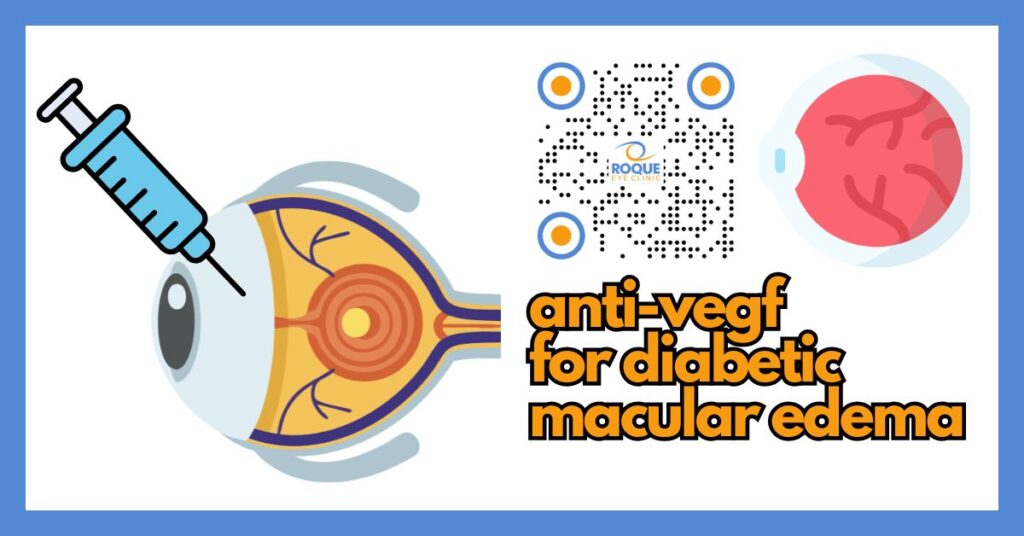
Anti-VEGF medicines are designed to block this leakage signal. They are given by intravitreal injection, which means the medicine is placed directly inside the eye so it can reach the retina effectively.
Common anti-VEGF medicines used in retinal practice include:
- Vabysmo (faricimab)
- Eylea (aflibercept)
- Lucentis (ranibizumab)
- Avastin (bevacizumab) in settings where it is used off-label in retina practice
👀 Why Anti-VEGF Helps in DME
DME happens when damaged diabetic retinal blood vessels leak fluid into the macula. If the center of the macula becomes swollen, patients may notice blurred reading vision, distorted letters, poor face recognition, or difficulty driving.
Anti-VEGF injections help by:
- reducing vessel leakage
- reducing retinal swelling
- stabilizing the blood-retina barrier
- sometimes improving vision when treatment begins early enough
However, anti-VEGF is not a “magic reset button.” Some patients improve quickly, some improve slowly, and some mainly achieve stabilization rather than dramatic vision gain. The starting vision, OCT findings, duration of swelling, and overall diabetic control all matter.
For a broader explanation of swelling in the macula, read Diabetic Macular Edema Explained and OCT for Diabetic Macular Edema.
Who May Need This Treatment?
Anti-VEGF is commonly considered when diabetic macular edema affects vision or when OCT shows swelling involving the center of the macula. Doctors often pay special attention to center-involving DME, because this area controls detailed vision.
You may be a candidate for anti-VEGF treatment if:
- your OCT shows macular swelling from diabetes
- your central vision is reduced or threatened
- your retina specialist believes injection therapy offers the best first-line option
- laser alone is unlikely to control the swelling adequately
Anti-VEGF may still help even if your vision is not yet severely blurred, especially when the doctor is trying to protect central vision early. That said, treatment decisions should always be individualized.
In some situations, your doctor may instead recommend or combine treatment with:
- focal laser for DME
- intravitreal steroid therapy
- observation with close follow-up if swelling is mild and vision is still excellent
🧪 What Happens During the Injection Visit?
Many patients feel anxious the first time they hear “injection inside the eye.” In reality, the visit is usually brief and highly standardized.
Typical steps during the visit
- Your vision and eye pressure may be checked.
- The eye is cleaned carefully using antiseptic measures.
- Numbing drops are applied so the injection is more comfortable.
- An eyelid holder may be used to keep the eye open.
- The medication is injected through the white part of the eye.
- The eye is rechecked, and you are given instructions for warning symptoms afterward.
Most patients describe the treatment as strange or uncomfortable rather than severely painful. The actual injection usually takes only a few seconds.
For a full visit-by-visit explanation, see Anti-VEGF Injection Procedure.
How Many Injections Are Usually Needed?
This is one of the most important questions patients ask. The honest answer is: it depends. DME is often a chronic disease. Because of that, treatment usually involves an initial series followed by ongoing monitoring and repeat injections as needed.
In practical terms, many patients begin with a loading phase or close interval treatment, then move into a maintenance phase based on OCT and vision results. Some need frequent injections for a long time. Others can stretch intervals once swelling is controlled.
Your doctor may use one of several strategies:
- fixed interval treatment
- treat-and-extend style interval adjustments
- as-needed retreatment based on OCT or vision findings
Learn more in Anti-VEGF Treatment Schedule.
Why repeat treatment matters: One injection may reduce swelling, but it does not “cure” diabetes in the retina. If follow-up stops too early, fluid may return and vision may worsen again.
💊 Benefits and Limits of Anti-VEGF Treatment
Main benefits
- can reduce retinal thickening on OCT
- can stabilize vision
- can improve vision in many patients, especially when treatment begins before permanent damage develops
- can sometimes reduce the severity of diabetic retinopathy along with treating edema
Important limits
- treatment often requires repeated visits
- not every patient gains many lines of vision
- if the retina has longstanding structural damage, recovery may be limited
- systemic diabetic control still matters; injections alone are not enough
Some patients respond better to one anti-VEGF medicine than another. Others may eventually need the treatment plan changed to a steroid or laser-based strategy if the response is incomplete.
Drug-specific guides: Vabysmo • Eylea • Lucentis • Avastin
Risks and Side Effects
Anti-VEGF injections are widely used in retina practice, but no invasive treatment is risk-free. Most visits are uneventful, yet patients should understand the difference between common short-term irritation and true warning signs.
Common temporary effects
- mild scratchy sensation
- small red spot on the white of the eye
- temporary blur right after the visit
- awareness of new bubbles or specks for a short time
Serious but less common risks
- infection inside the eye
- significant inflammation
- retinal tear or detachment
- traumatic lens injury in rare situations
- pressure spike inside the eye
Seek urgent ophthalmic evaluation after an injection if you develop severe eye pain, worsening redness, rapidly worsening vision, marked light sensitivity, or a sudden curtain/shadow in vision. These symptoms should not be ignored.
If you also have a history of glaucoma or high eye pressure, discuss that with your doctor before treatment. Related reading: Diabetes and Glaucoma • Neovascular Glaucoma in Diabetes
How to Improve Treatment Results
The injection treats the eye directly, but the body still matters. Patients often do best when retina treatment is combined with stronger diabetes control and better systemic care.
- keep blood sugar as stable as possible
- control blood pressure and cholesterol
- follow the OCT and injection schedule closely
- do not stop follow-up just because vision feels “better”
- coordinate with your internist or endocrinologist
Helpful related guides: Diabetes Control and Eye Health • Diabetes Targets and Eye Health • Endocrinologist and Diabetic Eye Disease
Continue Reading
- Anti-VEGF Injection Procedure
- Anti-VEGF Treatment Schedule
- Vabysmo for Diabetic Macular Edema
- Eylea for Diabetic Macular Edema
- Ozurdex for Diabetic Macular Edema
🏁 Take-Home Message
Anti-VEGF treatment is one of the most important ways to manage diabetic macular edema and protect central vision. It works best when patients start early, return consistently for OCT-guided follow-up, and understand that DME usually needs ongoing management rather than a one-time injection.
If your doctor recommends anti-VEGF, think of it as part of a long-term retina care plan—together with better diabetes control, regular monitoring, and prompt reporting of warning symptoms.
❓ Frequently Asked Questions
Is anti-VEGF the same as laser treatment?
No. Anti-VEGF is medicine injected into the eye, while laser uses light energy to treat selected retinal problems. Some patients need one treatment, and others need both.
Will one injection cure diabetic macular edema?
Usually not. DME often needs repeated treatment and OCT monitoring because swelling can return.
Are anti-VEGF injections painful?
Most patients feel pressure, brief discomfort, or irritation rather than severe pain because numbing drops are used.
How soon can vision improve after starting treatment?
Some patients notice improvement within weeks, while others improve more gradually over several visits.
What if anti-VEGF is not enough?
Your retina specialist may consider changing the medicine, adjusting the interval, adding laser, or using a steroid-based option in selected cases.
Can anti-VEGF also help diabetic retinopathy, not just DME?
Yes. In some eyes, anti-VEGF treatment can also reduce the severity of diabetic retinopathy while treating the edema.
📚 References
- American Academy of Ophthalmology Preferred Practice Pattern: Diabetic Retinopathy.
- American Diabetes Association Standards of Care: Retinopathy section.
- National Eye Institute: Diabetic Retinopathy / Diabetic Eye Disease.
- DRCR Retina Network and major randomized clinical trials on DME therapy.
- FDA and regulatory review materials for faricimab, aflibercept, and ranibizumab indications related to diabetic macular edema.
🤝 Roque Eye Clinic Patient Education Series
Reviewed by the Roque Advisory Council
Dr Manolette Roque | Dr Barbara Roque
St Luke’s Medical Center Global City | Asian Hospital Medical Center
Philippines
Medical Review: Roque Advisory Council
Last Updated: March 2026
This article is intended for educational purposes only and does not replace professional medical consultation.
ANIMATION
BOOK AN APPOINTMENT
It takes less than 5 minutes to complete your online booking. Alternatively, you may call our BGC Clinic, or our Alabang Clinic for assistance.