
When Should I See an Eye Doctor?
🧠 Dr. Roque’s Quick Answer
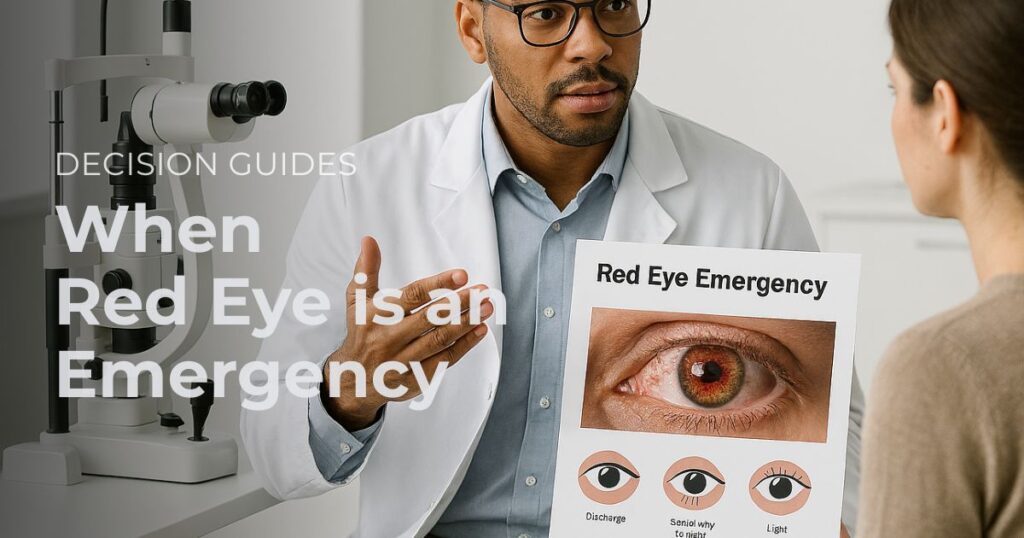
You should see an eye doctor immediately if you have sudden vision loss, a sudden shower of floaters or flashes, a dark curtain in your vision, significant eye pain, chemical exposure, eye trauma, or a red eye with blurred vision. You should book a soon appointment if your vision is gradually getting worse, your glasses no longer help, you have new double vision, frequent headaches with eye strain, diabetes, or a child with squinting, eye misalignment, or failed vision screening. Even without symptoms, regular eye exams matter because many eye diseases start quietly.
Many people wait too long before seeking eye care. That delay can be harmless in some cases, but in others it can cost vision. The real question is not simply, “Do I have an eye problem?” The better question is, “Does this problem need emergency care, a prompt clinic visit, or a routine eye check?” This guide will help you sort that out clearly.
🎯 Focus
Help patients recognize when an eye problem can wait, when it should be checked soon, and when it needs urgent attention.
🧭 Goal
Reduce dangerous delay, false reassurance, and confusion about whether to book a consultation, seek emergency care, or schedule a routine exam.
👁️ Evidence-Based
Urgent eye symptoms can signal retinal tears, retinal detachment, acute glaucoma, infection, stroke-related problems, trauma, or other sight-threatening disease.
Quick Navigation
🚨 Dr. Roque’s Emergency Warning
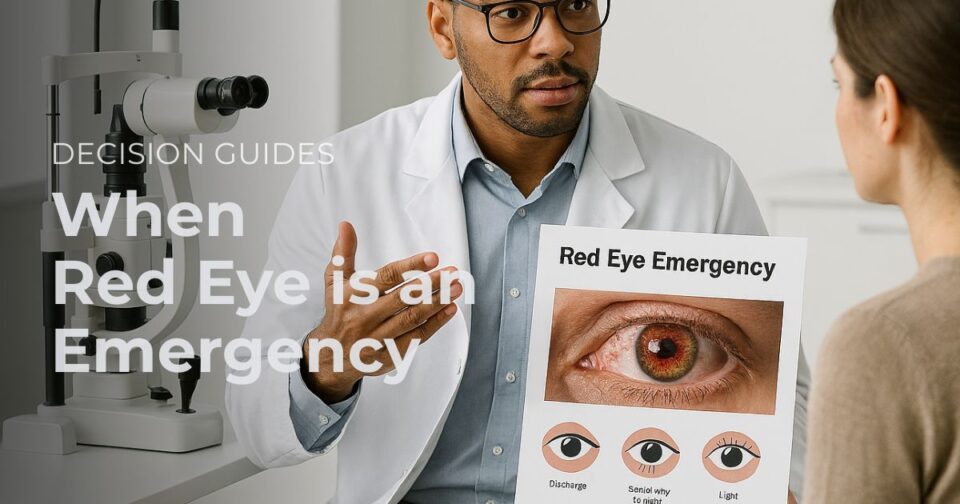
Do not watch and wait if you have:
- Sudden vision loss in one or both eyes
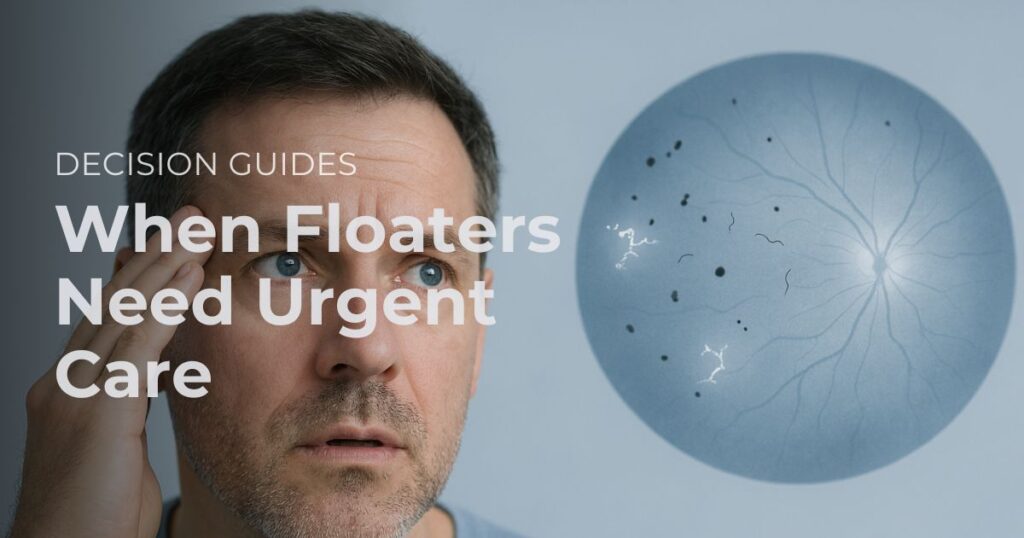
- A sudden burst of floaters or flashes, especially if followed by a shadow, curtain, or missing side vision
- Severe eye pain, especially with nausea, vomiting, halos, or blurred vision
- Eye trauma, including blunt injury, cuts, metal, glass, or high-speed foreign body exposure
- Chemical splash into the eye
- Red eye with reduced vision, marked light sensitivity, pus, or significant pain
- New double vision, especially with drooping eyelid, facial weakness, imbalance, or severe headache
- Sudden distortion of vision or a dark spot in the center of vision
- New eye symptoms after surgery, especially worsening pain, redness, or sudden vision change
Think of these as the eye’s version of a fire alarm. Some turn out to be manageable. Some are truly dangerous. The mistake is assuming you can tell the difference at home.
When you should book an eye check soon
You may not need the emergency room, but you should still arrange an appointment soon if you notice any of the following:
- Gradually worsening blurry vision
- Difficulty reading, driving, or seeing at night
- Frequent need to change glasses
- New ghosting, glare, halos, or visual distortion
- Recurring red eye, itching, watering, or irritation that does not settle
- Persistent headaches with eye strain
- A new eyelid lump, lid swelling, or lashes rubbing the eye
- Diabetes, high blood pressure, autoimmune disease, thyroid disease, or long-term steroid use with no recent eye exam
- A family history of glaucoma, retinal disease, or inherited eye disease
These problems are often not “dramatic,” which is exactly why people delay. Cataract, glaucoma, diabetic eye disease, dry eye disease, retinal disease, and even some neurologic problems may begin this way.
When a routine eye exam is appropriate
A routine eye exam is appropriate when you do not have red-flag symptoms but still want to protect your sight and check for silent disease. This matters because some eye conditions do not cause early warning signs.
A practical way to think about it is this:
- No symptoms, but age 40 or older: do not assume you are “fine” just because you can still function. This is a reasonable time for a comprehensive baseline eye evaluation.
- Age 60 and above or higher-risk patients: regular exams become more important because the risk of cataract, glaucoma, macular disease, and other conditions rises with age.
- You already wear glasses or contact lenses: vision change should not be blamed on prescription drift alone without proper eye evaluation.
In simple terms, routine does not mean optional forever. It means you are acting before the problem becomes obvious.
👁️ Anatomy Micro-Primer
Your eye works like a camera, but it is attached to living tissue and a nerve system.
- Cornea and lens: focus light
- Retina: captures the image
- Optic nerve: sends signals to the brain
- Eye pressure system: helps maintain the eye’s shape and internal balance
- Eyelids and tears: protect and lubricate the surface
A problem in any one of these parts can blur vision, cause pain, create redness, or produce flashes, floaters, distortion, or double vision.
💡 Dr. Roque’s Analogy
Do not treat your eye like a light bulb that either works or does not work. It is more like the dashboard of a car. A flashing warning light may represent anything from a small issue to a dangerous system failure. The smart move is not guessing. The smart move is checking what the warning means.
Terminology Glossary
- Floaters: small moving spots or cobweb-like shadows in your vision
- Flashes: brief streaks or flickers of light, often noticed in dim settings
- Retinal detachment: separation of the retina from the back wall of the eye, which can threaten sight
- Glaucoma: a group of diseases that damage the optic nerve, sometimes related to high eye pressure
- Dilated eye exam: an eye examination using drops to widen the pupils so the doctor can examine the back of the eye better
When a child should see an eye doctor
Parents often wait because the child is not complaining. That is a mistake. Many children do not realize their vision is abnormal because they have never known anything else.
Your child should be evaluated if you notice:
- One eye turning in, out, up, or down
- Constant squinting or sitting very close to screens
- Frequent eye rubbing not explained by tiredness
- Poor eye contact or poor tracking
- A white reflex in photos
- Droopy eyelid
- Failed school or clinic vision screening
- Complaints of headaches, blurred vision, or double vision
Children with premature birth history, developmental concerns, family history of squint or lazy eye, or known neurologic issues should not be managed casually.
Who needs earlier or more frequent eye exams
You should be more proactive if you:
- Have diabetes
- Have high blood pressure or vascular disease
- Have a family history of glaucoma, retinal detachment, or macular degeneration
- Use steroids long-term
- Have high myopia or a previous retinal problem
- Had prior eye surgery or trauma
- Have autoimmune disease, thyroid disease, or neurologic disease
- Are older and have noticed subtle visual decline, glare, or poor night vision
Risk is not the same as symptoms. High-risk patients should not wait for dramatic warning signs before getting checked.
A simple decision guide
Go now / same day: sudden vision loss, flashes with curtain, severe pain, trauma, chemical injury, red eye with blurred vision, sudden double vision with neurologic symptoms.
Book soon: gradual blur, worsening glare, frequent headaches with eye strain, new distortion, persistent redness, recurrent watering, child with visual or alignment concerns.
Book routinely: no symptoms but overdue for eye care, age-related screening, diabetes follow-up, family history risk, updating glasses with a proper eye health check.
What to expect during the visit
Depending on your symptoms, your visit may include:
- Vision testing
- Refraction if needed
- Eye pressure measurement
- Slit-lamp examination of the front of the eye
- Dilated retinal examination
- Additional imaging or tests when indicated
This is why self-diagnosis is unreliable. Two people can both say, “My eye is red,” while one has dry eye and the other has a serious corneal or pressure problem.
🧠 Dr. Roque’s Key Learning Points
- Not every eye symptom is an emergency, but some absolutely are.
- Sudden vision change, flashes with a curtain effect, pain, trauma, and chemical injury deserve urgent care.
- Gradual blur, glare, recurring redness, or worsening strain should still be checked soon.
- Children often need evaluation even when they do not complain.
- Diabetes, glaucoma risk, older age, and prior eye disease justify more proactive exams.
- Many sight-threatening eye diseases begin quietly.
Related Reading
Frequently Asked Questions
1. Should I see an eye doctor if my vision is blurry but not painful?
Yes. Blurry vision without pain can still be caused by cataract, retinal disease, glaucoma, macular problems, refractive error, dry eye, or systemic disease.
2. Is red eye always minor?
No. Some red eyes are mild, but a red eye with pain, light sensitivity, discharge, or blurred vision should not be dismissed.
3. When are floaters dangerous?
Floaters become more concerning when they appear suddenly, increase sharply, occur with flashes, or are followed by a shadow or curtain in vision.
4. Should I get an eye exam even if I can still read and drive?
Yes. Functional vision does not guarantee healthy eyes. Some diseases begin without obvious symptoms.
5. Does diabetes mean I need regular eye care even if my vision seems normal?
Yes. Diabetic eye disease can progress before you notice visual symptoms.
6. My child is not complaining. Could there still be a problem?
Yes. Children often adapt to poor vision or eye misalignment and may not describe the problem clearly.
7. Should I see an optometrist or an ophthalmologist?
That depends on the issue. If you have urgent symptoms, significant visual change, eye disease, surgical questions, or a complicated history, specialist evaluation is often appropriate.
8. What if I got something in my eye at work?
If it was a chemical, metal, glass, or high-speed injury, seek prompt evaluation. Do not assume the eye is safe just because discomfort settles.
9. Can headaches mean I need an eye exam?
Yes. Some headaches relate to vision or eye strain, while others do not. New headaches with visual symptoms deserve evaluation.
10. How do I know whether to wait or book now?
If the symptom is sudden, painful, traumatic, neurologic, or clearly worsening, do not wait. If you are unsure, it is safer to ask and be checked than to guess wrong.
References
- American Academy of Ophthalmology. Eye Exam and Vision Testing Basics.
- American Academy of Ophthalmology. Frequency of Ocular Examination.
- National Eye Institute. Get a Dilated Eye Exam.
- National Eye Institute. Keep Your Eyes Healthy.
- American Academy of Ophthalmology. Eye Screening for Children.
✅ Dr. Roque’s Take-Home Message
Do not use comfort as your safety test. Some of the most serious eye problems begin with symptoms people minimize, delay, or explain away. If the change is sudden, painful, alarming, or simply not making sense, get your eyes checked. The cost of an unnecessary visit is usually small. The cost of missing a sight-threatening problem can be permanent.
ROQUE Eye Clinic Patient Education Series
Reviewed by the Roque Advisory Council
Dr. Manolette Roque | Dr. Barbara Roque
St. Luke’s Medical Center Global City | Asian Hospital Medical Center
Philippines
Medical Disclaimer: This page is for patient education only. It does not replace a proper medical consultation, examination, diagnosis, or treatment plan. If you have sudden vision change, significant eye pain, trauma, or other urgent symptoms, seek prompt medical attention.