



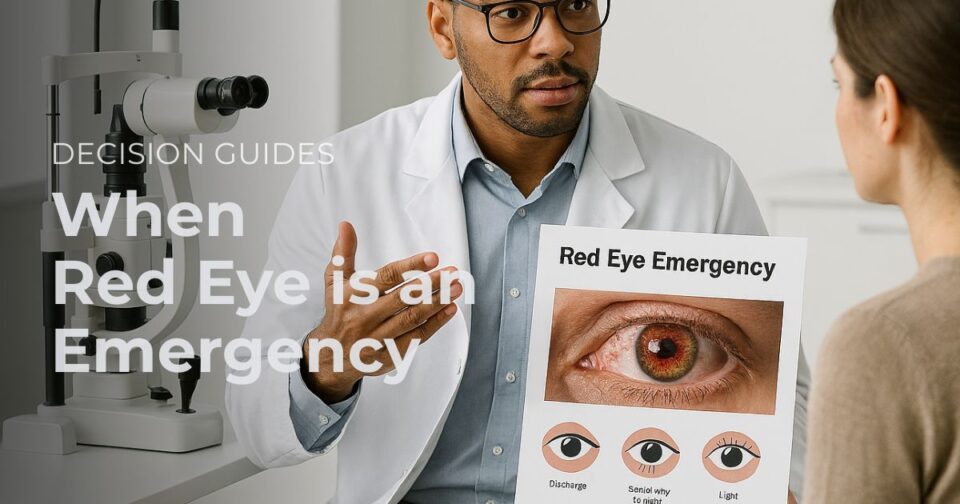
When Red Eye Is an Emergency
- Moderate to severe eye pain
- Blurred vision, sudden drop in vision, or halos around lights
- Light sensitivity that is significant or worsening
- Chemical splash in the eye
- Eye injury, foreign body, or trauma from metal, glass, tools, or high-speed objects
- A red eye in a contact lens wearer, especially with pain or blurred vision
- A very red eye with headache, nausea, or vomiting
- A misshapen pupil, unequal pupils, or trouble opening the eye
- New rash or blisters on the forehead, eyelid, or nose with red eye
- Recent eye surgery or injection followed by redness, pain, or worsening vision
A simple decision rule
- If your vision is worse, do not treat it like routine pink eye.
- If the eye hurts, especially if the pain is deep or severe, do not self-treat for days.
- If light bothers the eye, be cautious. Photophobia often means the problem is deeper than simple surface irritation.
- If there was injury, chemical exposure, or contact lens use, raise the level of concern immediately.
- If nausea, vomiting, or severe headache comes with the red eye, think emergency until proven otherwise.
When a red eye is often less urgent
- Mild viral conjunctivitis: watery eye, irritation, redness, often starts in one eye and spreads to the other
- Allergic conjunctivitis: itching is often the main symptom, usually both eyes, often with tearing
- Small subconjunctival hemorrhage: a bright red patch on the white of the eye with little or no pain and usually normal vision
- Mild dry eye flare: burning, grittiness, fluctuating discomfort, often worse with screen use or air-conditioning
When a red eye becomes urgent or emergent
1) Red eye with pain
2) Red eye with blurred vision
3) Red eye with light sensitivity
4) Red eye in a contact lens wearer
5) Red eye after chemical exposure
6) Red eye after trauma
7) Red eye with headache, nausea, vomiting, or halos
The conditions patients most often miss
What to do right now if your eye is red
- Check whether your vision is normal in each eye separately.
- Ask yourself whether the eye truly hurts or just feels irritated.
- Notice whether light makes the eye hurt more.
- Think about contact lens use, injury, chemical splash, or recent eye surgery.
- If any major red flag is present, stop self-medicating and seek urgent care.
- If a chemical entered the eye, rinse immediately and keep rinsing while getting help.
- Do not patch the eye or use leftover steroid drops without an eye doctor’s advice.
- Photophobia: light sensitivity
- Keratitis: inflammation or infection of the cornea
- Corneal ulcer: an open sore on the cornea, often from infection
- Uveitis: inflammation inside the eye
- Acute angle closure: sudden blockage of fluid drainage that can sharply raise eye pressure
- Subconjunctival hemorrhage: a broken small blood vessel causing a bright red patch on the white of the eye
- Red eye is a symptom, not a diagnosis.
- Severe pain, blurred vision, and photophobia are the big warning trio.
- Contact lens wear plus red eye is never something to minimize.
- Chemical splash requires immediate irrigation and urgent care.
- A painful red eye with headache, nausea, or halos can be acute angle closure.
- A bright red patch with no pain and normal vision is often less urgent, but not every red eye is that simple.
- If you are unsure whether it is serious, it is safer to be checked early.
Who should not wait
- Patients with only one badly affected eye
- Patients who recently had eye surgery, laser, or an injection
- Contact lens users
- Children who cannot explain symptoms clearly
- People with weak immune systems or significant medical illness
- Anyone whose symptoms are worsening rather than improving
Frequently Asked Questions
1) Is every red eye an emergency?
No. Many red eyes are mild. The problem is that some serious conditions begin with the same simple sign: redness.
2) What symptom worries you most?
A drop in vision. Severe pain and major light sensitivity are close behind.
3) Can conjunctivitis cause blurred vision?
It can cause temporary blur from discharge or tearing, but it should not cause true persistent vision loss.
4) I wear contact lenses. Should I wait a day or two?
Not if the eye is painful, red, or blurry. Contact lens-related corneal infection can worsen quickly.
5) What if a chemical splashed into my eye?
Start flushing the eye immediately with plenty of water and seek urgent medical care right away.
6) Is a painless bright red patch on the eye dangerous?
It is often a subconjunctival hemorrhage and usually less urgent if vision is normal and there is no trauma. It still deserves context if recurrent.
7) Can glaucoma make the eye red?
Yes. Acute angle-closure glaucoma can cause a painful red eye, blurry vision, halos, headache, nausea, and vomiting.
8) What should I avoid putting in the eye before I am checked?
Avoid using leftover steroid drops or random medicated drops unless specifically advised by an eye doctor.
9) Can I still drive myself if my eye is red?
Do not drive if vision is blurred, the eye is very painful, or you feel unwell.
10) When should I seek help even if I am not sure it is serious?
If you are uncertain and any red flag is present, seek urgent care. Delay causes more harm than caution in potentially sight-threatening red eyes.
- National Eye Institute. Pink Eye.
- National Eye Institute. Uveitis.
- National Eye Institute. Corneal Conditions.
- American Academy of Ophthalmology. Conjunctivitis Preferred Practice Pattern.
- American Academy of Ophthalmology. Herpes Simplex Virus Keratitis: A Treatment Guideline.
- American Academy of Ophthalmology. Common Types of Eye Infections: Symptoms and Treatment.
- NICE Clinical Knowledge Summaries. Primary angle closure glaucoma.
- NHS. Eye injuries.
- American Family Physician. Red flags for red eye.