




Tractional Retinal Detachment in Diabetes: Symptoms, Surgery, and Recovery
🤖 Quick Answer: Tractional retinal detachment in diabetes happens when scar tissue from severe diabetic retinopathy pulls the retina away from the back of the eye. It can cause blurred vision, dark shadows, or sudden vision loss. Prompt retina evaluation and, when needed, vitrectomy surgery can help preserve vision and prevent permanent damage.
Tractional retinal detachment is one of the most serious complications of advanced diabetic eye disease. It usually develops in patients with proliferative diabetic retinopathy, where abnormal blood vessels grow and later form scar tissue. Over time, that scar tissue contracts and pulls on the retina.
This article explains what tractional retinal detachment means, why it happens in diabetes, the symptoms to watch for, how retina specialists diagnose it, and when surgery becomes necessary. The goal is simple: help patients and families understand a frightening condition in clear, practical language.
🧩 Focus: Tractional retinal detachment caused by advanced diabetic retinopathy
👁 Goal: Help patients recognize warning signs, understand treatment options, and know when urgent retina surgery may be needed
🛡 Evidence-Based: Preferred Practice Patterns • Standards of Care • Systematic Reviews • Meta-Analyses
🧠 Diabetic Eye Disease Knowledge Hub
Start with the complete guide:
Diabetic Eye Disease: The Complete Patient Guide
🔎 Quick Navigation
- What Is Tractional Retinal Detachment?
- Why Diabetes Causes It
- Symptoms and Warning Signs
- How Retina Specialists Diagnose It
- Treatment and Surgery
- What Recovery Is Like
- How to Lower the Risk
Related Reading
- Proliferative Diabetic Retinopathy
- Vitreous Hemorrhage in Diabetes
- Vitrectomy for Diabetic Retinopathy
- Sudden Vision Loss in Diabetes
- B-Scan Ultrasound for the Retina
📌 Key Learning Points
- Tractional retinal detachment usually develops in advanced diabetic retinopathy, especially proliferative diabetic retinopathy.
- It happens when scar tissue pulls on the retina and lifts it away from the back wall of the eye.
- Symptoms may include blurred vision, distortion, missing areas of vision, or sudden worsening sight.
- When the macula becomes involved, central vision may drop significantly.
- Many patients need vitrectomy surgery to relieve traction and reattach the retina.
- Early treatment of diabetic retinopathy with proper follow-up can reduce the risk of severe complications.
👁 What Is Tractional Retinal Detachment?
A tractional retinal detachment happens when the retina is pulled away from its normal position by contracting scar tissue. In diabetes, this scar tissue usually grows after abnormal retinal blood vessels form in proliferative diabetic retinopathy.
The retina is the light-sensitive layer lining the back of the eye. It works like the sensor in a digital camera. If the retina is pulled off the wall of the eye, it cannot function properly, and vision becomes blurred, distorted, or lost.
This type of detachment is different from a rhegmatogenous retinal detachment, which occurs because of a retinal tear or hole. In a tractional detachment, the main problem is pulling force, not a tear. However, in some patients, both traction and a retinal tear may be present together. That combined situation can be even more urgent.
👀 Symptoms and Warning Signs
Symptoms depend on how much of the retina is involved and whether the central retina, called the macula, is affected. Some detachments progress slowly and cause gradual blur. Others worsen more quickly and become vision-threatening.
Common symptoms include:
- Blurred or cloudy vision
- Worsening central vision
- Distorted vision, where straight lines appear bent
- A dark shadow or missing area in the field of vision
- Difficulty reading or recognizing faces
- Sudden worsening of vision if bleeding also occurs
Some patients already have other advanced diabetic eye problems, such as vitreous hemorrhage or diabetic macular edema. Because of that, symptoms can overlap. A patient may think the blur is “just the diabetes acting up,” when in fact the retina is being pulled away.
Seek urgent retina evaluation if you notice a sudden drop in vision, a new dark curtain or shadow, rapid worsening blur, or a sudden increase in floaters with diabetic eye disease. These symptoms may indicate tractional retinal detachment, vitreous hemorrhage, or a combined tractional and tear-related retinal detachment.
Why Diabetes Causes Tractional Retinal Detachment
To understand why this complication happens, it helps to know what severe diabetic retinopathy does to the retina.
Step 1: Poor retinal oxygen supply
In advanced diabetic retinopathy, damaged blood vessels cannot deliver oxygen properly. The retina becomes starved of oxygen.
Step 2: Abnormal new blood vessels grow
The eye responds by growing fragile new blood vessels. This is called neovascularization. These vessels are abnormal and weak. Learn more here: Proliferative Diabetic Retinopathy.
Step 3: Scar tissue forms
Over time, abnormal vessels are often accompanied by fibrous tissue. This tissue acts like a web or membrane on the retinal surface and into the vitreous cavity.
Step 4: The scar tissue contracts
Scar tissue tends to shrink as it matures. When that happens, it pulls on the retina. If the pulling force is strong enough, the retina lifts off.
Not every patient with proliferative diabetic retinopathy develops tractional retinal detachment. However, the risk rises when proliferative disease is severe, untreated, or longstanding.
| Stage | What is happening | Vision effect |
|---|---|---|
| Severe diabetic ischemia | Retina receives poor oxygen supply | May still have mild or no symptoms |
| Neovascularization | Abnormal new vessels form | Risk of bleeding and progressive damage |
| Fibrovascular proliferation | Scar tissue and vessels grow together | Vision may blur gradually |
| Tractional retinal detachment | Scar tissue pulls retina off the eye wall | Can cause major vision loss, especially if the macula is detached |
🧪 How Retina Specialists Diagnose It
Diagnosis begins with a careful retina examination. The doctor checks whether there is traction, whether the macula is involved, and whether bleeding is blocking the view.
Common diagnostic tools include:
- Dilated retinal examination — the most important first step
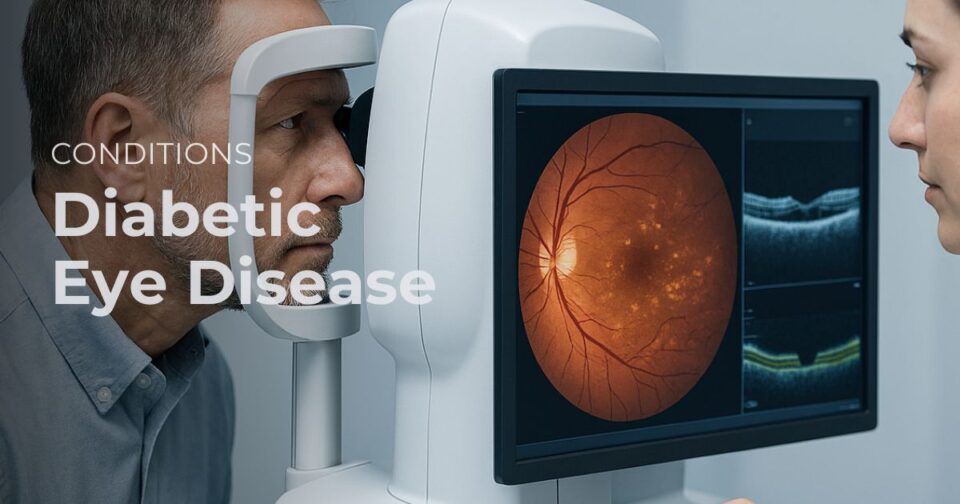
- OCT — helps assess the macula and nearby traction; see OCT for Diabetic Macular Edema
- Ultra-widefield imaging — useful for documenting the extent of proliferative disease; see Ultra-Widefield Retinal Imaging in Diabetes
- B-scan ultrasound — especially useful when vitreous hemorrhage prevents a clear view; see B-Scan Ultrasound for the Retina
- Fluorescein angiography — may help in selected cases to evaluate retinal perfusion and abnormal vessels; see Fluorescein Angiography
One of the most important questions is whether the macula is detached. If the macula is still attached, surgery is often more urgent because preserving central vision becomes the priority. If the macula is already detached, surgery may still help significantly, but the visual outcome can be more limited depending on duration and severity.
💊 Treatment and Surgery
Treatment depends on how much traction is present, whether the macula is involved, whether there is bleeding, and how much useful vision remains.
Observation in selected cases
Some small, stable tractional detachments away from the macula may be monitored closely rather than operated on immediately. However, observation only makes sense when the retina specialist believes the condition is not progressing rapidly.
Laser treatment
Retinal laser, especially panretinal photocoagulation, helps reduce the drive for abnormal new vessel growth. Laser is important in proliferative diabetic retinopathy, but once significant tractional detachment has formed, laser alone usually cannot reverse the pulling problem.
Anti-VEGF injections
Anti-VEGF medicine may be used before surgery in selected patients to reduce active neovascularization. This can sometimes make surgery safer by decreasing bleeding. However, the timing is important because fibrous tissue may contract after injection. Retina specialists decide carefully when to use it.
Vitrectomy surgery
The main treatment for significant tractional retinal detachment is usually vitrectomy. In this surgery, the retina specialist removes the vitreous gel and carefully peels or cuts the scar tissue that is pulling on the retina.
The goals of vitrectomy are:
- relieve traction on the retina
- flatten and reattach the retina when possible
- clear vitreous hemorrhage if present
- stabilize the eye and preserve as much vision as possible
Learn more here: Vitrectomy for Diabetic Retinopathy.
What surgery can and cannot do
Surgery can often save vision, but it does not guarantee normal sight. Outcomes depend on:
- whether the macula was involved
- how long the detachment has been present
- whether there is severe ischemia
- whether additional complications exist, such as recurrent bleeding or neovascular glaucoma
In simple terms, surgery is often better at preventing further loss than restoring perfect vision.
What Recovery Is Like After Vitrectomy
Recovery after vitrectomy varies. Some patients notice improvement within days to weeks, while others recover more slowly over months. The retina specialist may place gas or silicone oil inside the eye in selected cases, depending on the surgical situation.
Patients are commonly told to:
- use prescribed eye drops faithfully
- avoid rubbing the eye
- follow activity restrictions
- return for all follow-up visits
- report pain, severe redness, or sudden worsening vision immediately
The eye may remain blurry for some time after surgery. That does not always mean something is wrong. Healing, blood clearing, and retinal recovery can take time. For a more detailed recovery guide, read Vitrectomy Recovery.
How to Lower the Risk of Tractional Retinal Detachment
The best way to reduce the risk is to prevent diabetic retinopathy from reaching the proliferative stage.
- Keep regular dilated eye exams: Diabetic Eye Exam Schedule
- Control blood sugar, blood pressure, and cholesterol: Diabetes Control and Eye Health
- Treat proliferative diabetic retinopathy early: Proliferative Diabetic Retinopathy
- Do not ignore new symptoms such as floaters, shadowing, or rapid blur
- Follow through with recommended laser, injections, or surgery
In many patients, tractional retinal detachment is not the first diabetic eye problem. It is usually the result of advanced, severe, or delayed treatment of proliferative disease. That is why earlier steps in the diabetic eye care pathway matter so much.
Continue Reading
- Diabetic Retinopathy Stages
- Proliferative Diabetic Retinopathy
- Vitrectomy for Diabetic Retinopathy
- Vitrectomy Recovery
- Sudden Vision Loss in Diabetes
🏁 Take-Home Message
Tractional retinal detachment is a serious complication of advanced diabetic retinopathy. It happens when diabetic scar tissue pulls the retina off the back of the eye. Vision can be threatened quickly, especially if the macula becomes involved.
If you have diabetes and notice rapid blur, a dark shadow, or sudden worsening sight, get an urgent retina evaluation. Early treatment of proliferative diabetic retinopathy is the best way to reduce the risk of this complication.
❓ Frequently Asked Questions
What is tractional retinal detachment in diabetes?
It is a retinal detachment caused by scar tissue from advanced diabetic retinopathy pulling the retina away from the back of the eye.
Is tractional retinal detachment an emergency?
It can be vision-threatening, especially if central vision is affected. New shadows, rapid blur, or sudden vision loss should be treated as urgent symptoms.
Can eye drops fix tractional retinal detachment?
No. Eye drops do not remove the scar tissue pulling on the retina. Significant cases often require vitrectomy surgery.
Will surgery restore normal vision?
Surgery can often preserve or improve vision, but the final result depends on how severe the detachment is, how long it has been present, and whether the macula was affected.
Can tractional retinal detachment be prevented?
Risk can be reduced by regular diabetic eye exams, good systemic control, and timely treatment of proliferative diabetic retinopathy.
📚 References
- American Academy of Ophthalmology Preferred Practice Pattern: Diabetic Retinopathy.
- American Diabetes Association Standards of Care.
- National Eye Institute educational resources on diabetic retinopathy.
- DRCR Retina Network and related peer-reviewed diabetic retinopathy studies.
- Major peer-reviewed retina surgery literature on proliferative diabetic retinopathy and vitrectomy outcomes.
🤝 Roque Eye Clinic Patient Education Series
Reviewed by the Roque Advisory Council
Dr Manolette Roque | Dr Barbara Roque
St Luke’s Medical Center Global City | Asian Hospital Medical Center
Philippines
Medical Review: Roque Advisory Council
Last Updated: March 2026
This article is intended for educational purposes only and does not replace professional medical consultation.