


Early Warning Signs of Diabetic Eye Disease
🤖 Quick Answer: Early warning signs of diabetic eye disease include blurred vision, floaters, wavy lines, dark spots, and sudden vision changes. However, diabetic retinopathy may also start with no symptoms at all. That is why regular dilated eye exams matter. Early detection and prompt treatment can help prevent serious diabetes-related vision loss and blindness.
Diabetic eye disease often develops quietly. Many people assume that if they can still read, drive, or use their phone, their eyes must be healthy. Unfortunately, that is not always true. Diabetes can damage the retina long before symptoms become obvious.
This guide explains the early warning signs of diabetic eye disease, why those symptoms happen, when to worry, and why regular eye screening remains essential even when your vision feels normal.
🧩 Focus: Early warning signs of diabetic retinopathy and diabetic macular edema
👁 Goal: Help patients recognize warning symptoms early and seek timely eye care
🛡 Evidence-Based: Preferred Practice Patterns • Standards of Care • Systematic Reviews • Meta-Analyses
🧠 Diabetic Eye Disease Knowledge Hub
Start with the complete guide:
Diabetic Eye Disease: The Complete Patient Guide
📘 Retina Terminology Glossary
Retina — the thin light-sensing lining at the back of the eye.
Macula — the central retina responsible for detailed vision.
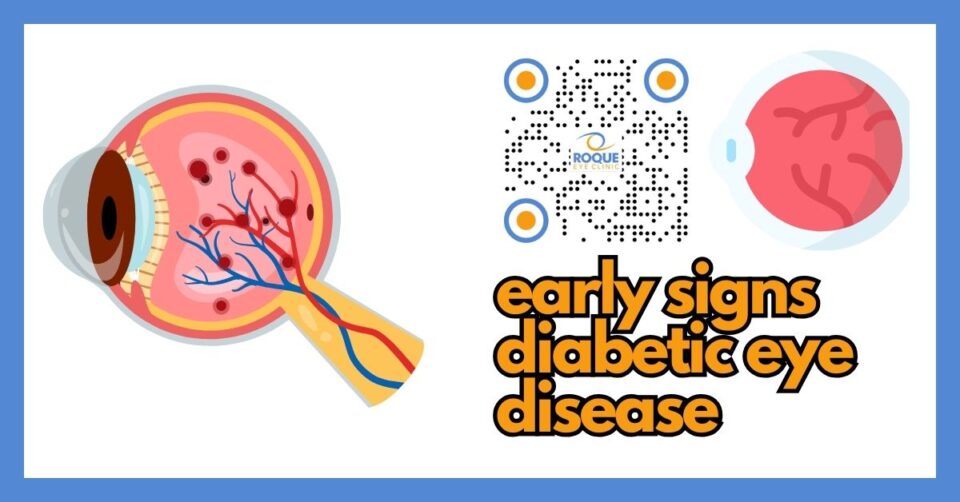
Retinal blood vessels — tiny vessels that bring oxygen and nutrients to the retina; diabetes can weaken and damage them.
Diabetic retinopathy — retinal blood vessel damage caused by diabetes.
Macular edema — swelling in the central retina from leaking blood vessels.
Vitreous — the gel inside the eye that can contain blood or floaters when retinal vessels bleed.
🔎 Quick Navigation
- Why early disease can be silent
- Blurred vision
- Floaters and dark spots
- Wavy or distorted vision
- Difficulty seeing at night
- Sudden vision changes
- When you should book an eye exam
Related Reading
- Diabetic Eye Disease: The Complete Patient Guide
- Why Vision Blurs with Diabetes
- Floaters in Diabetic Eye Disease
- Diabetic Eye Exam Schedule
- Diabetic Retinopathy Stages
📌 Key Learning Points
- Early diabetic eye disease may cause no symptoms at all, which is why screening is so important.
- Blurred vision, floaters, and distorted central vision can all be warning signs of diabetic retinal disease.
- Sudden floaters, flashes of light, or a dark curtain in vision may signal a retinal emergency.
- Diabetic macular edema is a common reason for blurred central vision in patients with diabetes.
- Regular dilated eye examinations help find retinal damage before permanent vision loss develops.
👁 Why Early Diabetic Eye Disease Can Be Silent
One of the most frustrating things about diabetic eye disease is that it can begin without warning. A person may read clearly, drive normally, and feel no pain, yet the retina may already show leaks, tiny hemorrhages, or abnormal blood vessel changes.
This happens because early retinal damage does not always affect the exact center of vision right away. In other words, damage may begin “off to the side” before you notice anything in daily life. That is why patients sometimes hear, “Your retina shows diabetic retinopathy,” even when they came in saying, “But I can still see fine.”
The lesson is simple: do not use “I can still see okay” as proof that your retina is healthy. For patients with diabetes, retinal disease can be present before symptoms appear.
👀 Blurred Vision
Blurred vision is one of the most common warning signs of diabetic eye disease. However, not all blur means the same thing.
Sometimes blur happens because blood sugar swings temporarily change how the eye focuses. That kind of blur may come and go. At other times, blur happens because the retina itself is affected—especially when the macula becomes swollen. This swelling is called diabetic macular edema.
Patients often describe this blur in different ways:
- “My vision is cloudy.”
- “Letters are harder to read.”
- “Faces are less clear.”
- “One eye seems weaker than the other.”
- “Vision gets worse by the end of the day.”
The important point is this: if blurred vision is new, persistent, or getting worse, it should not be dismissed as “just diabetes.” It may be the first sign that the retina needs medical attention.
Floaters and Dark Spots
Floaters are small spots, threads, cobwebs, or shadows that drift across vision. Many people get a few harmless floaters with age. However, in people with diabetes, a sudden increase in floaters can be a warning sign of bleeding inside the eye.
In more advanced diabetic retinopathy, fragile abnormal blood vessels may grow and then rupture. When they bleed into the vitreous gel, the patient may suddenly see:
- many new black spots
- cloudy or smoky vision
- a reddish or brown haze
- moving cobwebs in one eye
This complication is called vitreous hemorrhage. It does not always mean permanent blindness, but it does mean urgent retinal evaluation is needed.
A sudden shower of floaters, especially with blurred vision, flashes of light, or a curtain-like shadow, can mean bleeding or retinal detachment. Seek urgent ophthalmologic evaluation immediately.
Wavy or Distorted Vision
Straight lines should look straight. If door frames, text lines, or tile edges begin to look wavy, bent, rippled, or distorted, the macula may be affected.
This can happen when fluid leaks into the center of the retina and causes swelling. Patients may say:
- “Words bend when I read.”
- “Lines on my phone screen look uneven.”
- “One part of a face looks stretched.”
- “There is a blur or smudge in the middle.”
Distortion is especially important because it may suggest macular involvement, and the macula is the part most responsible for high-quality central vision.
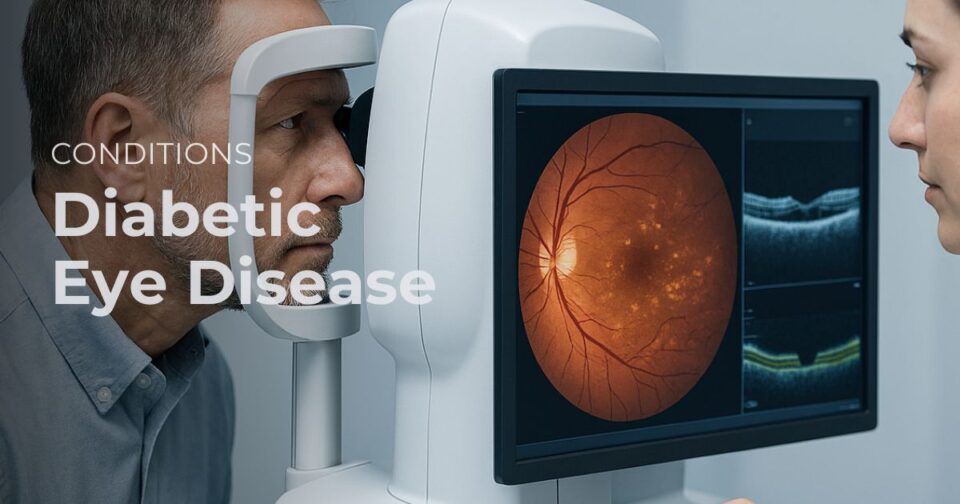
When patients report this symptom, retinal imaging such as OCT often becomes very helpful because it shows whether swelling is present in the macula.
Difficulty Seeing at Night
Some patients with diabetic retinal disease notice that night driving becomes harder. Street signs may look less sharp. Headlights may seem more troublesome. Dark environments may take longer to adjust to.
Night-vision complaints can happen for different reasons. Cataract can contribute. Retinal disease can also reduce contrast sensitivity and overall visual quality. While this symptom is not as dramatic as sudden floaters or sudden blur, it still deserves attention—especially when it is new or worsening.
If you have diabetes and feel your vision at night is changing, do not assume it is “just aging.” It may be useful to have both the retina and the lens evaluated.
Sudden Vision Changes
Sudden vision changes should always be taken seriously in patients with diabetes. Examples include:
- sudden cloudy or hazy vision
- rapid loss of central vision
- many new floaters appearing at once
- flashes of light
- a shadow or curtain covering part of vision
These symptoms may point to more advanced complications such as vitreous hemorrhage, tractional retinal detachment, or severe macular swelling. The longer serious complications are ignored, the greater the risk of permanent visual damage.
This is why “wait and see” is often not the best strategy when vision suddenly changes in a patient with diabetes.
🧪 When You Should Book an Eye Exam
You should book a diabetic eye examination if:
- you have diabetes and have not had a recent dilated eye exam
- your vision is becoming blurred
- you notice new floaters or dark spots
- straight lines look bent or wavy
- your night vision has worsened
- you develop sudden vision changes
Screening matters because major guidelines emphasize that people with vision-threatening diabetic retinopathy can still be asymptomatic. In practical terms, this means the “right time” to check your eyes is before symptoms become severe, not after. A dilated retinal examination remains one of the strongest tools for prevention.
Learn more in Diabetic Eye Exam Schedule and Prevent Diabetic Blindness.
Continue Reading
- Why Vision Blurs with Diabetes
- Floaters in Diabetic Eye Disease
- Flashes of Light and the Retina
- Sudden Vision Loss in Diabetes
- Diabetic Eye Exam Schedule
🏁 Take-Home Message
Early warning signs of diabetic eye disease include blurred vision, floaters, wavy lines, and sudden changes in sight. However, some patients have no symptoms at all in the early stages.
If you have diabetes, do not wait for severe vision loss before seeking care. Regular dilated eye exams and prompt attention to new symptoms offer the best protection for long-term vision.
❓ Frequently Asked Questions
What is the earliest warning sign of diabetic eye disease?
Sometimes there is no symptom at all. When symptoms do appear, blurred vision is one of the most common early warning signs.
Are floaters always caused by diabetic retinopathy?
No. Floaters can occur for many reasons, but a sudden increase in floaters in a person with diabetes needs urgent retinal evaluation.
Can diabetic eye disease cause distorted vision?
Yes. Wavy or distorted central vision may occur when the macula becomes swollen, a condition called diabetic macular edema.
Should I wait for symptoms before seeing an eye doctor?
No. Diabetic retinopathy can be present before symptoms appear, so routine dilated eye examinations remain very important.
What symptoms need urgent attention?
Sudden vision loss, flashes of light, a shower of floaters, or a curtain-like shadow need urgent ophthalmologic evaluation.
Can early treatment really help?
Yes. Detecting diabetic eye disease early gives doctors more chance to preserve vision and prevent serious complications.
📚 References
- American Academy of Ophthalmology. Diabetic Retinopathy Preferred Practice Pattern.
- American Diabetes Association. Standards of Care in Diabetes — Retinopathy, Neuropathy, and Foot Care.
- National Eye Institute. Diabetic Retinopathy and Dilated Eye Exam Guidance.
- DRCR Retina Network and related peer-reviewed evidence on diabetic macular edema.
- Peer-reviewed literature on retinal warning signs, diabetic macular edema, and proliferative diabetic retinopathy.
🤝 Roque Eye Clinic Patient Education Series
Reviewed by the Roque Advisory Council
Dr Manolette Roque | Dr Barbara Roque
St Luke’s Medical Center Global City | Asian Hospital Medical Center
Philippines
Medical Review: Roque Advisory Council
Last Updated: March 2026
This article is intended for educational purposes only and does not replace professional medical consultation.