



Walk-In vs Book Consultation: Which Is Better for Your Eye Problem?
🧠 Dr. Roque’s Quick Answer
If your eye concern is serious, painful, sudden, or potentially vision-threatening, do not delay because of scheduling convenience. Seek care as soon as possible. If your concern is important but not clearly emergent, booking a consultation is usually the better option because it improves timing, reduces waiting uncertainty, and helps the clinic prepare for your needs. Think of it this way: a walk-in is like arriving at the airport without checking the schedule, while a booked consultation is like having a confirmed seat and a clearer path forward.
🎯 Focus
Help you choose the most practical way to see an eye doctor based on urgency, convenience, waiting tolerance, and likelihood of needing tests or treatment planning.
🧩 Goal
Reduce friction. Help you avoid unnecessary delay, long uncertain waits, and preventable frustration while still acting quickly when symptoms may be urgent.
🛡️ Evidence-Based
This guide follows standard eye-care triage logic: urgent symptoms should not wait, while planned consultations generally work better when scheduled properly and matched to the right clinic flow.
Quick Navigation
👁️ Anatomy Micro-Primer
The eye has several parts that can cause very different problems. The cornea and ocular surface often cause redness, irritation, and pain. The lens can become cloudy from cataract. The retina and optic nerve are more concerning when you have sudden vision loss, flashes, floaters, or distortion. That is why scheduling decisions should not be based only on convenience. The type of symptom matters.
📘 Terminology Glossary
- Walk-in: You go to the clinic without a confirmed appointment slot.
- Book consultation: You reserve a clinic schedule ahead of time.
- Triage: Sorting patients by urgency and likely need.
- Dilation: Eye drops that enlarge the pupil so the back of the eye can be examined.
- Diagnostics: Tests such as refraction, imaging, pressure check, or scans that help clarify the problem.
What Is the Difference Between Walking In and Booking a Consultation?
A walk-in visit means you arrive without a reserved slot and the clinic tries to fit you into the day’s flow. A booked consultation means your visit has been planned in advance. That does not always mean zero waiting, but it usually means a more controlled and predictable process.
Many patients assume walk-in is automatically faster. That is not always true. If the clinic is busy, if another patient needs urgent attention, or if your visit needs dilation or testing, a walk-in may actually take longer. Booking ahead often wins because it lowers uncertainty.
When Walking In Makes Sense
Walking in can be reasonable when your concern needs attention soon and waiting for a future slot feels risky or impractical.
- You developed a new eye problem today and need same-day assessment.
- You have pain, redness, sudden irritation, or a foreign-body sensation that feels significant.
- Your vision changed suddenly and you are trying to be seen as soon as possible.
- You are unable to secure an online or phone booking quickly enough.
- You understand that waiting time may be unpredictable and you can tolerate that.
However, do not romanticize the walk-in pathway. It is not a “VIP shortcut.” It is a flexible access pathway with more uncertainty.
When Booking a Consultation Is the Smarter Choice
Booking is usually better when your condition is important but not clearly emergent, and when your visit may involve planning, testing, or counseling.
- You want a more predictable clinic flow.
- You are coming for cataract evaluation, refractive surgery assessment, glaucoma follow-up, or a second opinion.
- You may need special tests, imaging, refraction, or dilation.
- You are coordinating transportation, work leave, family assistance, or HMO documents.
- You prefer less uncertainty and want to reduce waiting surprises.
- You are comparing treatment options and want time for proper counseling.
For most planned eye care, booking is the more efficient adult decision. It respects both your time and the clinical process.
🚨 Dr. Roque’s Emergency Warning
Do not delay care just because you are deciding between walk-in and booking if you have any of the following:
- Sudden loss of vision
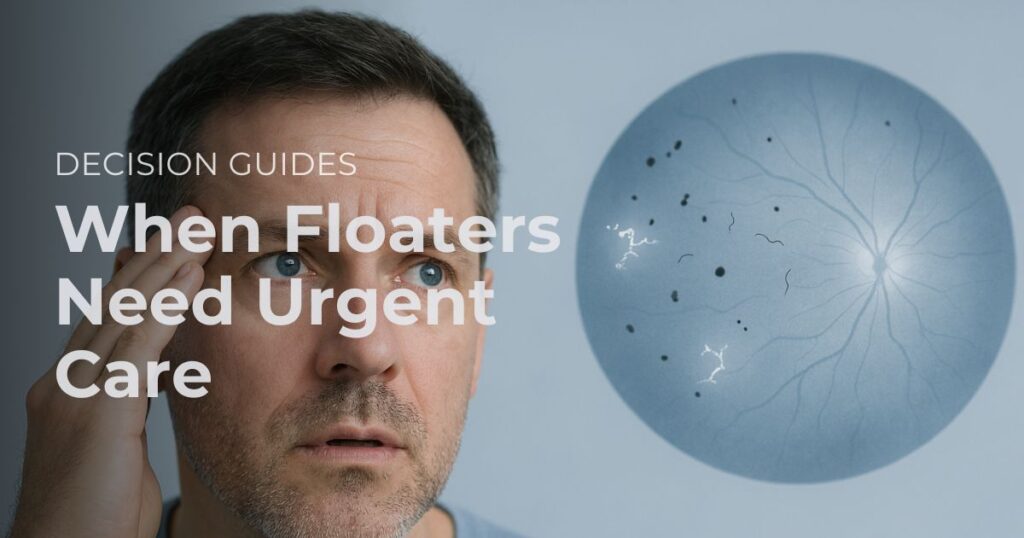
- New flashes and floaters, especially with a curtain or shadow
- Eye injury or chemical exposure
- Severe eye pain
- Marked redness with light sensitivity or blurred vision
- Sudden double vision
- Acute swelling, discharge, or rapidly worsening symptoms
In those situations, the question is not “walk in or book?” The real question is “how do I get proper care now?”
Side-by-Side Comparison
| Factor | Walk-In | Book Consultation |
|---|---|---|
| Speed of access | May help when you need same-day evaluation | Better for planned, organized care |
| Waiting predictability | Often less predictable | Usually more predictable |
| Best for urgent symptoms | Often yes, depending on severity and timing | Yes if same-day urgent booking is available |
| Best for planned evaluations | Usually not ideal | Usually best choice |
| Testing and work-up readiness | May be harder to coordinate smoothly | Usually easier to prepare properly |
| Convenience for travel and planning | Lower | Higher |
💡 Dr. Roque’s Analogy
A walk-in is like going to the emergency lane when you are not sure how heavy traffic will be. Sometimes you get through quickly. Sometimes you wait much longer than expected. A booked consultation is like using the correct lane with a clearer route. For non-emergency eye care, the second path is usually more efficient and less stressful.
How to Decide in Real Life
- Ask how urgent the symptom is. Sudden vision loss, severe pain, trauma, or a major new change should move you toward immediate care.
- Ask whether your visit is mainly diagnostic or planned. Cataract, LASIK, lens implant, glaucoma follow-up, and detailed second opinions usually work better when booked.
- Ask whether you can tolerate uncertainty. If not, booking is better.
- Ask whether you may need dilation or testing. Booking allows a more coordinated visit.
- Ask whether you are choosing convenience over judgment. That is where people make mistakes. Convenience is not the same as the best clinical decision.
🧠 Dr. Roque’s Key Learning Points
- Booking a consultation is usually better for planned eye care.
- Walking in can be reasonable when the problem is urgent or same-day help is needed.
- Walk-in does not automatically mean faster.
- Booked visits usually reduce uncertainty and improve clinic flow.
- Sudden vision changes, severe pain, injury, or major redness should not be delayed.
- The right choice depends on urgency, not just convenience.
Related Reading
Frequently Asked Questions
Is walk-in faster than a booked consultation?
Not always. A walk-in may help you get seen the same day, but actual waiting time is often less predictable.
Should I still walk in if I have sudden blurred vision?
Yes, you should seek urgent care promptly. Do not delay because you are trying to optimize scheduling.
Is booking better for cataract evaluation?
Usually yes. Cataract consultations often need time, counseling, and possibly diagnostic planning.
What if I am not sure whether my eye problem is urgent?
When in doubt, err on the side of earlier assessment. Sudden, painful, or rapidly worsening symptoms deserve more caution.
Does a booked consultation guarantee no waiting?
No. But it usually makes the process more organized and more predictable.
Can I book even if I think I might need tests?
Yes. In fact, booking is often better when your visit may require imaging, refraction, dilation, or treatment discussion.
Is walking in acceptable for red eye?
It can be, especially if the redness is new, painful, or associated with blurred vision or light sensitivity.
What is best for a routine follow-up?
Booking is usually the better choice for routine and follow-up care.
References
- American Academy of Ophthalmology. Patient education and ophthalmic care resources.
- National Eye Institute. Eye health education resources.
- Standard ophthalmic triage principles used in outpatient and urgent eye-care evaluation.
✅ Dr. Roque’s Take-Home Message
If your eye concern is planned, structured, or likely to need proper counseling and testing, book the consultation. If your eye concern is sudden, painful, or possibly serious, do not let scheduling delay care. The smartest move is not the most convenient one. It is the one that protects your vision.
ROQUE Eye Clinic Patient Education Series
Reviewed by the Roque Advisory Council
Dr. Manolette Roque | Dr. Barbara Roque
St. Luke’s Medical Center Global City | Asian Hospital Medical Center
Philippines
Medical Disclaimer
This content is for educational purposes only. It is not a substitute for medical advice, diagnosis, or treatment. If you have sudden vision loss, severe eye pain, injury, chemical exposure, or rapidly worsening symptoms, seek urgent medical care promptly.