

Flashes of Light and the Retina
🤖 Quick Answer: Flashes of light can happen when the vitreous gel pulls on the retina. In people with diabetes, flashes may be harmless, but they can also warn of retinal tears, retinal detachment, vitreous hemorrhage, or traction from diabetic retinopathy. Sudden flashes—especially with floaters, blurred vision, or a curtain-like shadow—need urgent ophthalmologic evaluation.
Seeing a brief flash of light can be frightening. Some patients describe it as a spark, a streak, a lightning bolt, or a camera flash in the corner of vision. These visual events are called photopsias, but most patients simply call them flashes.
In people with diabetes, flashes of light deserve careful attention because the retina may already be vulnerable. Sometimes flashes are caused by vitreous changes that are not dangerous. However, flashes can also signal retinal traction, retinal tears, bleeding, or retinal detachment. This guide explains why flashes happen, how diabetes changes the risk, and when urgent care is needed.
🧩 Focus: Flashes of light, diabetic retinal traction, retinal tears, and retinal emergencies
👁 Goal: Help patients distinguish harmless flashes from danger signs that need urgent retinal evaluation
🛡 Evidence-Based: Preferred Practice Patterns • Standards of Care • Systematic Reviews • Meta-Analyses
🧠 Diabetic Eye Disease Knowledge Hub
Start with the complete guide:
Diabetic Eye Disease: The Complete Patient Guide
🔬 Retina Anatomy Micro-Primer
Retina — the light-sensitive tissue at the back of the eye that converts light into signals for the brain.
Macula — the center of the retina that gives sharp central vision.
Retinal blood vessels — tiny vessels that nourish the retina; diabetes can weaken them and lead to bleeding or abnormal vessel growth.
Vitreous — the clear gel filling the eye; when it tugs on the retina, flashes can occur.
📘 Retina Terminology Glossary
Photopsia — a perceived flash or flicker of light not caused by an external light source.
Vitreous traction — pulling of the vitreous gel on the retina.
Retinal tear — a break in the retina that may lead to detachment.
Retinal detachment — separation of the retina from underlying tissue.
Tractional retinal detachment — retinal detachment caused by scar tissue pulling on the retina, often seen in advanced diabetic retinopathy.
🔎 Quick Navigation
- What flashes of light look like
- Why flashes happen
- Why diabetes changes the meaning of flashes
- Danger signs that need urgent care
- How doctors find the cause
- Treatment options
- Prevention and monitoring
Related Reading
- Diabetic Eye Disease: The Complete Patient Guide
- Floaters in Diabetic Eye Disease
- Sudden Vision Loss in Diabetes
- Tractional Retinal Detachment in Diabetes
- Vitreous Hemorrhage in Diabetes
📌 Key Learning Points
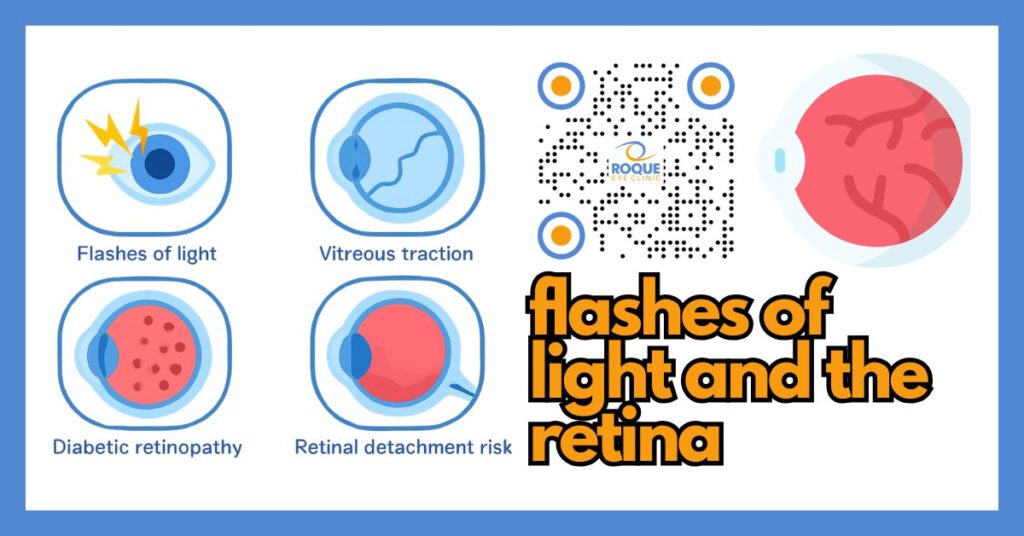
- Flashes of light happen when the retina is stimulated, often by vitreous pulling or retinal traction.
- In patients with diabetes, flashes can be related to retinal tears, retinal detachment, vitreous hemorrhage, or traction from advanced retinopathy.
- Flashes with many new floaters or a curtain-like shadow are especially concerning.
- Urgent retinal evaluation is needed when flashes are sudden, frequent, or accompanied by vision loss.
- Early treatment of diabetic retinopathy lowers the risk of severe retinal complications.
👁 What Flashes of Light Look Like
Flashes of light are visual sensations that may look like:
- lightning streaks at the side of vision
- camera flashes in the dark
- brief sparks or flickers
- arcs of light when the eye moves
- repeated flashes in one part of the visual field
Most patients notice them more clearly in dim rooms or at night. Some see them only when moving the eye quickly. Others notice them repeatedly over several hours or days.
Why Flashes Happen
The retina is designed to respond to light. However, it can also respond when it is mechanically stimulated. That means pulling, tugging, or traction can create a sensation of light.
One common cause is vitreous movement. The vitreous gel inside the eye changes with age and may separate from the retina. During that process, the vitreous can tug on the retina and create flashes.
In patients without diabetes, flashes may sometimes be caused by age-related vitreous changes alone. In patients with diabetes, the situation is more complicated because diabetic retinal disease can produce scar tissue, bleeding, and abnormal blood vessels. These changes increase the importance of careful retinal examination.
Why Diabetes Changes the Meaning of Flashes
Diabetes can damage retinal vessels and, in advanced stages, cause abnormal new blood vessels to grow. These fragile vessels may bleed, and the resulting healing response can produce scar tissue. Scar tissue can pull on the retina. This pulling is called traction.
When traction affects the retina, the patient may see flashes. In some cases, the pulling can progress to a tractional retinal detachment. In other cases, flashes occur together with floaters because the retina is being stressed while vessels are also bleeding.
This is why flashes of light in a person with diabetes should not be casually dismissed. The symptom does not automatically mean a retinal detachment is already present, but it does mean the retina deserves a careful check—especially if diabetic retinopathy is already known.
Flashes may be especially concerning when they occur together with:
- a sudden increase in floaters
- blurred or hazy vision
- a dark curtain or shadow
- loss of side vision
- one eye becoming suddenly different from the other
🚨 Danger Signs That Need Urgent Care
Not every flash is an emergency, but some combinations of symptoms strongly suggest that urgent retinal evaluation is needed.
- flashes with many new floaters
- flashes with a curtain, veil, or shadow
- flashes with sudden blur or loss of part of vision
- flashes after trauma
- persistent flashes in one eye that are getting worse
Flashes of light with a sudden shower of floaters, a dark curtain, or a drop in vision may indicate retinal tear, retinal detachment, or diabetic retinal bleeding. Seek urgent ophthalmologic evaluation immediately.
Related emergency topics include Floaters in Diabetic Eye Disease, Sudden Vision Loss in Diabetes, and Vitreous Hemorrhage in Diabetes.
🧪 How Doctors Find the Cause
The main goal of the examination is to find out whether the flashes are coming from harmless vitreous changes or from a retinal problem that needs treatment.
- Dilated retinal examination — allows direct evaluation of the retina, peripheral tears, hemorrhage, and traction.
- OCT — can help assess the macula if central blur is also present.
- Ultrasound (B-scan) — useful when bleeding blocks a clear view of the retina.
- Fluorescein angiography — may help in selected cases to evaluate abnormal vessels and leakage.
During the visit, the ophthalmologist will also ask about timing, severity, whether one or both eyes are affected, and whether floaters or shadows appeared at the same time. These details help narrow down the cause.
💊 Treatment Options
Treatment depends on what is causing the flashes.
Observation
If the flashes are due to non-dangerous vitreous changes and the retina is intact, careful observation may be enough. The key is making sure there is no tear, bleeding, or detachment.
Laser Treatment
If advanced diabetic retinopathy is present, laser treatment may help control retinal disease and reduce the risk of further complications.
Anti-VEGF Injections
Anti-VEGF medicines may be used when active neovascular diabetic retinal disease or associated macular edema is present.
Vitrectomy Surgery
If flashes are related to traction, persistent vitreous hemorrhage, or retinal detachment, vitrectomy surgery may be necessary to relieve traction, remove blood, and repair retinal problems.
How to Reduce the Risk
The best way to reduce dangerous flashes related to diabetes is to reduce the chance of severe retinal disease developing in the first place.
- Keep blood sugar as stable as possible over time
- Control blood pressure and cholesterol
- Do not miss dilated retinal examinations
- Seek early treatment for diabetic retinopathy
- Do not ignore new symptoms such as blur, floaters, or flashes
Routine retinal follow-up is one of the strongest protective habits a person with diabetes can develop. A patient may feel “fine” and still have retinal traction or new vessels beginning to form.
Continue Reading
- Floaters in Diabetic Eye Disease
- Vitreous Hemorrhage in Diabetes
- Tractional Retinal Detachment in Diabetes
- Diabetic Retinopathy Stages
- Laser Treatment for Diabetic Retinopathy
🏁 Take-Home Message
Flashes of light can happen when the retina is tugged or stressed. In diabetes, flashes may point to serious retinal problems such as traction, bleeding, or detachment—especially if floaters or blur appear at the same time.
Do not ignore new flashes. A prompt dilated retinal examination can be sight-saving.
❓ Frequently Asked Questions
What causes flashes of light in the eye?
Flashes usually happen when the retina is mechanically stimulated, often by vitreous pulling or retinal traction.
Can diabetes cause flashes of light?
Yes. Diabetes can lead to retinal bleeding, scar tissue, and traction, all of which may cause flashes.
Are flashes always dangerous?
Not always, but sudden flashes need retinal examination because they can signal tears or detachment.
Why are flashes more concerning with floaters?
Flashes with floaters may indicate vitreous hemorrhage, retinal tear, or retinal detachment.
When should I seek urgent care?
Immediately if flashes are accompanied by sudden floaters, blur, or a curtain-like shadow.
📚 References
- American Academy of Ophthalmology. Diabetic Retinopathy Preferred Practice Pattern.
- American Diabetes Association. Standards of Care in Diabetes.
- National Eye Institute. Retinal Detachment and Diabetic Retinopathy resources.
- Peer-reviewed retina literature on flashes, vitreous traction, and diabetic retinal complications.
- DRCR Retina Network and related evidence on diabetic retinal disease progression.
🤝 Roque Eye Clinic Patient Education Series
Reviewed by the Roque Advisory Council
Dr Manolette Roque | Dr Barbara Roque
St Luke’s Medical Center Global City | Asian Hospital Medical Center
Philippines
Medical Review: Roque Advisory Council
Last Updated: March 2026
This article is intended for educational purposes only and does not replace professional medical consultation.
BOOK AN APPOINTMENT
It takes less than 5 minutes to complete your online booking. Alternatively, you may call our BGC Clinic, or our Alabang Clinic for assistance.