

Lens Replacement Cost in the Philippines: A Clear Patient Guide
🧠 Dr. Roque’s Quick Answer
Lens replacement cost in the Philippines can vary a lot because the final price is not just about the surgery itself. Your total usually depends on the lens implant you choose, whether laser assistance is used, the hospital or facility fees, anesthesia needs, diagnostic testing, and whether PhilHealth, HMO support, or senior/PWD discounts apply. The safest way to think about price is this: the cheapest package is not always the best fit, and the most expensive package is not automatically the best choice for your eyes.
🎯 Focus
Help patients understand what drives lens replacement cost and why two quotations can differ so much.
🧭 Goal
Help you compare options intelligently instead of choosing only by sticker price.
🛡️ Evidence-Based
The right lens depends on the eye, the visual goal, the exam findings, and the tradeoffs you are willing to accept.
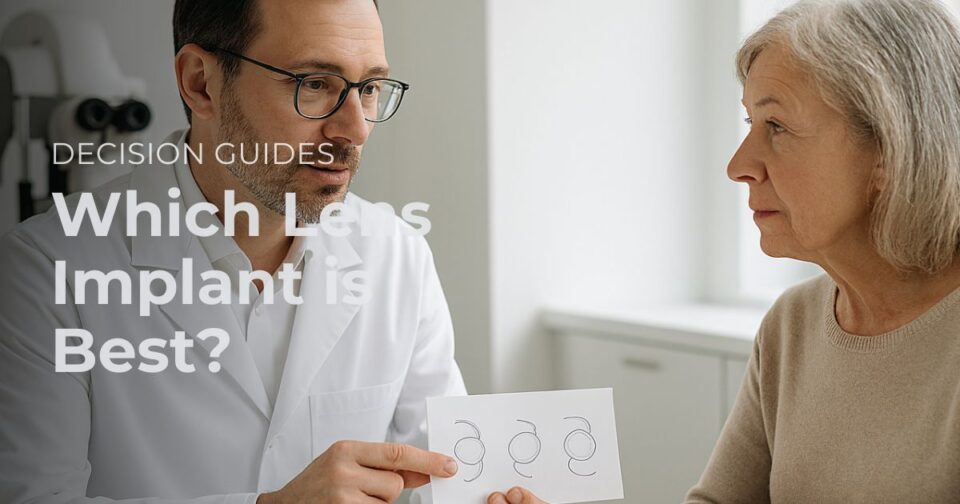
Lens replacement cost matters, but what matters more is whether the plan matches your eye condition and visual goals. Some patients want distance clarity. Others want less dependence on reading glasses. Others simply need a safer, more predictable option because of cataract, presbyopia, high hyperopia, or a lens-based cause of poor vision. Cost counseling only makes sense after that clinical question is answered.
What is lens replacement?
Lens replacement surgery removes the eye’s natural lens and replaces it with an artificial intraocular lens. It is often discussed in two settings:
- when a cataract is already affecting vision
- when the natural lens is still relatively clear, but a lens-based refractive solution may fit the patient better than corneal laser surgery
In practice, many patients also hear the term refractive lens exchange. For patients, the important point is simple: the cost changes depending on why surgery is being done and what kind of lens implant is being chosen.
💡 Dr. Roque’s Analogy
Think of lens replacement cost the way you would think of building a house. The bill is not just for the workers. It also depends on the design, the materials, the site conditions, and the finishing choices. In eye surgery, the “materials” include the intraocular lens, the “site conditions” are your eye findings, and the “design choices” are your visual goals.
What usually affects the final cost?
- The lens implant itself. Monofocal lenses usually cost less than toric, extended depth of focus, or multifocal lens options.
- Your refractive goal. Correcting astigmatism or reducing dependence on glasses can increase total cost.
- Whether femtosecond laser assistance is used. This can add to the bill.
- Anesthesia needs. Sedation or general anesthesia can increase the total cost.
- Hospital and facility fees. These are often separate from the surgeon’s professional fee.
- Diagnostic testing. Biometry, corneal measurements, retina checks, and other tests are often needed before surgery.
- Whether the eye is routine or high-risk. Dense cataract, weak zonules, prior surgery, or retinal disease can change planning and cost.
- Insurance or discount eligibility. PhilHealth, HMO authorization, and senior/PWD discounts may change the amount payable.
Example cost framework patients can understand
At ROQUE Eye Clinic, a common patient question is whether there is a fixed all-in price. The honest answer is no. A practical way to explain it is by showing the usual cost framework:
- Base professional fee package: may start at around ₱56,000 per eye in some lens-based surgery frameworks
- Senior/PWD mandated discount: eligible charges may reduce to around ₱40,000 per eye
- Femtosecond laser assistance: may add a substantial premium
- Sedation or general anesthesia: may add a substantial premium
- Lens implant fee: varies widely depending on monofocal, toric, EDOF, or multifocal choice
- Hospital bill and room charges: often billed separately
- Diagnostics and clearances: may be separate from the surgery package
That means a patient who compares one number from one clinic against one number from another clinic may be comparing very different things. That is the trap. A quotation only becomes meaningful when you know what is included and what is not.
What should you ask when comparing quotations?
- Is the quoted price for one eye or both eyes?
- What exact lens implant is included?
- Is astigmatism correction included?
- Are diagnostics included or billed separately?
- Is the hospital bill separate?
- Is laser assistance included, optional, or not part of the plan?
- Are medicines included?
- Will PhilHealth, HMO, or senior/PWD discounts apply to the quoted amount?
- Does the quote assume a routine case, or can it change if surgery is more complex?
- What happens if a backup lens or a different surgical plan becomes necessary?
What is usually included, and what is often separate?
Often included
- surgeon professional fee
- basic operating room professional services in some packages
- standard intraoperative consumables in some packages
Often separate
- premium lens implant fee
- hospital or facility charges
- room charges
- diagnostic testing
- medical clearance and blood work
- special anesthesia services
- medications and postoperative drops
Does lens choice really change the price that much?
Yes. This is usually the biggest driver of variation. A standard monofocal lens is designed mainly for one focal range, usually distance. A toric lens can help correct corneal astigmatism. An extended depth of focus lens or multifocal lens may reduce dependence on glasses for more than one distance, but these options also come with tradeoffs. Some patients gain convenience. Others may notice halos, glare, or reduced crispness in certain lighting conditions.
So the real question is not, “Which lens is the most expensive?” The real question is, “Which lens fits my eye, my lifestyle, and my tolerance for tradeoffs?”
🚨 Dr. Roque’s Emergency Warning
If you have sudden vision loss, severe eye pain, flashes and floaters, trauma, or a red painful eye, do not delay care while comparing prices online. In urgent cases, the correct next step is a prompt eye examination, not cost shopping.
Can PhilHealth, HMO, or senior/PWD discounts help?
Sometimes, yes. But patients make a common mistake here: they assume every part of the bill is discounted the same way. That is often not true. Eligibility depends on the diagnosis, the surgery classification, the facility, the approved charges, and whether the benefit applies to the professional fee, the hospital bill, or both.
That is why it is better to ask for a written quotation that clearly separates professional fees, lens fees, hospital fees, and any expected deductions. Otherwise, patients get surprised by charges they thought were already covered.
Anatomy Micro-Primer
Your natural lens sits behind the iris and helps focus light. With age, it can become cloudy as a cataract, or it may no longer give the visual performance you want. Lens replacement surgery removes that natural lens and replaces it with a clear artificial lens. Because the lens sits inside the eye, choosing it is more like choosing a permanent internal optical strategy than choosing a pair of eyeglasses.
Terminology Glossary
- Lens replacement: surgery that removes the eye’s natural lens and replaces it with an artificial one
- Intraocular lens: the artificial lens implanted inside the eye
- Monofocal lens: a lens designed mainly for one viewing distance
- Toric lens: a lens that also corrects astigmatism
- EDOF lens: extended depth of focus lens, designed to stretch the range of vision
- Multifocal lens: a lens designed to provide more than one focus point, with possible tradeoffs such as halos
- Femtosecond laser assistance: laser-guided assistance used in selected lens surgery cases
🧠 Dr. Roque’s Key Learning Points
- Lens replacement cost is not one universal number.
- The lens implant is often the biggest driver of total cost.
- Laser assistance, anesthesia, diagnostics, and hospital fees can materially change the quotation.
- A cheaper quote may exclude items that another quote already includes.
- A more expensive lens is not automatically the better lens for your eye.
- Senior/PWD, PhilHealth, and HMO support may reduce some charges, but not always every charge.
- The safest comparison is item-by-item, not headline number against headline number.
- The right decision starts with candidacy and eye findings, not with price alone.
Related Reading
✅ Dr. Roque’s Take-Home Message
The smartest way to think about lens replacement cost is not to ask, “What is the cheapest price?” Ask instead, “What exactly is included, what lens is being proposed, and why is this plan the right fit for my eyes?” That question protects you better than any headline promo ever will.
Frequently Asked Questions
Is lens replacement more expensive than standard cataract surgery?
It can be, especially when premium lens implants, astigmatism correction, or refractive goals are part of the plan.
Why do quotations from different clinics vary so much?
Because they may include different lenses, different diagnostics, different anesthesia plans, and different hospital or surgeon fees.
Does a premium lens always mean better vision?
No. It may offer more convenience for some patients, but it can also involve tradeoffs. Fit matters more than price tier.
Can I use PhilHealth for lens replacement?
It depends on the diagnosis, procedure classification, and facility billing rules. Ask for a written breakdown.
Can an HMO cover part of the surgery?
Sometimes. Coverage depends on the plan, authorization rules, and whether the procedure is medically indicated.
Are diagnostics usually included in the quote?
Not always. That is why patients should ask whether biometry, retina checks, and corneal measurements are separate.
Why does astigmatism correction increase cost?
Because it may require a toric lens or additional surgical planning to improve the final refractive result.
Can I ask for surgery first and choose the lens later?
You should not rush that decision. Lens choice is one of the most important parts of the planning process.
Is the cheapest package risky?
Not automatically. The real issue is whether the plan fits your eye and whether the quote is transparent and complete.
What is the best next step if I want an accurate quotation?
Have a proper eye examination and lens counseling visit, then request an itemized written quotation based on your actual findings.
References
- ROQUE Eye Clinic internal patient counseling framework for lens-based surgery pricing and package explanation.
- Standard patient education principles for cataract surgery, refractive lens exchange, intraocular lens selection, and informed financial counseling.
ROQUE Eye Clinic Patient Education Series
Reviewed by the Roque Advisory Council
Dr. Manolette Roque | Dr. Barbara Roque
St. Luke’s Medical Center Global City | Asian Hospital Medical Center
Philippines
Medical Disclaimer
This page does not replace a medical consultation. It does not create a doctor-patient relationship by itself. Prices, package components, and eligibility for discounts or coverage can change. Please confirm your current quotation, benefits, and surgical plan directly with the clinic after a full eye evaluation.