

Eylea for Diabetic Macular Edema: A Patient Guide
🤖 Quick Answer: Eylea is an anti-VEGF eye injection used to treat diabetic macular edema, a diabetes-related swelling of the retina’s center. It can reduce leakage, improve or stabilize vision, and lower the risk of further damage. Treatment usually starts with repeated injections, followed by ongoing monitoring and a schedule tailored to your eye’s response.
If you or a loved one has been told that Eylea may help treat diabetic macular edema (DME), it is normal to have many questions. What exactly is Eylea? Is it safe? How often do you need injections? Will it improve vision? And how does it compare with the other treatments your doctor may mention?
This patient-friendly guide explains what Eylea does, why retina specialists use it, what the treatment process looks like, what benefits and risks to expect, and how it fits into the overall care of diabetic eye disease.
🧩 Focus: Eylea (aflibercept) for diabetic macular edema
👁 Goal: Help patients understand how Eylea is used to reduce retinal swelling and protect vision
🛡 Evidence-Based: Preferred Practice Patterns • Standards of Care • Systematic Reviews • Meta-Analyses
🧠 Diabetic Eye Disease Knowledge Hub
Start with the complete guide:
Diabetic Eye Disease: The Complete Patient Guide
🔎 Quick Navigation
- What Is Eylea?
- Why Eylea Is Used for DME
- Who May Benefit from Eylea
- What the Injection Procedure Is Like
- How Often Eylea Is Given
- Expected Benefits
- Risks and Side Effects
- How It Compares with Other Treatments
- Frequently Asked Questions
Related Reading
- Diabetic Macular Edema Explained
- Anti-VEGF for Diabetic Macular Edema
- What Happens During an Eye Injection Procedure?
- Anti-VEGF Treatment Schedule for DME
- Vabysmo for Diabetic Macular Edema
📌 Key Learning Points
- Eylea is an anti-VEGF medicine injected into the eye to reduce diabetic macular edema.
- Its goal is to reduce retinal swelling, protect central vision, and improve or stabilize sight.
- Treatment usually involves a series of injections, not a one-time dose.
- Many patients improve, but the response can vary depending on how severe the swelling is and how long it has been present.
- Good diabetes, blood pressure, and cholesterol control still matter, even while receiving injections.
👁 What Is Eylea?
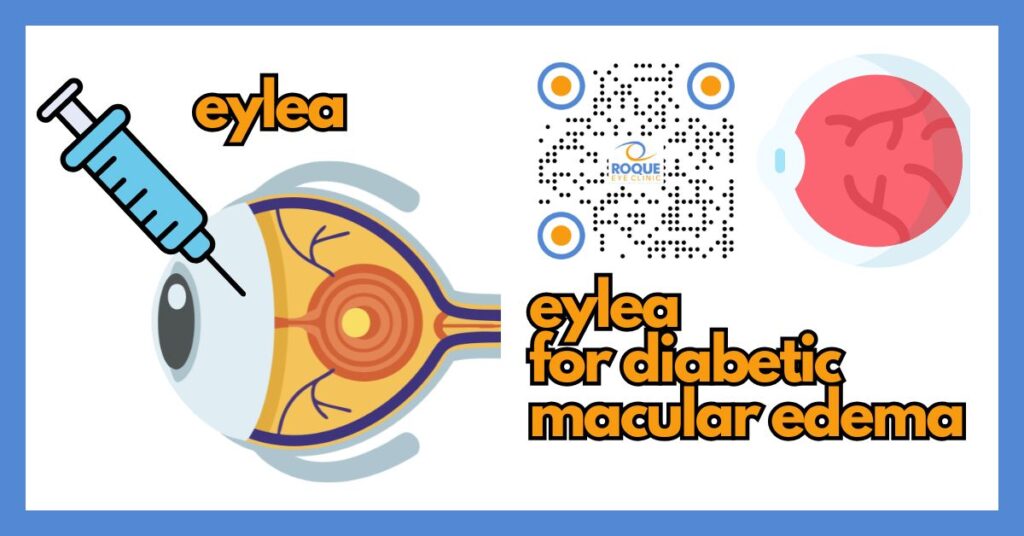
Eylea is the brand name for aflibercept, a prescription medicine injected into the eye by a retina specialist. It belongs to a group of medicines called anti-VEGF drugs. VEGF stands for vascular endothelial growth factor, a protein that plays a major role in abnormal leakage and abnormal blood vessel behavior inside the retina.
In diabetic macular edema, damaged retinal blood vessels leak fluid into the macula, the part of the retina responsible for detailed central vision. When the macula swells, patients may notice blurred reading vision, distorted lines, difficulty recognizing faces, or trouble driving.
Eylea works by binding to VEGF and helping reduce that abnormal leakage. As the swelling goes down, the retina may function better, and vision may improve or stabilize.
Why Eylea Is Used for Diabetic Macular Edema
Diabetic macular edema is one of the most common reasons people with diabetes lose central vision. Because the macula is responsible for fine detail, even a modest amount of swelling can interfere with reading, screen use, paperwork, and driving.
Retina specialists use Eylea when they want to treat center-involving DME or other clinically important macular swelling that threatens vision. In many patients, anti-VEGF injections are considered first-line therapy because they directly target the leakage pathway driving the swelling.
Eylea is not a “vitamin shot” and not a cure for diabetes. Instead, it is part of a broader plan that may also include:
- close retinal imaging with OCT scans,
- ongoing blood sugar control,
- blood pressure and cholesterol management,
- and, in selected cases, laser treatment or steroid implants.
Read the bigger picture here: Diabetic Eye Treatment in the Philippines.
Who May Benefit from Eylea?
Eylea may be considered when a patient has diabetic macular edema affecting the center of vision or when the retina specialist believes anti-VEGF treatment is appropriate based on examination and imaging results.
Patients who may benefit include:
- those with center-involving DME,
- those with blurred vision clearly linked to retinal swelling,
- those with OCT evidence of persistent macular fluid,
- and some patients whose doctor wants to reduce leakage before considering other interventions.
On the other hand, not everyone with diabetes or even everyone with DME needs Eylea immediately. In some cases, the retina specialist may recommend observation, a different anti-VEGF medicine, focal laser, steroid treatment, or a combination strategy.
Treatment selection depends on:
- how much the patient’s vision is affected,
- whether the DME involves the center of the macula,
- how severe the OCT swelling is,
- previous treatment response,
- the patient’s ability to return for follow-up,
- and other eye conditions such as glaucoma, cataract, or traction.
Learn more here: Center-Involving DME and OCT for Diabetic Macular Edema.
🧪 What the Injection Procedure Is Like
Many patients worry most about the injection itself. Fortunately, intravitreal injections are usually quick, controlled, and performed with numbing medication. The actual injection takes only a short time.
A typical treatment day may look like this:
- Your vision may be checked.
- The eye is cleaned carefully to reduce infection risk.
- Numbing drops, gel, or local anesthetic are applied.
- A small eyelid holder may be used to keep the eye open.
- The doctor places the medicine into the vitreous cavity with a tiny needle.
- You are monitored briefly and then allowed to go home.
Patients often feel pressure more than pain. Afterward, the eye may feel slightly scratchy, teary, or irritated for a short time. Some people notice a small floating bubble or moving spot briefly after treatment.
Read the step-by-step guide here: Anti-VEGF Injection Procedure.
💊 How Often Eylea Is Given
One of the most important practical questions is how often Eylea injections are needed. For Eylea 2 mg in diabetic macular edema, treatment typically starts with a loading phase. That means the medicine is given every 4 weeks for the first 5 injections, followed by a maintenance interval that is often extended to every 8 weeks, although some patients may still need more frequent dosing depending on response.
This is why patients should think of Eylea as a treatment program, not a one-time event. The retina specialist reassesses the eye regularly with examination and OCT imaging. If the swelling improves and remains controlled, the interval may be maintained. If the swelling returns, the schedule may need adjustment.
Several real-world factors affect the plan:
- how severe the edema is at the start,
- how much the OCT improves after early injections,
- whether the patient misses visits,
- and whether the doctor sees persistent fluid despite treatment.
Read more here: Anti-VEGF Treatment Schedule.
Expected Benefits of Eylea
The main expected benefits of Eylea are:
- reduction of macular swelling,
- improvement or stabilization of central vision,
- lower risk of further visual decline,
- and better retinal anatomy on OCT scans.
Some patients notice clearer vision relatively early. Others improve more gradually over several visits. A few patients may stabilize without dramatic visual gain, which is still important because stopping further loss is a meaningful success.
It is also important to be realistic. If the retina has already been damaged for a long time, the vision may not return all the way to normal even if the swelling improves. The earlier treatment starts, the more likely it is that useful vision can be preserved.
This is one reason why regular retinal screening matters so much. See Diabetic Eye Exam Schedule and How to Prevent Diabetic Blindness.
Risks and Side Effects
No medical treatment is risk-free, and Eylea is no exception. Most injection visits are uneventful, but patients should still understand possible side effects and serious complications.
Common short-term effects
- mild eye irritation,
- redness,
- tearing,
- a scratchy sensation,
- temporary floaters or tiny spots in vision.
Serious but less common risks
- endophthalmitis (serious infection inside the eye),
- retinal detachment,
- increase in eye pressure after injection,
- intraocular inflammation,
- and, as listed in product safety information, possible arterial thromboembolic events such as stroke or heart attack, although these are uncommon.
Eylea should not be given in an eye with an active eye infection or significant inflammation. The retina specialist also screens for medication allergy or hypersensitivity concerns.
Seek urgent eye evaluation if you develop severe eye pain, marked redness, a strong drop in vision, worsening light sensitivity, or new dense floaters after an injection. These can be warning signs of a serious complication that should not be ignored.
How Eylea Compares with Other DME Treatments
Eylea is one of several anti-VEGF treatments used for diabetic macular edema. Depending on the situation, your doctor may also discuss Vabysmo, Lucentis, Avastin, or steroid-based options such as Ozurdex. Laser therapy may still be useful in selected cases, and surgery may be needed if traction or other advanced complications are present.
Patients often ask, “Which is best?” The practical answer is that the “best” option depends on the eye in front of the doctor. Some eyes respond very well to one medicine. Others need a switch because fluid persists. Cost, availability, visit frequency, baseline vision, lens status, glaucoma risk, and other medical factors can all influence the choice.
AAO educational material has noted that all three older anti-VEGF agents used in DME can be effective, while aflibercept may show an advantage in some patients who begin treatment with worse baseline visual acuity. This is one reason Eylea remains an important option in many treatment discussions.
Related comparisons:
Why Follow-Up Matters Just as Much as the First Injection
One of the biggest reasons treatment fails in real life is not because the medicine “doesn’t work,” but because patients cannot maintain the follow-up plan. DME often needs repeated treatment and careful monitoring. Missing visits may allow the swelling to return or worsen.
That is why your doctor may emphasize:
- keeping the next appointment even if the eye already feels better,
- continuing diabetes care with your internist or endocrinologist,
- getting recommended OCT scans,
- and reporting any sudden change in vision right away.
Eylea works best when it is part of a consistent plan, not a rescue treatment used only when vision has already become significantly worse.
What Patients Should Ask Before Starting Eylea
Before treatment begins, it helps to ask your retina specialist:
- Do I have center-involving DME?
- What does my OCT show?
- Why are you recommending Eylea instead of another option?
- How often do you expect I may need injections at the start?
- How will we know if it is working?
- What symptoms after the injection should worry me?
- Could I need laser, steroids, or surgery later?
Good treatment decisions are easier when the patient understands the plan and can commit to follow-up.
Continue Reading
- Anti-VEGF for Diabetic Macular Edema
- Anti-VEGF Injection Procedure
- Anti-VEGF Treatment Schedule
- Diabetic Macular Edema Explained
- Diabetic Eye Treatment in the Philippines
🏁 Take-Home Message
Eylea is a well-established anti-VEGF treatment for diabetic macular edema. Its job is to reduce retinal leakage, improve or stabilize central vision, and help protect the macula from further diabetes-related damage.
The most important thing for patients to remember is that success usually depends on early treatment, regular follow-up, OCT monitoring, and good diabetes control—not just the injection itself.
❓ Frequently Asked Questions
Is Eylea the same as laser treatment?
No. Eylea is an anti-VEGF medicine injected into the eye, while laser uses focused light treatment. They are different treatments and may be used in different situations.
How many Eylea injections will I need?
Many patients need a starting series of injections followed by ongoing treatment or monitoring. The exact number varies depending on how the eye responds.
Can Eylea cure diabetic macular edema permanently?
Eylea helps control DME, but it does not cure diabetes itself. Some eyes need repeated treatment because swelling can return.
Does Eylea hurt?
Most patients feel pressure or brief discomfort rather than severe pain because the eye is numbed before the injection.
What if my vision does not improve right away?
Some patients improve quickly, while others need several visits before OCT swelling decreases enough for vision to improve. In some cases, the goal is stabilization rather than dramatic improvement.
Can my doctor switch me from Eylea to another treatment?
Yes. If the response is incomplete or the treatment plan changes, a retina specialist may discuss switching to another anti-VEGF medicine, steroid therapy, or adding another approach.
📚 References
- U.S. Food and Drug Administration. EYLEA (aflibercept) injection prescribing information.
- EYLEA official prescribing and dosing resources for diabetic macular edema.
- American Academy of Ophthalmology. Diabetic Macular Edema: Diagnosis and Management.
- American Academy of Ophthalmology educational updates on initiating anti-VEGF therapy for DR/DME.
- DRCR Retina Network and related peer-reviewed anti-VEGF clinical studies in DME.
🤝 Roque Eye Clinic Patient Education Series
Reviewed by the Roque Advisory Council
Dr Manolette Roque | Dr Barbara Roque
St Luke’s Medical Center Global City | Asian Hospital Medical Center
Philippines
Medical Review: Roque Advisory Council
Last Updated: March 2026
This article is intended for educational purposes only and does not replace professional medical consultation.
ANIMATION
BOOK AN APPOINTMENT
It takes less than 5 minutes to complete your online booking. Alternatively, you may call our BGC Clinic, or our Alabang Clinic for assistance.