


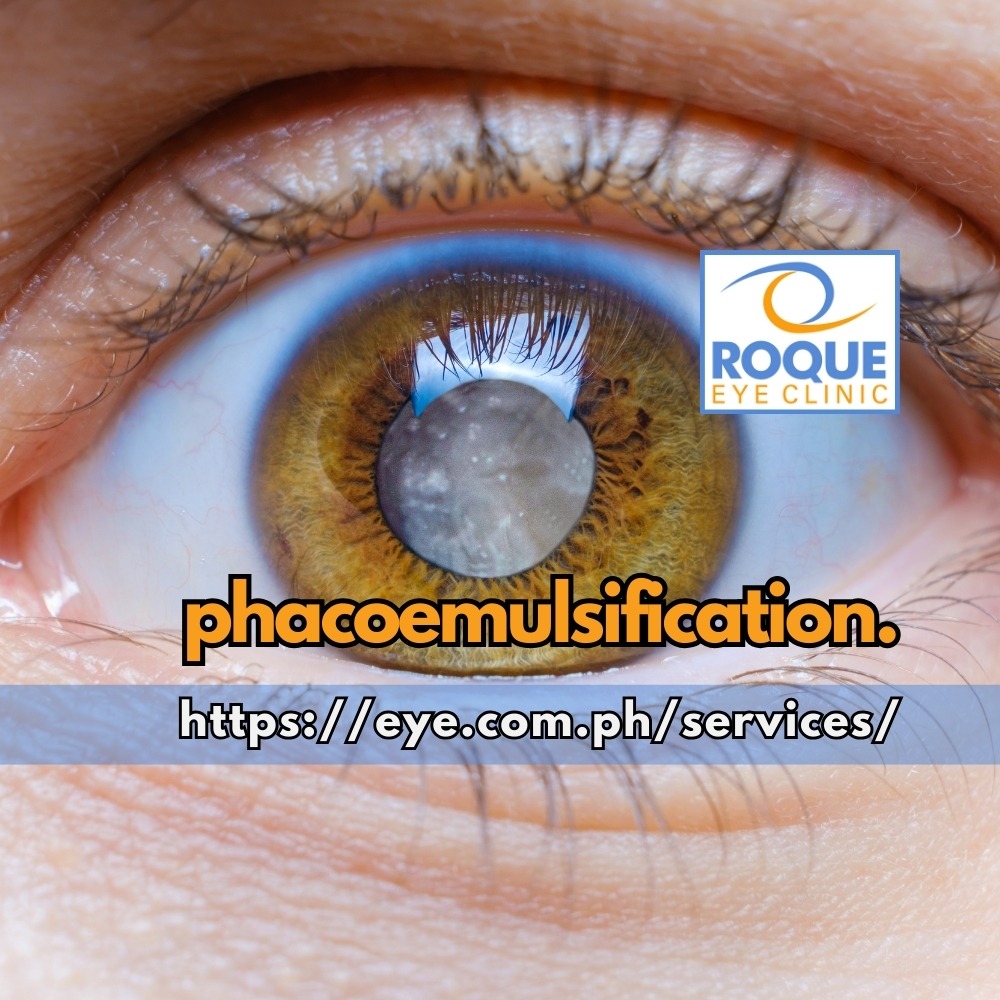
Phacoemulsification is a minimally invasive cataract surgery that removes the cloudy lens and replaces it with a clear foldable acrylic intraocular lens. It uses a small incision, local anesthesia, and modern technology to restore clearer vision with faster recovery for most patients.
- The published price refers to the surgeon’s professional fee for one eye only. The final net amount may be reduced after applicable discounts, such as Senior Citizen or PWD benefits.
- If the procedure is performed under general anesthesia, a fifty percent premium is added to the surgeon’s professional fee.
- Hospital fees and the cost of the intraocular lens implant are billed separately and are paid directly by the patient.
- When applicable, PhilHealth pre-approval is required. Insurance or HMO cases also require an approved letter of authority or guarantee letter before the procedure.
Dr. Manolette Roque | Dr. Barbara Roque
St. Luke’s Medical Center – Global City
2nd Floor, Units 217-218, Roque Eye Clinic, Medical Arts Building
Rizal Drive cor. 5th Ave, Taguig City 1634, Philippines
+63-917-844-2020
+63-998-998-2020
+63-2-8828-2020
+63-2-8789-7700 ext. 7217
+63-2-8789-7700 ext. 7218
Dr. Manolette Roque | Dr. Barbara Roque
Asian Hospital and Medical Center
5th Floor, Unit 509, Roque Eye Clinic, Medical Office Building
2205 Civic Drive, Alabang, Muntinlupa City 1781, Philippines
+63-917-795-2020
+63-998-997-2020
+63-2-8771-9253
+63-2-8771-9000 ext. 7509
PHACOEMULSIFICATION WITH FOLDABLE ACRYLIC INTRAOCULAR LENS IMPLANTATION
Phacoemulsification with foldable acrylic intraocular lens implantation is a standard, minimally invasive cataract surgery that restores clearer vision. During this procedure, your ophthalmologist removes the cloudy natural lens and replaces it with a clear artificial lens. As a result, light can focus properly again on the retina, which improves visual quality and daily function.
WHAT THIS PROCEDURE TREATS
A cataract develops when the natural lens becomes cloudy over time. Therefore, patients often notice blurred vision, glare, poor night driving, faded colors, and difficulty reading. Phacoemulsification directly removes the cloudy lens. At the same time, lens implantation restores focusing power. This combined approach provides a reliable and well-studied solution for visually significant cataracts.
HOW THE SURGERY IS PERFORMED
First, the eye is numbed using local anesthesia, usually with eye drops and, when needed, a small anesthetic injection. Next, the surgeon creates a very small corneal incision. Then, an ultrasound probe gently breaks the cloudy lens into tiny fragments. The surgeon removes these fragments through suction. Afterward, a foldable acrylic intraocular lens is inserted through the same small opening and positioned securely. Because the incision is small, stitches are often not required.
KEY FEATURES AND BENEFITS
This modern cataract surgery method offers several important advantages. Consequently, it remains the preferred technique worldwide.
1. Small incision with minimal tissue disruption
2. Short operating time in most cases
3. Faster visual recovery for many patients
4. Predictable and stable lens positioning
5. Wide selection of lens power options
INTRAOCULAR LENS OPTIONS
The implanted foldable acrylic lens is designed to stay permanently inside the eye. Moreover, it does not require maintenance or replacement. Lens power is carefully measured before surgery to match your eye. Depending on your needs, your doctor may recommend a monofocal or specialty lens design to support distance or selected ranges of vision.
RECOVERY AND AFTERCARE
Most patients go home on the same day. Vision often improves within days; however, healing continues for several weeks. You will use prescribed eye drops to control inflammation and prevent infection. In addition, you should avoid eye rubbing, heavy lifting, and water contamination early in recovery. Follow-up visits allow your doctor to monitor healing and visual results.
SAFETY INFORMATION
Phacoemulsification with lens implantation has a strong safety record when performed by trained surgeons. Still, all surgery carries risk. Possible complications include infection, inflammation, pressure changes, or retinal problems. Therefore, proper screening, accurate measurements, and guided aftercare remain essential for safe outcomes.
Related Services
Related products
₱ 5,600.00
₱ 180,000.00
Original price was: ₱ 17,500.00.₱ 12,500.00Current price is: ₱ 12,500.00.
Original price was: ₱ 35,000.00.₱ 25,000.00Current price is: ₱ 25,000.00.