




PRICE
OVERVIEW, TERMS & CONTACT INFO
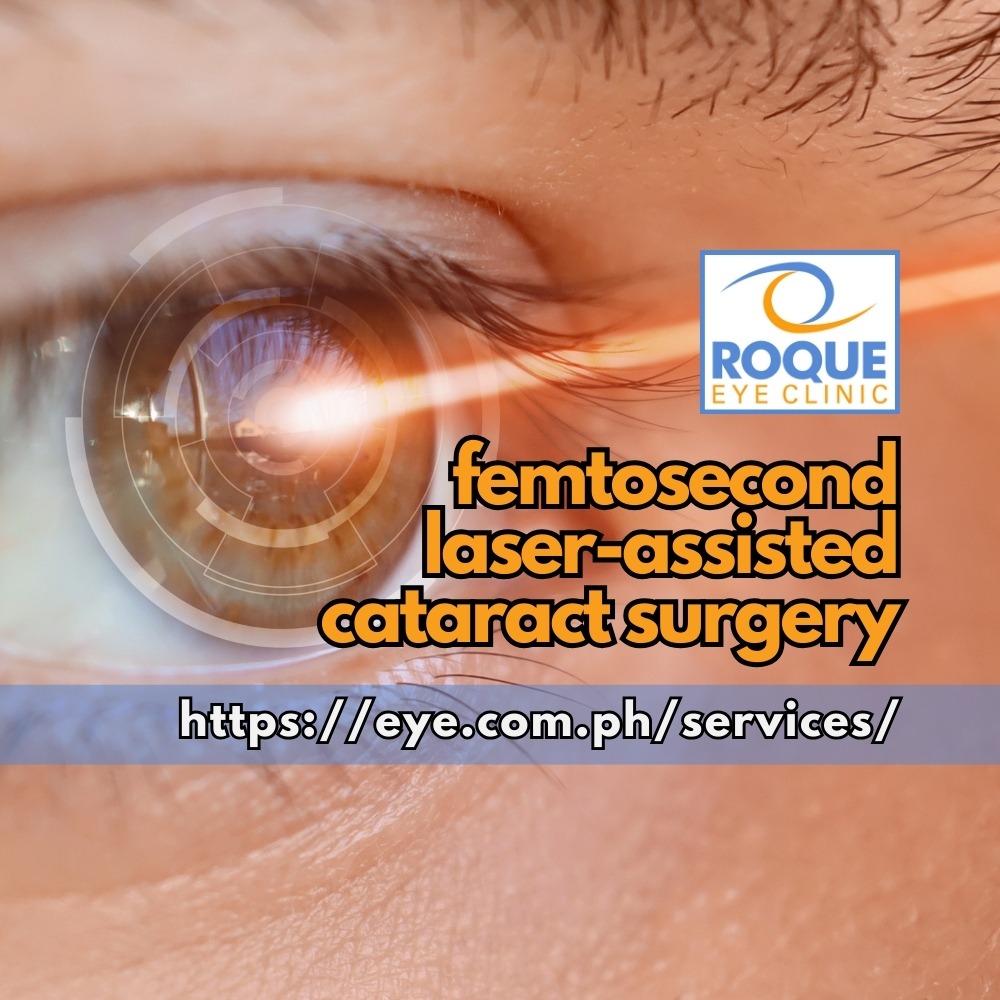
Femtosecond laser-assisted cataract surgery uses computer-guided laser technology to improve precision in key surgical steps. It helps create accurate incisions, soften the cataract, and optimize premium lens placement. Many patients choose FLACS for customized treatment and astigmatism correction during cataract surgery.
- The published price refers to the surgeon’s professional fee for one eye only. The final net amount may be reduced after applicable discounts, such as Senior Citizen or PWD benefits.
- If the procedure is performed under general anesthesia, a fifty percent premium is added to the surgeon’s professional fee.
- Hospital fees and the cost of the intraocular lens implant are billed separately and are paid directly by the patient.
- When applicable, PhilHealth pre-approval is required. Insurance or HMO cases also require an approved letter of authority or guarantee letter before the procedure.
Dr. Manolette Roque | Dr. Barbara Roque
St. Luke’s Medical Center – Global City
2nd Floor, Units 217-218, Roque Eye Clinic, Medical Arts Building
Rizal Drive cor. 5th Ave, Taguig City 1634, Philippines
+63-917-844-2020
+63-998-998-2020
+63-2-8828-2020
+63-2-8789-7700 ext. 7217
+63-2-8789-7700 ext. 7218
DETAILS
FEMTOSECOND LASER-ASSISTED CATARACT SURGERY (FLACS)
Femtosecond Laser-Assisted Cataract Surgery, also called FLACS, is an advanced method of cataract removal that uses computer-guided laser technology to perform key steps of surgery with high precision. Instead of relying only on handheld instruments, the surgeon uses a femtosecond laser to create corneal incisions, open the lens capsule, and soften the cloudy lens. As a result, the procedure becomes more accurate, reproducible, and customized for each eye.
HOW FLACS WORKS
First, detailed three-dimensional scans of the eye are captured. Then the laser uses these images to map and treat the exact surgical area. Next, the laser creates precise micro-incisions and a circular opening in the lens capsule. It also pre-fragments the cataract into smaller pieces. Because of this step, less ultrasound energy is often needed during lens removal. The surgeon then completes the procedure and implants the selected intraocular lens.
KEY BENEFITS
FLACS offers several potential advantages when compared with conventional cataract surgery. However, suitability still depends on individual eye findings and clinical goals.
1. Greater precision in corneal incisions and lens capsule opening.
2. Improved centration and sizing for premium lens implants.
3. Reduced ultrasound energy in many cases.
4. Better astigmatism management with laser-created arcuate incisions.
5. High level of customization based on eye imaging data.
WHO MAY BENEFIT MOST
FLACS is often helpful for patients who choose premium intraocular lenses, such as toric or extended depth of focus lenses. In addition, patients with corneal astigmatism may benefit from laser-assisted astigmatism correction during the same session. It is also useful when consistent capsule shape and lens positioning are critical for visual outcomes.
SAFETY AND CLINICAL EVIDENCE
Multiple peer-reviewed studies show that femtosecond laser steps are accurate and predictable. Moreover, large clinical series confirm that FLACS is generally safe when performed by trained cataract surgeons using approved systems. Visual outcomes are comparable to excellent standard surgery, while precision steps are enhanced. Nevertheless, final results still depend on retinal health, optic nerve status, and correct lens selection.
IMPORTANT CONSIDERATIONS
Not every cataract case requires FLACS. Therefore, a full eye examination and imaging review guide the recommendation. Cost, lens choice, corneal shape, and ocular comorbidities also influence planning. Your surgeon explains the expected benefits, limits, and alternatives before scheduling surgery.
Related Services
Related products
₱ 54,616.00
₱ 135,874.00
₱ 62,071.00
₱ 36,915.00