

PRICE
OVERVIEW, TERMS & CONTACT INFO
OVERVIEW
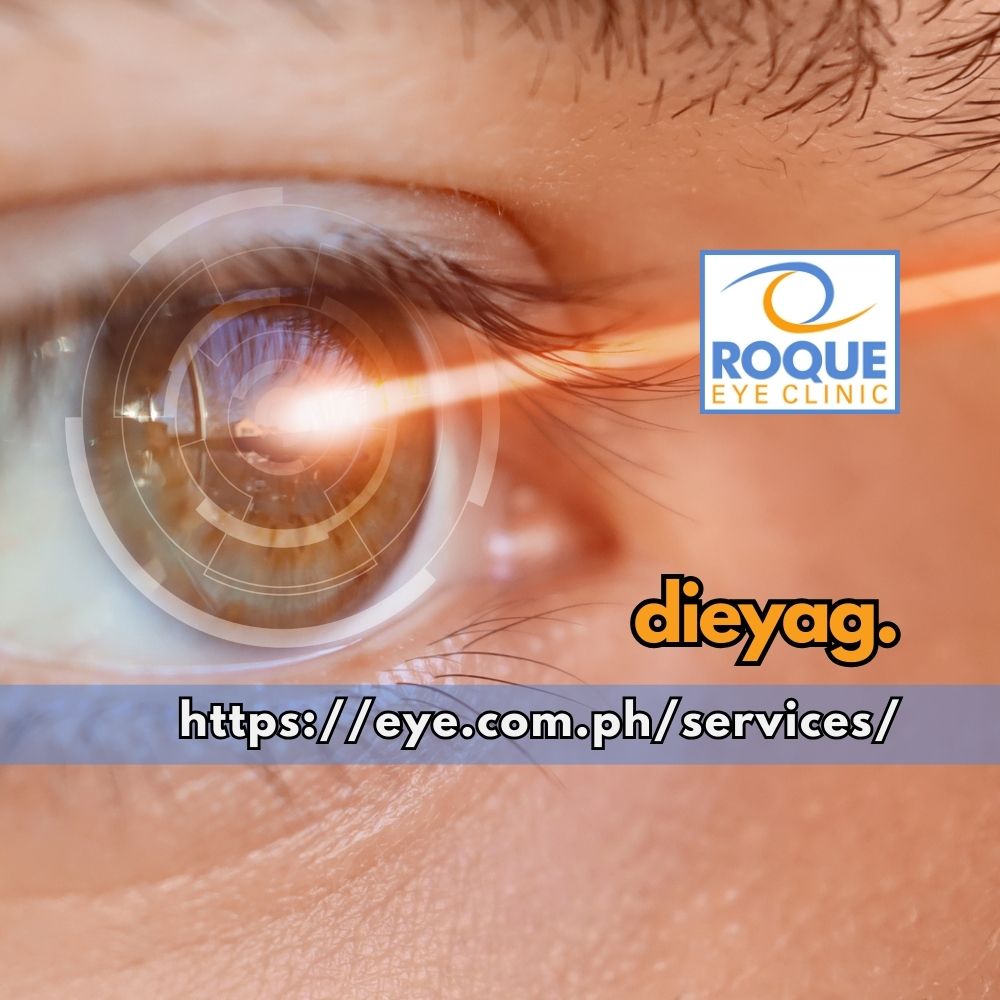
DIEYAG is a clinic-based Nd:YAG laser treatment that disrupts ingrown epithelial cells in the cornea after surgery or injury. It is minimally invasive and highly targeted. The procedure helps control early ingrowth and may prevent more invasive surgical treatment when used in appropriate cases.
TERMS AND CONDITIONS, INCLUSIONS, AND EXCLUSIONS
1. Service includes Nd:YAG laser disruption of confirmed epithelial ingrowth.
2. Eligibility requires slit-lamp examination and diagnostic confirmation.
3. Fees vary based on extent and number of treatment areas.
4. Multiple sessions may be needed in some cases.
5. Advanced ingrowth may require surgical management instead.
6. Post-treatment medicines and follow-up visits are billed separately.
7. Visual outcome depends on baseline corneal status.
CONTACT INFORMATION
Dr. Manolette Roque | Dr. Barbara Roque
St. Luke’s Medical Center – Global City
2nd Floor, Units 217-218, Roque Eye Clinic, Medical Arts Building
Rizal Drive cor. 5th Ave, Taguig City 1634, Philippines
+63-917-844-2020
+63-998-998-2020
+63-2-8828-2020
+63-2-8789-7700 ext. 7217
+63-2-8789-7700 ext. 7218
Dr. Manolette Roque | Dr. Barbara Roque
Asian Hospital and Medical Center
5th Floor, Unit 509, Roque Eye Clinic, Medical Office Building
2205 Civic Drive, Alabang, Muntinlupa City 1781, Philippines
+63-917-795-2020
+63-998-997-2020
+63-2-8771-9253
+63-2-8771-9000 ext. 7509
DETAILS
DISRUPTION OF INGROWN EPITHELIUM WITH ND:YAG LASER (DIEYAG)
Disruption of Ingrown Epithelium with Nd:YAG Laser, also called DIEYAG, is a precise laser treatment that removes or breaks abnormal epithelial cell growth inside the cornea or along a prior surgical interface. Doctors use this service to manage epithelial ingrowth after refractive or corneal surgery. As a result, the procedure helps restore corneal clarity and protects visual quality.
WHAT THIS SERVICE TREATS
Epithelial ingrowth occurs when surface corneal cells migrate into deeper layers after surgery or trauma. These misplaced cells can create haze, irregularity, or visual distortion. DIEYAG targets these cells directly. Therefore, the laser disrupts the unwanted tissue without opening the cornea again in many suitable cases.
HOW THE PROCEDURE WORKS
The Nd:YAG laser delivers focused energy pulses to the ingrown epithelial nests. First, the eye doctor examines and maps the affected area. Next, anesthetic drops provide comfort. Then, the laser applies controlled pulses to break and stop the abnormal cell clusters. Consequently, the body clears the disrupted cells over time.
WHEN DOCTORS RECOMMEND DIEYAG
Ophthalmologists consider DIEYAG when epithelial ingrowth appears limited and well defined. For example, it may be recommended in these situations.
1. Post-LASIK epithelial ingrowth
2. Interface cell nests after corneal procedures
3. Localized ingrowth with visual symptoms
4. Progressive but focal epithelial invasion
5. Cases where flap lifting is not preferred
PATIENT EXPERIENCE AND RECOVERY
The procedure usually takes only a few minutes in the clinic. Patients remain awake and comfortable with topical anesthesia. Most patients report minimal discomfort during treatment. Vision may appear temporarily blurred afterward. However, daily activities usually resume soon, based on doctor advice.
SAFETY AND CLINICAL VALUE
DIEYAG offers a minimally invasive option for selected epithelial ingrowth cases. Because the treatment avoids surgical lifting in many patients, recovery may be simpler. Careful case selection improves success rates. Follow-up visits allow the doctor to confirm that the ingrowth remains controlled.
Related Services
Related products
₱ 28,000.00
₱ 51,633.00
₱ 16,800.00
₱ 36,200.00