



PRICE
OVERVIEW, TERMS & CONTACT INFO
At ROQUE Eye Clinic, we can remove conjunctival nevi if it is cosmetically unacceptable to the patient. This is performed for benign conjunctival melanotic lesions only. If a lesion is suspected to be potentially malignant, such as in cases of melanoma, then an excision biopsy will be recommended instead. This will entail surgical removal of the pigmented lesion with histopathologic analysis.
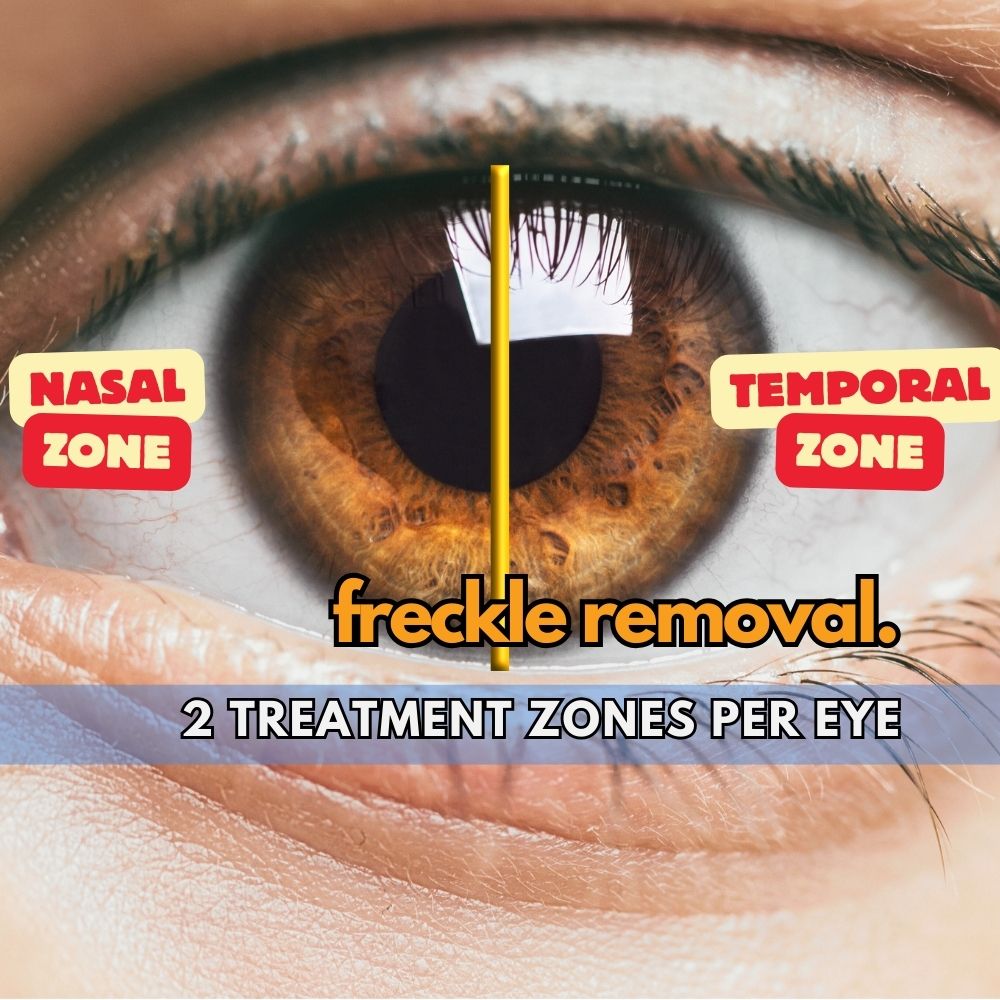
1. This published rate is the professional fee for one of two possible treatment zones per eye.
2. Each eye has a nasal treatment zone and a temporal treatment zone. Take a look at the gallery image to view each treatment zone.
3. The facility fee for using the laser machine per eye is paid directly at the hospital billing section.
4. Pre-operative evaluation, post-laser medications, and post-operative evaluations are excluded.
5. Results may vary per individual.
6. Additional treatments may be necessary.
Dr. Manolette Roque | Dr. Barbara Roque
St. Luke’s Medical Center – Global City
2nd Floor, Units 217-218, Roque Eye Clinic, Medical Arts Building
Rizal Drive cor. 5th Ave, Taguig City 1634, Philippines
+63-917-844-2020
+63-998-998-2020
+63-2-8828-2020
+63-2-8789-7700 ext. 7217
+63-2-8789-7700 ext. 7218
Dr. Manolette Roque | Dr. Barbara Roque
Asian Hospital and Medical Center
5th Floor, Unit 509, Roque Eye Clinic, Medical Office Building
2205 Civic Drive, Alabang, Muntinlupa City 1781, Philippines
+63-917-795-2020
+63-998-997-2020
+63-2-8771-9253
+63-2-8771-9000 ext. 7509
DETAILS
OVERVIEW
A conjunctival nevus (often called an “eye freckle”) is a common, usually benign spot on the clear tissue that covers the white part of the eye. Many nevi stay stable for years. However, some patients request removal for cosmetic reasons, irritation, or because the spot changes over time. Conjunctival nevus laser removal is a clinic-based procedure that aims to reduce or remove visible pigmentation while protecting the eye’s delicate surface.
WHO MAY BENEFIT
You may consider conjunctival nevus (eye freckle) laser removal if the spot affects your confidence, causes friction with blinking, or repeatedly gets inflamed. In addition, your ophthalmologist may recommend removal or biopsy if the lesion shows warning signs such as rapid growth, new blood vessels, increasing thickness, or a change in color pattern. Because some pigmented lesions can mimic more serious conditions, a careful slit-lamp exam and photo documentation matter.
HOW LASER REMOVAL WORKS
Your surgeon first evaluates the lesion’s location, depth, and features. Then, after numbing drops, the laser targets the pigment with controlled energy to minimize damage to surrounding tissue. Moreover, your doctor selects settings based on safety and appearance goals. In some cases, your ophthalmologist may advise surgical excision and laboratory analysis instead of laser, especially when the lesion looks atypical.
WHAT TO EXPECT
The procedure usually takes minutes. Afterward, you may feel mild stinging, tearing, or a gritty sensation, similar to a small scratch. Therefore, your doctor may prescribe antibiotic and anti-inflammatory drops to support healing. Most patients return to desk work quickly, although the eye can look red for several days.
POTENTIAL BENEFITS AND LIMITATIONS
Laser removal can improve the cosmetic appearance and reduce irritation. However, results vary because pigment can sit at different depths. As a result, some patients need more than one session, while others may notice residual discoloration. Also, if your doctor suspects a risky lesion, excision with histopathology offers a clearer diagnosis than laser alone.
RISKS AND POSSIBLE SIDE EFFECTS
All eye surface procedures carry risks. These can include temporary redness, discomfort, dryness, delayed healing, scarring, infection, recurrence of pigment, or uneven color. Rarely, the lesion can look more noticeable during early healing before it improves.
AFTERCARE AND SAFETY REMINDERS
Use drops exactly as prescribed and avoid rubbing the eye. In addition, limit swimming and eye makeup until your doctor clears you. Seek urgent care if you develop worsening pain, marked light sensitivity, thick discharge, sudden drop in vision, or a rapidly enlarging dark spot.
IMPORTANT MEDICAL AND LEGAL NOTE
This page provides general medical information and does not replace an in-person eye examination. A licensed ophthalmologist must assess any pigmented eye lesion to confirm the diagnosis and the safest treatment plan.
Related Services
Related products
₱ 84,000.00
₱ 22,400.00
₱ 135,874.00
₱ 84,000.00