



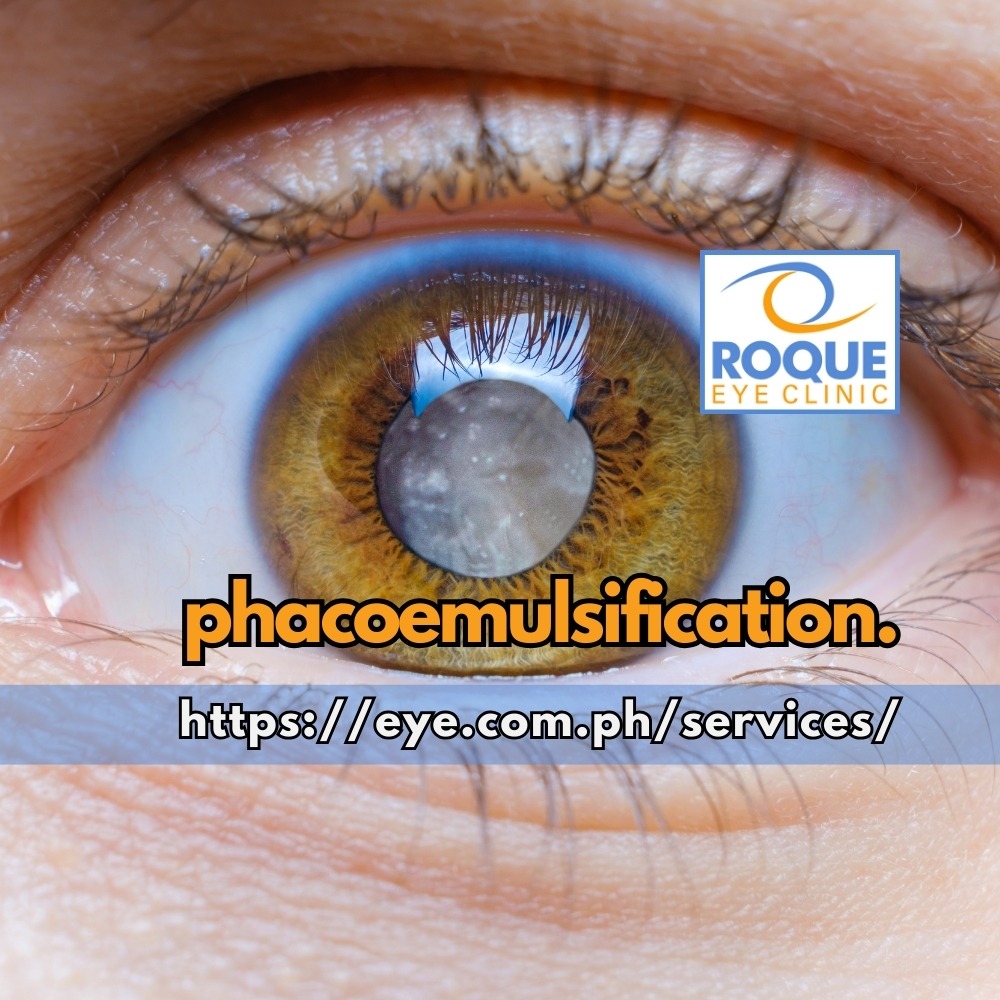
PHACOEMULSIFICATION
Phacoemulsification is a modern cataract surgery service that removes a cloudy natural lens and replaces it with a clear artificial intraocular lens. Cataracts often cause blurred vision, glare, and poor contrast, especially in bright light or at night. During phacoemulsification, the surgeon uses ultrasound energy to break the cloudy lens into tiny fragments and removes them through a small incision. As a result, vision clarity often improves and daily activities such as reading, driving, and recognizing faces become easier.
WHAT THIS SERVICE TREATS
This procedure treats cataracts, a condition in which the eye’s natural lens becomes cloudy. Cataracts may develop due to aging, diabetes, long-term steroid use, eye injury, or other eye conditions. Therefore, the ophthalmologist confirms that cataracts cause the visual symptoms through clinical examination and diagnostic testing before recommending surgery.
HOW THE PROCEDURE WORKS
First, the surgeon numbs the eye using anesthetic drops or local anesthesia, depending on the case. Next, a small incision is created, and an opening is made in the lens capsule. The surgeon then applies ultrasound energy to break the cataract into small pieces and gently removes them. After cataract removal, a foldable artificial lens is inserted into the capsule. Because the incision is small, it often seals on its own and supports faster recovery.
WHO MAY BENEFIT
Phacoemulsification may benefit patients when cataracts interfere with daily function or safety. For example, surgery may be advised for patients who experience the following concerns.
1. Blurred or dim vision that affects work or household tasks
2. Glare or halos, especially while driving at night
3. Reduced contrast or difficulty reading small print
4. Cataracts that limit retinal examination or treatment planning
5. Visual goals that may improve with lens-based correction
RECOVERY AND AFTERCARE
Vision often improves within a few days, although clarity may continue to stabilize over several weeks. Some patients notice mild irritation, dryness, or light sensitivity during early healing. Therefore, prescribed eye drops and scheduled follow-up visits play an important role in recovery. Patients should avoid rubbing the eye and should follow activity instructions provided by the surgeon.
SAFETY AND IMPORTANT RISK INFORMATION
Phacoemulsification has a long track record of safety and effectiveness when proper screening and technique are used. However, all surgery carries some risk. Possible complications include infection, inflammation, eye pressure changes, swelling, and rare retinal problems. Pre-existing eye conditions and individual healing responses also influence outcomes. A complete eye evaluation allows the surgeon to assess suitability and discuss expected results.