

Pediatric Eye Conditions: A Parent’s Guide to Common Eye Problems in Children
Children do not always say that something is wrong with their vision. Many eye conditions in children are quiet at first. This page explains the most common pediatric eye conditions, the warning signs parents should not ignore, and when your child needs a complete eye examination.
🧠 Dr. Roque’s Quick Answer
The most common pediatric eye conditions include refractive errors, amblyopia, strabismus, blocked tear ducts, allergic eye disease, droopy eyelids, and less commonly cataract, glaucoma, retinal disease, and eye tumors. The safest mindset is this: if a child has a wandering eye, a white pupil, a droopy eyelid that covers the pupil, persistent tearing with light sensitivity, poor visual behavior, or repeated headaches with reading, do not wait and hope it will pass.
🎯 Focus
Help parents recognize common eye conditions in children and separate routine concerns from urgent danger signs.
🧩 Goal
Make the next step clear: observe wisely, seek screening on time, and arrange a full eye exam when red flags appear.
👁️ Evidence-Based
This article follows current guidance from pediatric ophthalmology and ophthalmology organizations, plus major screening recommendations.
ROQUE Eye Clinic Pediatric Ophthalmology Knowledge Hub
This cornerstone page is an overview. It helps parents understand the big picture, but it does not replace a child-specific examination.
Related internal pathways: Child Eye Problems · Strabismus · Ocular Emergencies · When Should I See an Eye Doctor?
📚 Quick Navigation
What counts as a pediatric eye condition? Common conditions Warning signs Screening Treatment FAQ
🧠 Dr. Roque’s Key Learning Points
- Children can have significant eye disease even when they do not complain.
- Amblyopia is a vision-development problem. Delayed treatment can reduce the chance of full recovery.
- Strabismus is not just cosmetic. A wandering eye can affect visual development and binocular vision.
- A white pupil, absent red reflex, or unusual glow in photographs is urgent.
- Persistent tearing with light sensitivity or a cloudy cornea is not a “simple blocked tear duct” until proven otherwise.
- Some common issues, such as blocked tear ducts and refractive errors, are treatable and often do very well when caught early.
- Screening is useful, but screening does not replace a full eye examination when there are concerning signs.
- Parents should trust patterns, not excuses. If something looks off repeatedly, it deserves attention.
🧩 Anatomy Micro-Primer
Think of the eye like a camera connected to a computer. The cornea and lens focus light. The retina captures the image. The optic nerve carries the message to the brain. In children, the brain is still learning how to see. That is why problems that blur or block vision early in life can harm visual development more than the same problem would in an adult.
🗂️ Terminology Glossary
- Amblyopia: reduced vision because the brain did not learn to use the eye properly during childhood.
- Strabismus: eye misalignment, often called a wandering or crossed eye.
- Refractive error: a focusing problem such as myopia, hyperopia, or astigmatism.
- Leukocoria: a white pupil or white reflex instead of the usual dark pupil or red reflex.
- Ptosis: a droopy upper eyelid.
- Nasolacrimal duct obstruction: a blocked tear duct.
What counts as a pediatric eye condition?
A pediatric eye condition is any eye problem that affects a baby, child, or teenager and can interfere with comfort, vision, eye alignment, or visual development. Some are mild and temporary. Others are time-sensitive because the child’s brain is still wiring the visual system.
That last point matters. In adults, blurry vision usually means the image is blurry. In children, blurry vision can also mean the brain never learns to see clearly. That is why pediatric ophthalmology is not simply “adult eye care in a smaller patient.”
Common pediatric eye conditions parents should know
1) Refractive errors: myopia, hyperopia, and astigmatism
These are focusing problems. A child may be nearsighted, farsighted, or have an irregular focus. Some children function surprisingly well and never say that they cannot see clearly. Others squint, sit too close to screens, lose their place while reading, or complain of headaches or eye strain.
The trap is assuming that a child would tell you if vision were blurry. Many do not. If only one eye is blurred, the stronger eye can hide the problem. If the refractive error is significant and untreated, amblyopia can develop.
2) Amblyopia (“lazy eye”)
Amblyopia is not an eye that is merely “lazy.” It is a developmental problem in which one eye, or sometimes both, do not reach normal visual potential because the brain received poor-quality visual input during childhood. Common causes include unequal refractive error, strabismus, cataract, ptosis, or anything else that blocks a clear image.
Parents often assume that if the eye looks normal, vision must be normal. That assumption fails often. Amblyopia can be quiet. The child may pass through daily life without complaint because the better eye is doing the work.
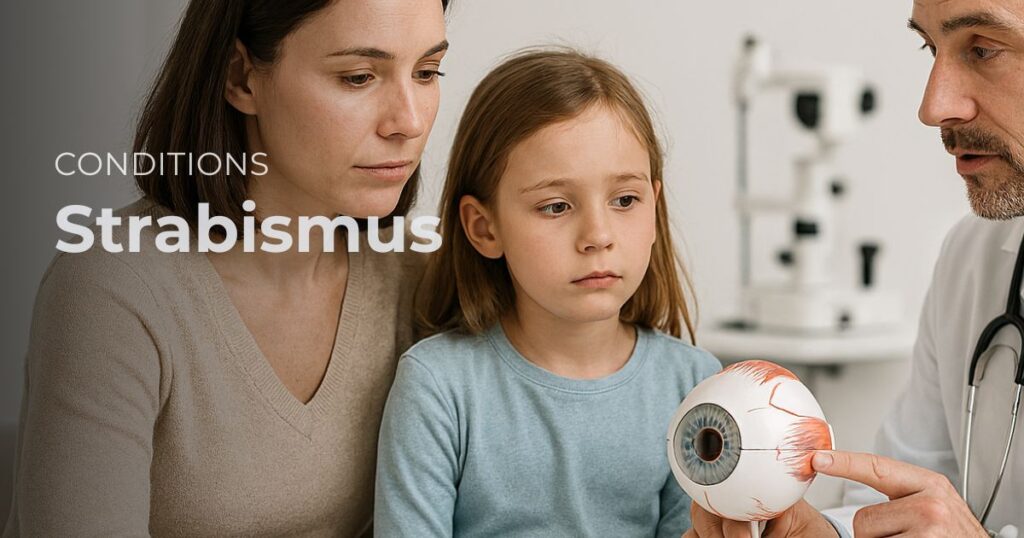
3) Strabismus (crossed eyes or wandering eyes)
Strabismus means the eyes do not point in the same direction. One eye may turn inward, outward, upward, or downward. Sometimes the deviation is constant. Sometimes it appears only when the child is tired, sick, daydreaming, or looking far away.
This matters for more than appearance. Misalignment can interfere with depth perception and can also lead to amblyopia. Many families wait because relatives say, “He will outgrow it.” Sometimes that is false reassurance. A real eye turn deserves a proper evaluation.
4) Blocked tear duct
A blocked tear duct is very common in infants. Parents usually notice tearing, wet lashes, or mucus discharge. The eye itself is usually white, and the child is otherwise comfortable. Many cases improve on their own during the first year of life.
Still, not every tearing baby has a simple blocked duct. If tearing comes with marked light sensitivity, a cloudy cornea, obvious eye enlargement, redness, or distress, you must think beyond a tear duct problem.
5) Allergic eye disease and eyelid inflammation
Children often rub itchy eyes because of allergies. They may also develop lid margin inflammation, recurrent styes, or chalazia. These problems are common and usually manageable, but constant rubbing can worsen irritation and, in predisposed patients, may contribute to corneal problems.
Do not minimize chronic eye rubbing. It is a clue, not a personality trait.
6) Ptosis (droopy eyelid)
A droopy eyelid may be mild, or it may cover the pupil and block the visual axis. When that happens in a young child, the eyelid can contribute to amblyopia. Some children also adopt a chin-up posture to see under the lid. Parents may interpret that as a habit when it is actually compensation.
7) Pediatric cataract
Children can be born with cataracts or develop them later. If the lens becomes cloudy enough to block a clear image, visual development can suffer. Unlike age-related cataract in adults, pediatric cataract is more urgent because of the risk to visual development.
8) Pediatric glaucoma
This is uncommon, but important. Red flags may include excessive tearing, light sensitivity, a large-looking eye, or a cloudy cornea. Parents sometimes mistake these symptoms for routine irritation or a tear duct issue. That is dangerous if glaucoma is the real cause.
9) Retinal, neurologic, and tumor-related conditions
These are less common, but they are the conditions you do not want to miss. A white pupil, poor visual behavior, nystagmus, sudden onset eye turn, or unusual concern about one eye can sometimes signal retinal disease, congenital abnormalities, or even retinoblastoma. Rare does not mean optional.
🚨 Dr. Roque’s Emergency Warning
Arrange urgent evaluation if your child has any of the following:
- A white pupil, absent red reflex, or an unusual white glow in photos
- A new constant eye turn, especially if it appears suddenly
- A droopy eyelid covering the pupil
- A cloudy cornea, enlarged-looking eye, or severe light sensitivity
- Eye trauma, chemical exposure, sudden vision loss, or sudden severe eye pain
- Persistent red eye with pain, discharge, or reduced vision
- A baby or child who does not seem to fix and follow normally
How pediatric eye conditions may show up at home
Parents do not need to diagnose the condition. They need to notice patterns. Useful clues include squinting, sitting very close to screens, covering one eye, tilting the head, frequent blinking, rubbing the eyes, poor reading stamina, clumsiness, avoiding detail work, or one eye drifting in photos. Babies may not track faces well, may resist bright light, or may always seem to use one eye more than the other.
A practical example: if a child keeps closing one eye outdoors, do not jump straight to “sunlight bothers him.” That behavior can also happen with misalignment or focusing problems.
Screening versus a full eye examination
Screening is helpful. It catches some children who need referral. But screening is not the same as a full eye examination. A screening program may say “refer” or “pass.” A full pediatric eye exam answers a much harder question: what exactly is happening, how urgent is it, and what should we do next?
Children should undergo routine vision screening, and children ages 3 to 5 should be screened at least once for amblyopia or its risk factors. That said, a child with a white pupil, obvious eye turn, suspicious visual behavior, ptosis, or other red flags should not wait for the next routine screening schedule.
Which children deserve earlier or closer attention?
- Children born premature
- Children with developmental delay or neurologic disease
- Children with a family history of strabismus, amblyopia, strong refractive error, childhood cataract, glaucoma, or retinoblastoma
- Children with Down syndrome or other syndromic conditions
- Children whose teachers report visual behavior concerns
- Children who fail screening or cannot cooperate well enough to produce a reliable screening result
💡 Dr. Roque’s Analogy
A child’s visual system is like wet cement. While it is still setting, the pattern becomes permanent more easily. Amblyopia, cataract, significant refractive error, or strabismus can leave the wrong imprint if they are ignored for too long. In an adult, a blurry image is a blurry image. In a child, a blurry image can reshape how the brain learns to see.
How pediatric eye conditions are treated
Treatment depends on the diagnosis. That sounds obvious, but it matters because families sometimes chase the wrong solution. An eye turn is not fixed by glasses alone in every child. Amblyopia is not fixed by surgery alone. A blocked tear duct is not treated the same way as glaucoma. Precision matters.
- Refractive errors: glasses, and in selected cases other refractive management strategies
- Amblyopia: glasses when needed, patching, atropine penalization, and treatment of the cause
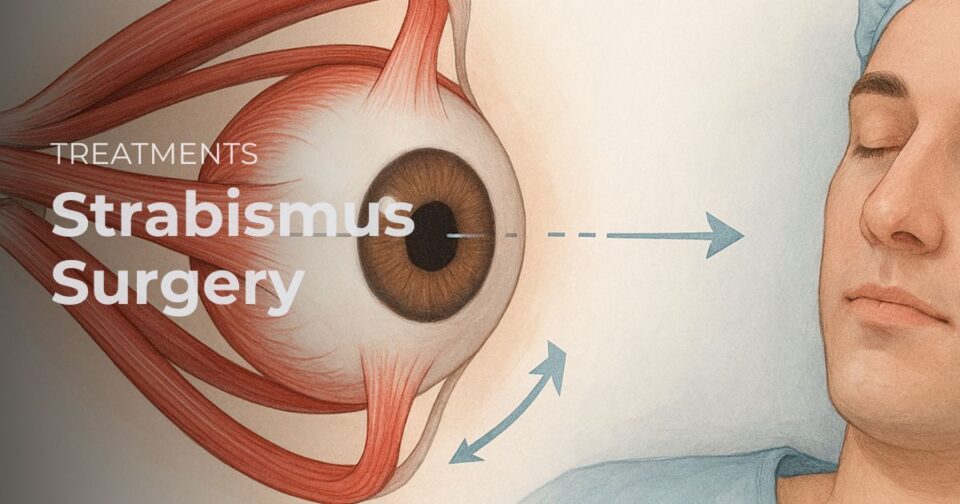
- Strabismus: glasses in some cases, amblyopia treatment, prisms in selected situations, and sometimes eye muscle surgery or injection
- Blocked tear duct: observation, massage guidance when appropriate, and probing or related procedures when needed
- Allergic disease and lid disease: trigger control, lid hygiene, lubricants, allergy-directed therapy, and treatment of complications
- Ptosis: monitoring or surgery depending on severity and visual effect
- Cataract, glaucoma, retinal disease, tumor-related disease: urgent specialty management, often including surgery or advanced medical care
For children with progressing myopia, newer myopia-control strategies may be discussed in appropriate cases. The key is not to oversell them. These are management tools, not magic.
What parents can do right now
- Do not dismiss repeated visual behaviors just because your child seems otherwise fine.
- Take photos seriously if one pupil looks white or different.
- Keep routine screening appointments, but escalate sooner when red flags appear.
- If glasses are prescribed, treat them as treatment, not decoration.
- Follow through with amblyopia treatment. Inconsistent treatment wastes time during a limited developmental window.
- Protect children from eye trauma during sports, rough play, and chemical exposure.
📖 Related Reading
✅ Dr. Roque’s Take-Home Message
Most pediatric eye conditions are manageable, and many do very well when recognized early. The real danger is delay. If your child has a wandering eye, a white pupil, unusual light sensitivity, poor visual behavior, or a droopy lid that blocks the pupil, do not wait for the problem to “declare itself.” In children, time is part of the treatment plan.
Frequently Asked Questions
Can a child have an eye problem without complaining?
Yes. This is common. Children often adapt, and one good eye can hide a problem in the other eye.
Is a wandering eye always serious?
It is always worth evaluating. Some cases are intermittent and less urgent than others, but true misalignment should not be ignored because it can affect visual development.
What does a white pupil mean?
A white pupil, also called leukocoria, is an urgent sign. It can be caused by several serious conditions, including cataract and retinoblastoma, and needs prompt examination.
Will my child outgrow crossed eyes?
Do not assume that. Some visual behaviors in infants can be transient, but a persistent or obvious eye turn needs professional evaluation.
When do children need glasses?
Children may need glasses for blurry vision, to support normal visual development, to treat amblyopia risk, or to help control some forms of strabismus.
Is patching the only treatment for amblyopia?
No. Treatment may include glasses, patching, atropine drops, and correction of the underlying cause.
Are blocked tear ducts dangerous?
Usually not, but they should still be assessed properly. If tearing comes with light sensitivity, a cloudy cornea, or a distressed child, more serious causes must be excluded.
Can too much screen time cause all pediatric eye conditions?
No. Screen habits may contribute to eye strain and may influence myopia risk patterns, but they do not explain every pediatric eye condition.
What if my child fails a school vision screening?
Treat that as a referral signal, not a final diagnosis. The next step is a proper eye examination.
When should I bring my child urgently?
Come urgently for trauma, a white pupil, sudden eye turn, sudden vision loss, severe pain, marked light sensitivity, a cloudy cornea, or a red eye with reduced vision.
📚 References
- American Academy of Ophthalmology. Childhood Eye Diseases and Conditions.
- American Academy of Ophthalmology. Eye Screening for Children.
- American Academy of Ophthalmology. Vision Screening for Infants and Children (Clinical Statement, 2022).
- National Eye Institute. Amblyopia (Lazy Eye).
- American Association for Pediatric Ophthalmology and Strabismus. Amblyopia.
- American Association for Pediatric Ophthalmology and Strabismus. Strabismus.
- American Association for Pediatric Ophthalmology and Strabismus. Refractive Errors in Children.
- American Association for Pediatric Ophthalmology and Strabismus. Nasolacrimal Duct Obstruction.
- U.S. Preventive Services Task Force. Vision in Children Ages 6 Months to 5 Years: Screening.
- American Academy of Ophthalmology. Pediatric Cataracts: Overview.
ROQUE Eye Clinic Patient Education Series
Reviewed by the Roque Advisory Council
Dr. Manolette Roque | Dr. Barbara Roque
St. Luke’s Medical Center Global City | Asian Hospital Medical Center
Philippines
Medical Disclaimer: This page is for patient education and decision support. It does not diagnose your child online and does not replace a complete eye examination. If your child has acute pain, trauma, a white pupil, a cloudy cornea, sudden vision loss, or a rapidly worsening eye problem, seek urgent in-person care.