



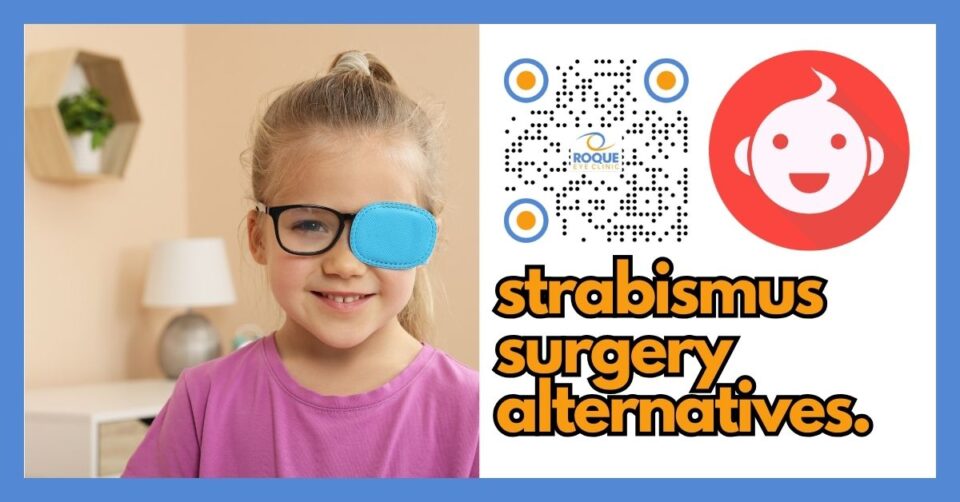
Can Strabismus Be Treated Without Surgery? Glasses, Prism, and When Surgery Helps Most
Strabismus surgery is an established treatment for selected patients whose eye misalignment cannot be adequately managed with appropriately prescribed glasses, observation, or other diagnosis-specific treatments. Children with amblyopia may also require separate treatment for reduced visual development, while some patients with double vision may benefit from prisms.
Generalized eye-exercise or vision-therapy programs are not prerequisites for strabismus surgery. When surgery is indicated, unnecessary delays may affect visual development, binocular function, comfort, or quality of life.
The decision to operate depends on the underlying condition, degree and stability of misalignment, symptoms, age, and individual clinical findings.
Quick Guide: When Non-Surgical Care Makes Sense
Non-surgical care often works best when the misalignment relates to focusing, fatigue, or a smaller deviation. Also, it can support surgery before or after, depending on the plan.
Common Non-Surgical Tools
- Glasses to correct refractive error and reduce misalignment triggers
- Prism lenses to help align images for selected double vision cases
- Patching for amblyopia management in children
Glasses: Often the First Step
Glasses do not “straighten muscles.” Instead, they correct focusing problems that can pull eyes out of alignment. Therefore, an accurate refraction matters.
Who Benefits Most?
- Children with accommodative esotropia (inward crossing linked to focusing)
- Patients with uncorrected farsightedness
Prism Lenses: Helpful for Some Adults
Prism can reduce double vision for selected patterns. However, prism works best for smaller deviations and stable measurements.
Prism Pros and Cons
- Pros: non-surgical, immediate symptom relief in selected cases
- Cons: may not work for large deviations; can change over time
Comparison Table: Non-Surgical vs Surgery
| Option | Best For | Limitations |
|---|---|---|
| Glasses | Focusing-related misalignment | May not correct muscle imbalance fully |
| Prism | Stable, small deviations with diplopia | Less effective for large angles |
| Surgery | Moderate to severe misalignment | May need repeat surgery in some types |
When Surgery Becomes the Best Option
When the angle is moderate or large, surgery often provides the most direct alignment improvement. Also, surgery may reduce the need for heavy prism in some adults.
Frequently Asked Questions
Can eye exercises fix strabismus permanently?
Eye exercises have not been proven to provide reliable or permanent correction for most common forms of strabismus. Programs promising to straighten crossed or wandering eyes through repeated exercises should not replace evidence-based medical assessment.
Some patients improve with prescription glasses or other nonsurgical measures. Others require eye muscle surgery to achieve appropriate alignment. A comprehensive examination determines which approach is suitable.
Can Botox treat strabismus?
Some specialists use injections in selected cases. Still, suitability depends on the strabismus type and goals.
Do children always need surgery?
No. Some children improve with glasses, especially when focusing drives the crossing.
Need a Proper Evaluation?
Each case of eye misalignment is unique. A detailed eye examination helps determine the most appropriate treatment plan based on your condition, visual needs, and goals.
A consultation provides clarity on diagnosis, treatment options, expected outcomes, and cost considerations.


