

Anti-VEGF Injection Procedure: What Happens During an Eye Injection?
🤖 Quick Answer: An anti-VEGF injection is a short, office-based procedure in which medicine is placed inside the eye to reduce retinal swelling or abnormal blood vessel growth. Your doctor numbs the eye, cleans it carefully, gives the injection through the white part of the eye, then checks you afterward and reviews warning symptoms.
If your retina specialist has recommended an anti-VEGF injection, it is normal to feel anxious. Many patients worry that the injection will be painful, dangerous, or difficult to tolerate. In reality, the procedure is usually quick, carefully sterilized, and commonly performed in retina clinics.
This guide explains exactly what happens before, during, and after an anti-VEGF injection, why it is used, what you may feel, and which warning signs should prompt urgent follow-up.
🧩 Focus: Step-by-step anti-VEGF injection procedure for diabetic retinal disease
👁 Goal: Help patients understand what to expect before, during, and after an intravitreal injection
🛡 Evidence-Based: Preferred Practice Patterns • Standards of Care • Systematic Reviews • Meta-Analyses
🧠 Diabetic Eye Disease Knowledge Hub
Start with the complete guide:
Diabetic Eye Disease: The Complete Patient Guide
🔎 Quick Navigation
- What is an anti-VEGF injection?
- Why doctors recommend it
- What happens before the injection
- What happens during the procedure
- What happens after the injection
- What is normal afterward
- When to call urgently
- Frequently asked questions
Related Reading
- Anti-VEGF for Diabetic Macular Edema
- Anti-VEGF Treatment Schedule
- Diabetic Eye Treatment in the Philippines
- Diabetic Macular Edema Explained
- OCT for Diabetic Macular Edema
📌 Key Learning Points
- An anti-VEGF injection is usually a short office procedure, not a major operation.
- The eye is first numbed and cleaned carefully to reduce discomfort and lower infection risk.
- Most patients feel pressure or a brief pinch, not severe pain.
- Mild irritation, tearing, or a small red spot on the white of the eye can be normal afterward.
- Severe pain, worsening vision, increasing redness, or marked light sensitivity are not normal and need urgent review.
👁 What Is an Anti-VEGF Injection?
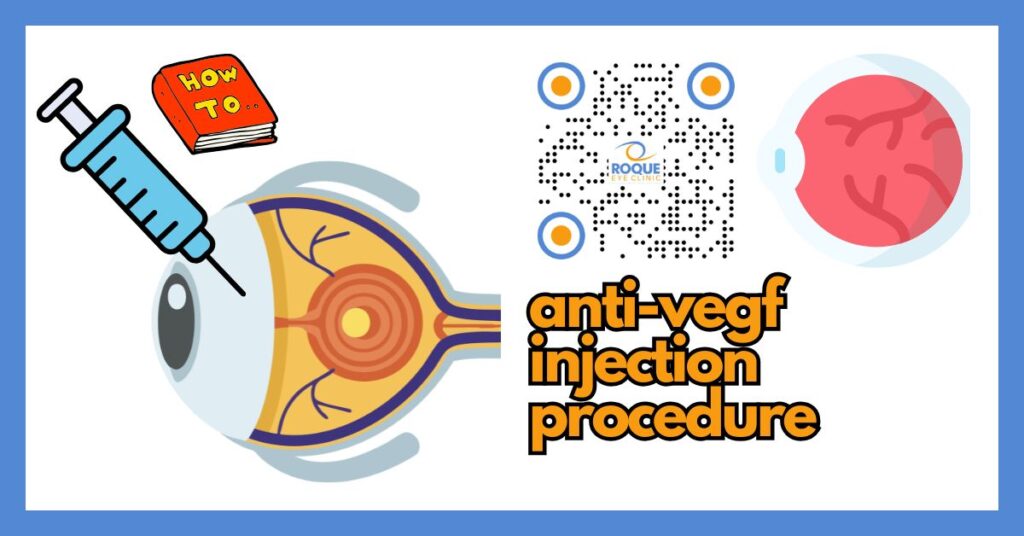
Anti-VEGF treatment involves placing medication inside the eye using a very small needle. “VEGF” stands for vascular endothelial growth factor, a protein that can make retinal blood vessels leak fluid or grow abnormally. In diabetes, excess VEGF contributes to retinal swelling and abnormal vessel growth.
By blocking VEGF, these medicines help reduce macular edema, lower leakage, and control abnormal blood vessels. In practical terms, the goal is to protect vision and, in many patients, improve it.
The injection goes into the vitreous, the clear gel-like space inside the eye. That is why retina specialists also call it an intravitreal injection.
Why Doctors Recommend Anti-VEGF Injections
Your doctor may recommend anti-VEGF injections if diabetes has caused problems such as:
- Diabetic macular edema (DME) — swelling in the central retina that blurs reading vision
- Diabetic retinopathy with active leakage or progression
- Proliferative diabetic retinopathy — abnormal new vessels that can bleed
These injections are commonly used because they can directly target the process causing leakage and abnormal vessel growth. Your retina specialist chooses the exact drug, frequency, and follow-up plan based on your OCT scan, vision, and retinal findings.
Learn more here: Anti-VEGF for Diabetic Macular Edema • Proliferative Diabetic Retinopathy • Center-Involving DME
🧪 What Happens Before the Injection?
Before the procedure begins, your clinic team typically confirms the following:
- Your identity and the eye being treated
- Your current symptoms and any recent changes in vision
- Your medication history, allergies, and any prior injection reactions
- Your most recent retinal exam or OCT findings
In many clinics, vision may be checked first. Your eye pressure may also be reviewed when needed. The goal is to make sure the injection is appropriate that day and that there is no reason to postpone treatment.
Preparing the eye
The procedure area is prepared carefully. The eye is numbed using anesthetic drops, gel, or a small amount of anesthetic solution. Then the eyelids and the surface of the eye are cleaned. This cleaning step is extremely important because it helps reduce infection risk.
Your doctor may place a small device to help keep the eyelids open. Although it can feel unusual, it helps prevent blinking during the injection and keeps the field controlled and sterile.
💊 What Happens During the Procedure?
The actual injection usually takes only a few moments.
Step 1: Final positioning
You will usually lie back or recline. The doctor may ask you to look in a certain direction. This helps expose the safest part of the eye for the injection.
Step 2: Numbing and antisepsis
If needed, additional numbing drops may be applied. The doctor makes sure the antiseptic preparation is complete before proceeding.
Step 3: The injection itself
The needle is placed through the white part of the eye (the sclera), not the colored part and not directly through the cornea. Because the eye is numbed, most patients describe the sensation as pressure, a brief poke, or a strange but tolerable feeling rather than sharp pain.
Step 4: Immediate safety check
After the medicine is given, the doctor or team checks the eye. Some clinics assess optic nerve perfusion or eye pressure, especially if there is concern about pressure rise. You may be asked whether your vision is present and whether you feel unusual pain.
The entire visit may take longer than the injection itself because preparation and safety checks matter just as much as the injection.
What Happens Right After the Injection?
After the procedure, many patients notice:
- Mild irritation or scratchiness
- Tearing
- A temporary foreign-body sensation
- A small red patch on the white of the eye
- Tiny floaters or moving bubbles shortly after treatment
These can happen and are often temporary. The small red patch is usually a harmless surface blood spot called a subconjunctival hemorrhage. It can look alarming but often fades on its own over days to weeks.
Vision may be slightly hazy right after the injection because of the drops, the antiseptic, the medicine, or the surface irritation. In many cases, this improves later the same day or over the next day.
What Is Normal After an Injection?
Patients often ask, “What should I expect later today?” The following can be normal if they are mild and improving:
- Mild scratchy sensation
- Watery eye
- Small surface redness
- Temporary blur that improves
- Seeing a few spots or bubbles for a short time
You are usually advised not to rub the eye. Your clinic may provide specific instructions depending on the medication used and your eye findings.
Some patients worry because the eye feels “aware” or slightly irritated. That feeling alone is not always a danger sign. What matters more is whether symptoms are getting clearly worse instead of better.
🚨 When Should You Call Urgently?
Call your retina specialist or seek urgent eye evaluation if you develop severe eye pain, worsening redness, marked light sensitivity, worsening blurred vision, or symptoms that feel distinctly worse instead of better. These may indicate serious complications such as infection, retinal detachment, or significant inflammation.
Although serious complications are uncommon, they matter because they require rapid treatment. That is why your clinic will usually review warning signs before you go home.
Important symptoms not to ignore
- Severe pain rather than mild irritation
- Vision that is getting worse rather than gradually clearing
- Increasing redness across the eye
- Significant light sensitivity
- A large new shower of floaters or a curtain-like shadow
What Questions Should You Ask Before Going Home?
It helps to leave the clinic knowing exactly what is expected next. Good questions include:
- When is my next follow-up visit?
- Will I need an OCT scan at the next visit?
- What symptoms are normal after today?
- Which symptoms require an urgent call?
- When will I know whether the injection is helping?
If you are receiving repeated injections, ask your doctor how today’s treatment fits into your larger treatment schedule.
Related reads: Anti-VEGF Treatment Schedule • Vabysmo for DME • Eylea for DME • Lucentis for DME • Avastin for DME
Does the Injection Hurt?
This is one of the most common fears. Most patients do not describe the injection as severely painful. Instead, they report:
- Pressure
- A brief sting or pinch
- An odd sensation that lasts only seconds
The part many patients dislike most is not always the needle itself. Sometimes it is the antiseptic drops, the eyelid holder, or the temporary scratchy feeling afterward. Even so, the procedure is usually manageable, especially once you know what to expect.
How Soon Does It Start Working?
Some patients notice improvement after one injection, but many need a series of injections before swelling control becomes clear. Your doctor usually judges response using:
- Vision testing
- OCT scans
- Retinal examination findings
In other words, the best sign of response is not only how you feel—it is also how the retina looks on examination and imaging.
Continue Reading
- Anti-VEGF for Diabetic Macular Edema
- Anti-VEGF Treatment Schedule
- OCT for Diabetic Macular Edema
- Laser Treatment for Diabetic Retinopathy
- Vitrectomy for Diabetic Retinopathy
🏁 Take-Home Message
An anti-VEGF injection is usually a short, carefully sterilized office procedure designed to protect vision by treating retinal swelling or abnormal blood vessel growth.
Mild irritation afterward can be normal, but severe pain, worsening redness, increasing light sensitivity, or declining vision should be reported urgently.
❓ Frequently Asked Questions
Is an anti-VEGF injection a surgery?
It is usually an office-based intravitreal procedure rather than a major operating-room surgery.
Will I be awake during the injection?
Yes. Most patients are awake, but the eye is numbed and the procedure is very short.
What do patients usually feel during the injection?
Most describe pressure, a quick pinch, or an unusual sensation rather than severe pain.
What is normal after the injection?
Mild scratchiness, watering, a small red spot, and temporary blur may occur and often improve with time.
What symptoms are dangerous after an injection?
Severe pain, worsening vision, increasing redness, marked light sensitivity, or a large new shower of floaters need urgent evaluation.
Will one injection be enough?
Sometimes one injection helps, but many patients need a series of treatments based on OCT findings and retinal response.
📚 References
- American Academy of Ophthalmology. Intravitreal Injections – Clinical Statement.
- American Academy of Ophthalmology. Diabetic Retinopathy Preferred Practice Pattern.
- National Eye Institute. Injections to Treat Eye Conditions.
- National Eye Institute. Treating Diabetic Retinopathy: What You Should Know.
- U.S. Food and Drug Administration prescribing information for intravitreal anti-VEGF agents used in diabetic retinal disease.
🤝 Roque Eye Clinic Patient Education Series
Reviewed by the Roque Advisory Council
Dr Manolette Roque | Dr Barbara Roque
St Luke’s Medical Center Global City | Asian Hospital Medical Center
Philippines
Medical Review: Roque Advisory Council
Last Updated: March 2026
This article is intended for educational purposes only and does not replace professional medical consultation.
ANIMATION
BOOK AN APPOINTMENT
It takes less than 5 minutes to complete your online booking. Alternatively, you may call our BGC Clinic, or our Alabang Clinic for assistance.