



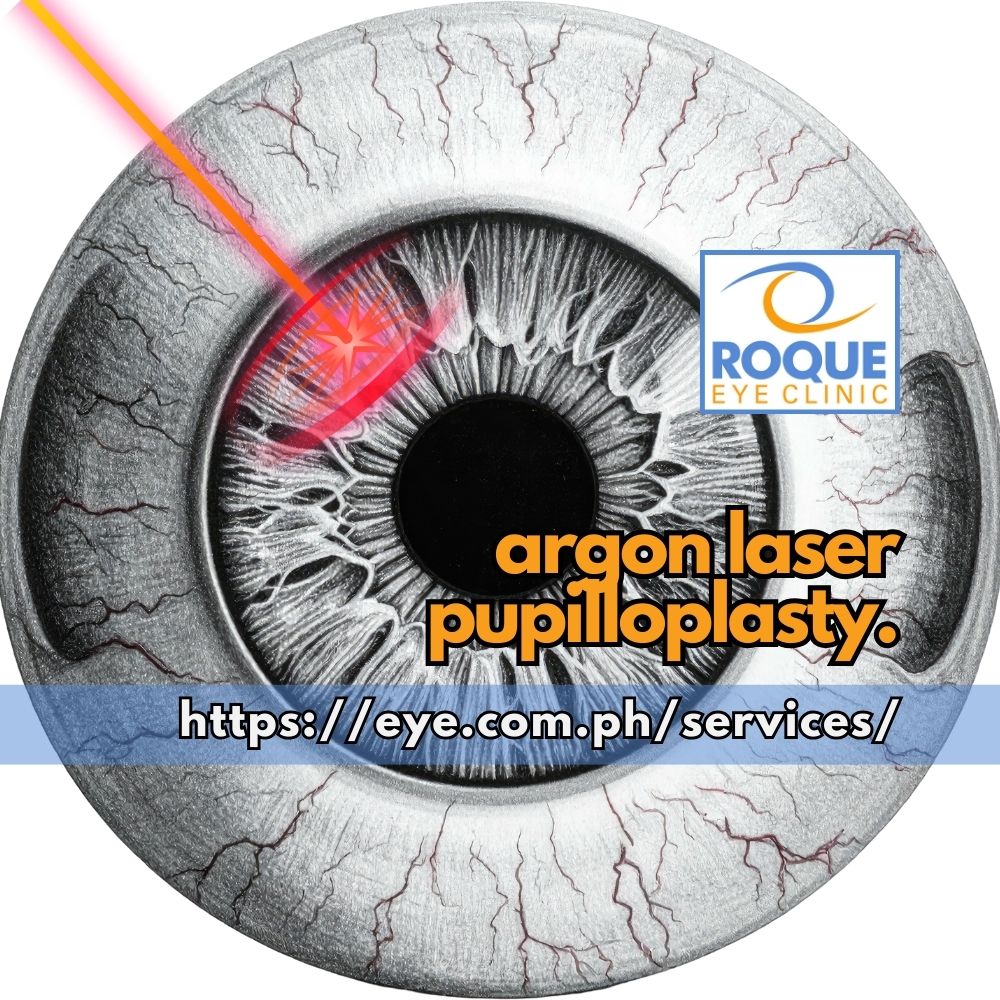
ARGON LASER PUPILLOPLASTY
Argon Laser Pupilloplasty is a precise, non-incisional laser procedure that reshapes or re-centers the pupil to improve visual function and reduce symptoms. Ophthalmologists use this treatment when the pupil is irregular, displaced, or poorly reactive. As a result, patients may experience better light control, reduced glare, and improved visual quality.
WHAT THIS SERVICE DOES
This procedure uses controlled argon laser applications to gently contract selected areas of the iris. The laser spots tighten tissue and modify pupil shape or position. Therefore, the pupil becomes more centered or more regular in contour. Doctors often recommend this approach when structural pupil changes affect vision or comfort.
Because the treatment is targeted and localized, surrounding eye structures remain largely unaffected.
COMMON CLINICAL INDICATIONS
Argon Laser Pupilloplasty supports both functional and optical improvement. For example, it may be advised in the following settings.
1. Irregular pupil after eye surgery or trauma
2. Decentered pupil causing glare or halos
3. Small sector iris defects
4. Selected cases of angle management support
5. Symptomatic light scatter from pupil distortion
HOW THE PROCEDURE IS PERFORMED
The treatment is done in the clinic using a slit-lamp laser system. First, the eye receives anesthetic drops for comfort. Next, a special contact lens is placed to stabilize focus. Then, the doctor applies a series of low-energy argon laser spots to the iris. Consequently, controlled tissue contraction reshapes the pupil. The session usually takes only several minutes.
PATIENT EXPERIENCE AND RECOVERY
Most patients report minimal discomfort during the procedure. Vision may appear slightly blurred right after treatment due to drops and light exposure. However, this effect usually clears within hours. Doctors may prescribe anti-inflammatory drops for a short period. Follow-up visits help confirm proper response and pupil configuration.
SAFETY AND CLINICAL VALUE
Argon Laser Pupilloplasty has an established safety profile when performed by a trained ophthalmologist. Like any eye procedure, it carries some risk, yet complications remain uncommon. Possible temporary effects include mild inflammation or light sensitivity. Because pupil shape influences optical performance, careful laser adjustment can significantly improve symptom control.
Early evaluation and proper case selection increase treatment success and patient satisfaction.