

Eye Discharge: Causes, What It Means, and When You Should Worry
🧠 Dr. Roque’s Quick Answer
Eye discharge can come from infection, allergy, dry eye, blepharitis, blocked tear drainage, or contact lens-related problems. Some discharge is mild and temporary, but discharge with pain, marked redness, light sensitivity, blurred vision, eyelid swelling, or contact lens use can signal a more serious problem and should not be ignored.
Eye discharge is one of those symptoms patients often simplify too much. Many people assume that if the eye has “muta,” it must automatically be a simple infection. That is sloppy thinking. The color, thickness, amount, timing, and associated symptoms all matter.
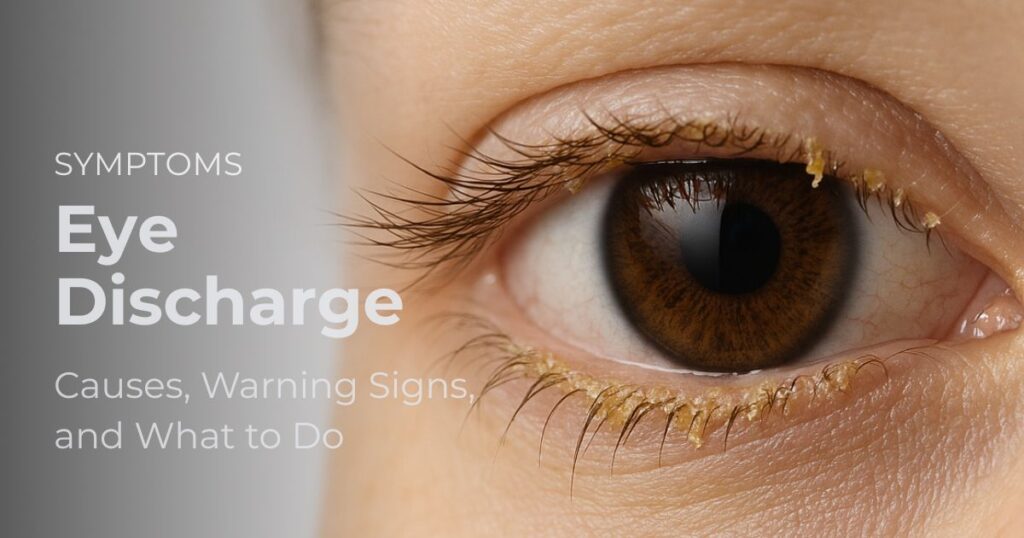
A small amount of crust in the morning can happen even in normal eyes. But frequent stickiness, pus-like material, or discharge with pain and redness needs more careful attention.
🎯 Focus
Help patients understand what different types of eye discharge may mean.
🏁 Goal
Separate mild causes from urgent causes and make the next step clear.
🛡️ Evidence-Based
Discharge pattern plus redness, pain, swelling, and vision symptoms help narrow the diagnosis.
🧠 Dr. Roque’s Key Learning Points
- Not all eye discharge is the same. Watery, stringy, sticky, and pus-like discharge suggest different possibilities.
- Discharge alone is often less important than discharge plus pain, light sensitivity, vision changes, or eyelid swelling.
- Contact lens wearers with discharge and redness need extra caution because corneal infection is possible.
- Children with sticky eyes may have conjunctivitis, eyelid inflammation, or tear duct blockage.
- Repeated self-treatment with leftover drops can delay the right diagnosis.
Quick Navigation
ROQUE Eye Clinic Symptoms Knowledge Hub
This article is part of the symptom-triage pathway on Eye.com.ph.
Start with the main hub: Symptoms
👁️ Anatomy Micro-Primer
The front of the eye and the eyelids work together to keep the eye clean, moist, and protected.
- Conjunctiva: the thin membrane covering the white part of the eye and inner eyelids.
- Cornea: the clear front window of the eye.
- Eyelid margins and lashes: help protect the eye and control the tear film.
- Tear film: washes the surface and helps remove debris.
- Tear drainage system: carries tears away from the eye toward the nose.
🧩 Terminology Glossary
- Conjunctivitis: inflammation or infection of the surface lining of the eye.
- Blepharitis: inflammation of the eyelid margins.
- Mucus discharge: sticky or stringy material from the eye.
- Purulent discharge: thick yellow or green pus-like discharge.
- Canaliculitis: infection of part of the tear drainage system.
- Keratitis: inflammation or infection of the cornea.
What Does Eye Discharge Mean?
Eye discharge is any material that collects in or comes out of the eye beyond the usual small amount of tear residue. It may look watery, sticky, stringy, cloudy, yellow, green, or crusty.
The mistake is treating all discharge as one disease. That is like saying every cough is pneumonia. It does not work that way. The type of discharge is only one clue. You also need to ask:
- Is the eye red?
- Is there pain?
- Is vision affected?
- Is the patient wearing contact lenses?
- Is the discharge mostly in the morning or all day long?
- Is one eye involved or both?
Different Types of Eye Discharge
Watery discharge
This often happens with viral conjunctivitis, allergies, dry eye, surface irritation, or reflex tearing.
Stringy or ropy mucus
This is often linked to allergy or ocular surface irritation.
Sticky discharge with crusting
This may happen with blepharitis, conjunctivitis, dry eye, or tear drainage problems.
Yellow or green pus-like discharge
This raises concern for bacterial infection, but the diagnosis still depends on the whole picture. Thick discharge with significant redness and swollen lids deserves proper evaluation.
💡 Dr. Roque’s Analogy
Think of eye discharge like smoke from a car. Thin vapor, thick dark smoke, and leaking fluid do not all mean the same problem. The appearance gives clues, but you still need to check the engine. In the same way, discharge pattern helps, but it does not replace a proper eye examination.
Common Causes of Eye Discharge
1) Conjunctivitis
Conjunctivitis can be viral, bacterial, allergic, or irritative. Viral cases often cause watery discharge and redness. Bacterial cases may cause thicker discharge and sticky lids. Allergic cases usually bring itching, watering, and mucus.
2) Blepharitis
Inflamed eyelid margins can produce crusting, irritation, sticky lashes, and fluctuating symptoms, especially in the morning.
3) Dry Eye and Ocular Surface Disease
Dry eye does not always look dry. It can produce mucus, stickiness, and reflex tearing. Patients may complain of burning, grittiness, and fluctuating vision.
4) Allergy
Allergy often causes watery or stringy discharge, itching, rubbing, and eyelid puffiness.
5) Blocked Tear Drainage or Tear Sac Problems
If tears do not drain well, material can collect and the eye may become watery and sticky. Some patients develop recurrent discharge or swelling near the inner corner of the eyelids.
6) Contact Lens-Related Disease
This deserves respect. Contact lens users with discharge, pain, redness, or light sensitivity may have corneal injury or infection. That is not something to casually observe at home.
7) Corneal Infection or Ulcer
A corneal ulcer may cause discharge, but the more important clues are pain, redness, light sensitivity, and blurred vision. This can threaten vision and needs urgent care.
8) Foreign Body or Eye Surface Injury
Dust, metal, a scratch, or chemical exposure can trigger discharge and watering because the surface becomes inflamed and irritated.
Clues That Help Narrow the Cause
When Eye Discharge May Be Serious
The discharge itself is not the whole story. The danger lies in the company it keeps.
🚨 Dr. Roque’s Emergency Warning
Seek urgent eye care if eye discharge happens with any of the following:
- moderate to severe eye pain
- light sensitivity
- blurred or reduced vision
- significant redness
- contact lens use with red or painful eye
- swelling around the eye or eyelids
- injury, foreign body, or chemical splash
- fever or marked tenderness near the tear sac area
- discharge in a newborn
Here is the ruthless version: if a patient with discharge also says, “Doc, the eye hurts, I cannot tolerate light, and my vision is blurry,” you should stop thinking “simple sore eyes” and start thinking about corneal disease until proven otherwise.
How an Eye Doctor Evaluates Eye Discharge
A proper evaluation usually tries to answer these questions:
- Is the main problem the conjunctiva, the eyelids, the cornea, or the tear drainage system?
- Is the discharge watery, mucous, or pus-like?
- Is there infection, allergy, or surface irritation?
- Is the cornea involved?
- Is the patient using contact lenses?
The examination may include checking visual acuity, eyelid margins, lashes, conjunctiva, cornea, tear film, tear drainage area, and any signs of swelling or tenderness.
Treatment Depends on the Cause
If the problem is allergy
Treatment often focuses on controlling inflammation and avoiding triggers.
If the problem is blepharitis
Eyelid hygiene and treating the lid margin disease usually matter more than random antibiotic use.
If the problem is bacterial conjunctivitis
Treatment depends on the clinical picture, severity, and whether other structures are involved.
If the cornea is involved
This becomes more urgent. Prompt diagnosis matters because the wrong treatment can worsen the outcome.
If tear drainage is the issue
The treatment depends on whether there is blockage, inflammation, or infection in the drainage pathway.
What You Should Avoid
- Do not keep reusing leftover eye drops from a previous episode.
- Do not assume pus automatically means a harmless infection.
- Do not wear contact lenses until the eye is fully evaluated and cleared.
- Do not share towels, makeup, or eye drops if conjunctivitis is possible.
- Do not ignore discharge with pain, blurred vision, or strong light sensitivity.
When to Book a Consultation
Book an eye consultation if discharge is recurrent, significant, one-sided, associated with redness or swelling, or causing the eyelids to stick together repeatedly. Book sooner if you wear contact lenses or if the eye is painful, light-sensitive, or blurry.
✅ Dr. Roque’s Take-Home Message
Eye discharge is a clue, not a final diagnosis. Mild discharge can happen with allergy, dry eye, or eyelid inflammation, but discharge with pain, redness, blurred vision, contact lens use, or swelling raises the stakes. Do not oversimplify it. The right next step depends on the whole clinical picture.
Frequently Asked Questions
Is eye discharge always an infection?
No. It can also happen with allergy, dry eye, blepharitis, or tear drainage problems.
What color discharge is most concerning?
Color helps, but it is not enough by itself. Thick yellow or green discharge deserves attention, especially if there is pain, marked redness, or swelling.
Can dry eye cause sticky discharge?
Yes. Dry eye and ocular surface irritation can cause mucus and stickiness.
Should I stop wearing contact lenses if I have discharge?
Yes. Stop wearing them until the eye has been properly assessed and cleared.
Why are my eyelids stuck together in the morning?
This can happen with conjunctivitis, blepharitis, or significant overnight discharge.
Can allergies cause eye discharge?
Yes. Allergies commonly cause watery or stringy discharge along with itching.
When is eye discharge an emergency?
When it comes with pain, light sensitivity, blurred vision, contact lens use, trauma, or significant swelling.
Can children get eye discharge from blocked tear ducts?
Yes. Children and babies may have discharge from tear drainage problems as well as conjunctivitis.
Should I use antibiotic drops right away?
Not automatically. The right treatment depends on the cause, and not all discharge is bacterial.
Can eye discharge spread to other people?
Some infectious causes, especially certain forms of conjunctivitis, can spread. Good hygiene matters.
📚 Related Reading
📖 References
- American Academy of Ophthalmology. Preferred Practice Pattern resources related to conjunctivitis, blepharitis, dry eye disease, corneal disorders, and external eye disease.
- Peer-reviewed reviews on bacterial, viral, and allergic conjunctivitis.
- Peer-reviewed reviews on blepharitis and ocular surface disease.
- Peer-reviewed reviews on contact lens-related keratitis and corneal ulcer risk.
- Standard ophthalmology reference texts on red eye, discharge, tear drainage problems, and corneal infection.
ROQUE Eye Clinic Patient Education Series
Reviewed by the Roque Advisory Council
Dr. Manolette Roque | Dr. Barbara Roque
St. Luke’s Medical Center Global City | Asian Hospital Medical Center
Philippines
Medical Disclaimer: This page is for patient education only and does not replace an eye examination, diagnosis, or treatment plan. If you have pain, reduced vision, light sensitivity, trauma, chemical exposure, or worsening symptoms, seek prompt medical attention.