

PHACOEMULSIFICATION AND FEMTOSECOND LASER-ASSISTED CATARACT SURGERY
Phacoemulsification and femtosecond laser-assisted cataract surgery are advanced lens-based procedures that restore clear vision. In addition, these techniques also support refractive lens exchange for patients who want long-term vision correction. Instead of relying on glasses alone, patients can improve vision by replacing the eye’s natural lens with a clear artificial lens. As a result, vision often becomes sharper and more stable.
WHAT THIS SERVICE TREATS
These procedures treat cataracts, which cause cloudy and blurred vision. In addition, they correct refractive errors such as nearsightedness, farsightedness, and astigmatism. When used as refractive lens exchange, the same techniques replace a clear lens to reduce dependence on glasses. Therefore, both medical and vision correction goals can be addressed in one plan.
TYPES OF PROCEDURES INCLUDED
The surgeon selects the most suitable method after a full eye exam.
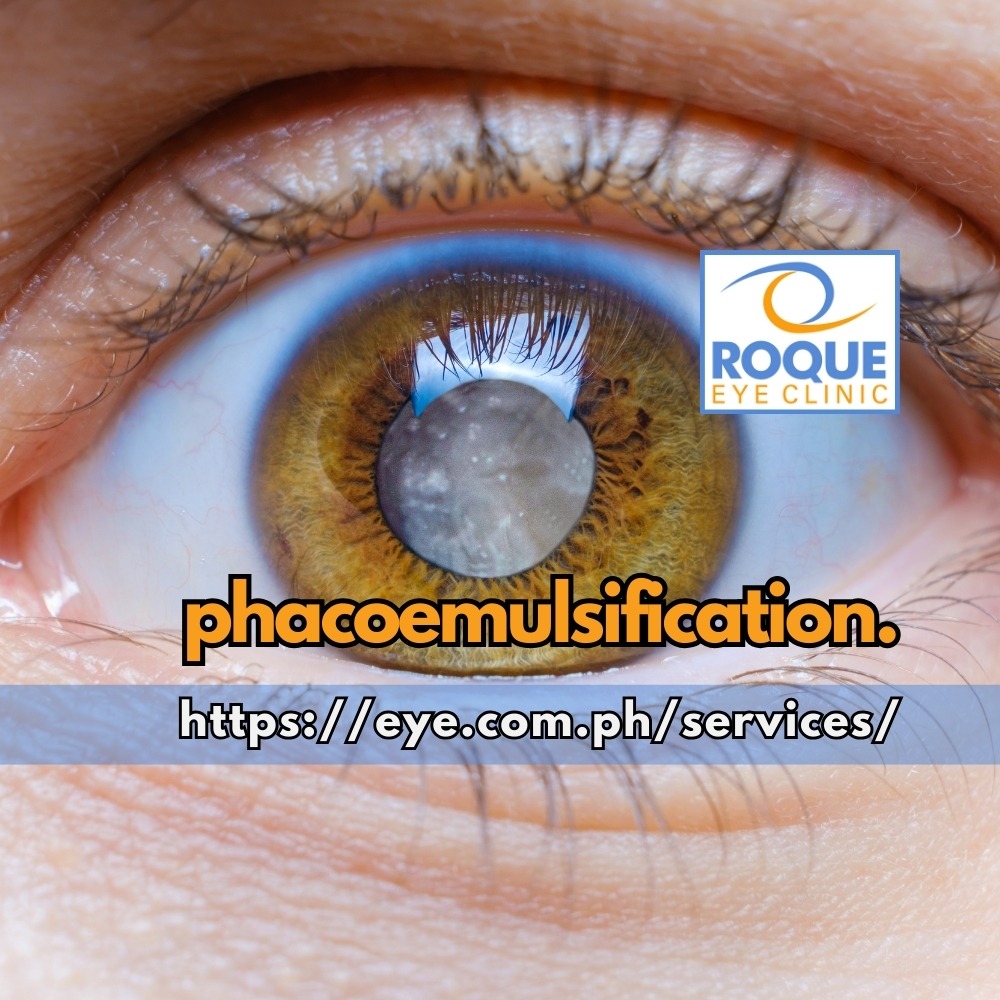
1. Phacoemulsification, where ultrasound gently breaks and removes the cloudy lens
2. Femtosecond laser-assisted cataract surgery, which uses laser precision for key steps
3. Refractive lens exchange, where a clear lens is replaced to correct vision
4. Femtosecond laser-assisted refractive lens exchange for enhanced precision
HOW THE PROCEDURE WORKS
First, the surgeon applies numbing drops to ensure comfort. Next, a small opening allows removal of the natural lens. Then, the surgeon places a foldable artificial lens inside the eye. When femtosecond laser is used, it creates precise openings and softens the lens before removal. As a result, the procedure becomes more controlled and accurate. Because modern lens options include monofocal, toric, extended depth of focus, and multifocal designs, patients can personalize their visual goals.
WHO MAY BENEFIT
Patients with visually significant cataracts benefit from lens removal and replacement. In addition, adults with high refractive error or early lens changes may consider refractive lens exchange. Furthermore, patients who are not ideal laser vision candidates may choose this option. Therefore, this service offers flexibility for different vision needs.
RECOVERY AND EXPECTED OUTCOMES
Most patients notice clearer vision within days. However, mild blur, glare, or light sensitivity may occur early. Over the next few weeks, vision continues to stabilize. Consequently, follow-up visits allow the surgeon to monitor healing and lens position. Because each eye heals at its own pace, final results may vary.
SAFETY AND CLINICAL CONSIDERATIONS
The surgeon performs these procedures after detailed testing of the cornea, retina, and eye pressure. In addition, measurements guide lens power selection. While modern techniques show strong safety records, risks may include infection, swelling, pressure changes, or retinal problems. Therefore, careful screening and follow-up remain essential.
Showing all 4 resultsSorted by popularity
₱ 84,000.00
₱ 56,000.00
₱ 56,000.00
₱ 84,000.00