



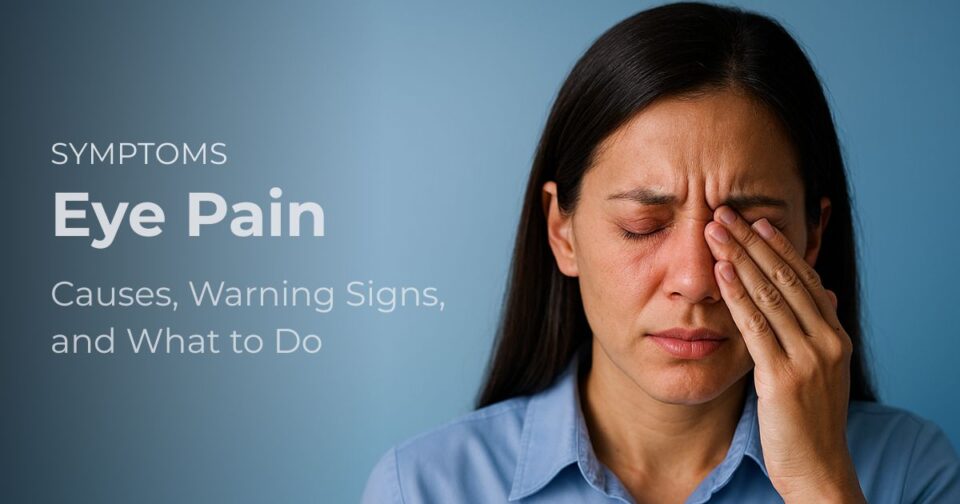
Eye Pain: when it may be minor, when it may be urgent, and what to do next
🧠 Dr. Roque’s Quick Answer
Eye pain should not be brushed aside, especially if it is severe, sudden, associated with blurred vision, redness, light sensitivity, nausea, vomiting, swelling, or recent injury. Sometimes the cause is surface irritation or dryness. Sometimes it is a problem that needs urgent eye care. The safest approach is to pay attention to the pattern of pain and the other symptoms that come with it.
🧩 Focus
Help you understand what eye pain may mean and when you should seek urgent care.
👁️ Goal
Separate milder patterns from the red flags that should not wait.
🛡️ Evidence-Based
This page is written to support safe triage, patient understanding, and practical next-step decisions.
🚨 Dr. Roque’s Emergency Warning
Please seek urgent eye care as soon as possible if the pain is severe, if your vision has changed, if light suddenly hurts, if you see halos around lights, if you also have nausea or vomiting, if the eye was hit or exposed to a chemical, if something is stuck in the eye, or if you cannot open or move the eye normally.
Eye pain with blurred vision is more concerning than eye pain alone.
🧠 Dr. Roque’s Key Learning Points
- Eye pain can come from the surface of the eye, the inside of the eye, the tissues around the eye, or even nearby nerves and sinuses.
- Some causes are relatively mild, such as dryness, irritation, or a small scratch. Others can threaten vision if treatment is delayed.
- Sudden severe pain, reduced vision, light sensitivity, nausea, vomiting, halos, trauma, or chemical exposure deserve urgent attention.
- Pain with eye movement may point to a different kind of problem than pain that feels like burning or scratching on the surface.
- If you are unsure, it is safer to be examined than to wait and guess.
What eye pain can feel like
Patients do not all describe eye pain the same way. One person says the eye feels scratched. Another says it aches deeply. Someone else says light hurts or that it feels painful when the eye moves.
That difference matters. A burning, gritty, or foreign-body feeling often points toward the surface of the eye. A deeper throbbing or aching pain may suggest inflammation, pressure problems, or pain from structures behind the eye. Pain that is worse when moving the eye can raise concern for problems involving the optic nerve or tissues deeper in the orbit.
🧬 Anatomy Micro-Primer
The eye has a very sensitive surface called the cornea, a clear front window with many nerves. The tissues around the eye, the muscles that move the eye, and the structures inside the eye can also generate pain. That is one reason eye pain is not a diagnosis by itself. It is a symptom that needs context.
📘 Terminology Glossary
Photophobia: discomfort or pain when exposed to light.
Cornea: the clear front surface of the eye.
Uveitis: inflammation inside the eye.
Acute angle-closure glaucoma: a sudden pressure problem inside the eye that can cause severe pain and blurred vision.
Common causes of eye pain
Eye pain is a symptom, not a final diagnosis. The cause may be on the surface of the eye, inside the eye, around the eye, or even from nearby structures.
| Possible cause | Typical pattern | Urgency |
|---|---|---|
| Dry eye or surface irritation | Burning, stinging, grittiness, worse with wind, screen use, or dryness | Usually not an emergency, but should be checked if persistent |
| Corneal abrasion or foreign body | Sharp pain, tearing, light sensitivity, foreign-body sensation | Prompt evaluation recommended |
| Corneal infection or ulcer | Pain, redness, light sensitivity, blurred vision, contact lens history may be present | Urgent |
| Uveitis | Aching pain, photophobia, redness, blurred vision | Urgent |
| Acute angle-closure glaucoma | Severe pain, blurred vision, halos, nausea, vomiting, red eye | Emergency |
| Optic neuritis or deep orbital problem | Pain with eye movement, vision change, sometimes color vision change | Urgent |
| Pain around the eye from sinus, nerve, or headache disorders | Pressure or ache around the eye, sometimes without true eye redness | Depends on the overall picture |
The same symptom can come from very different causes. That is why the pattern matters more than the word “pain” by itself.
When eye pain is more concerning
Eye pain deserves more concern when it comes with other warning signs. In clinic, I worry more when pain is paired with blurred vision, marked redness, light sensitivity, halos, nausea, vomiting, swelling, discharge, or recent trauma.
Pain after a chemical splash, pain in a contact lens wearer with redness and blurred vision, or pain with difficulty moving the eye should not be treated casually.
🚨 Go for urgent evaluation now if:
- the pain is sudden or severe
- your vision becomes blurred, dim, doubled, or suddenly different
- light suddenly hurts your eye
- you also have nausea or vomiting
- you see halos around lights
- the eye was hit, scratched, burned, or exposed to a chemical
- something may be stuck in the eye
- the eye is swollen, cannot open properly, or does not move normally
- there is pus, blood, or significant discharge
What I usually want patients to notice
When patients describe eye pain, I want to know:
- Is it on the surface or does it feel deep?
- Did it start suddenly or gradually?
- Is the eye red?
- Has the vision changed?
- Does light hurt?
- Was there trauma, chemical exposure, or contact lens wear?
- Is it worse when the eye moves?
- Is there headache, nausea, vomiting, or swelling?
Those details often tell us whether this sounds more like a surface problem, inflammation, a pressure problem, infection, injury, or pain referred from somewhere else.
💡 Dr. Roque’s Analogy
Think of eye pain the way you would think of chest pain. Sometimes it turns out to be something minor. Sometimes it points to a more serious problem. The symptom alone does not give the full answer, but it tells you that you should pay attention to the pattern.
What to do while waiting to be seen
- Do not rub the eye.
- Do not patch the eye unless you have been specifically instructed to do so.
- Stop wearing contact lenses until you are examined.
- If there was chemical exposure, irrigate immediately with plenty of clean water and seek urgent care.
- Avoid using leftover eye drops, especially steroid drops, unless an eye doctor told you to use them for this exact problem.
- If the pain is severe or your vision is affected, do not wait for it to “settle down.”
Related reading
✅ Dr. Roque’s Take-Home Message
Eye pain is not something I advise patients to ignore, especially if it is severe, sudden, or accompanied by vision changes, redness, light sensitivity, nausea, vomiting, or injury. Sometimes the cause is minor. Sometimes it is urgent. When in doubt, have it checked.
Frequently asked questions
Can dry eye cause pain?
Yes. Dry eye can cause burning, stinging, grittiness, and sometimes real discomfort. But severe pain or pain with blurred vision should not simply be blamed on dryness without an examination.
Is eye pain always serious?
No. Some causes are minor. The problem is that some important causes can look similar at the beginning. That is why the other symptoms matter.
What does pain with eye movement mean?
It can happen with deeper problems behind the eye, including inflammation involving the optic nerve or tissues in the orbit. It deserves more attention than simple surface irritation.
Should I use leftover antibiotic or steroid drops?
I would not recommend self-starting leftover steroid drops for unexplained eye pain. Steroids can worsen certain infections or delay correct diagnosis.
When should I go to the emergency room?
Go urgently if the pain is severe, vision changes suddenly, the eye was exposed to chemicals, something is stuck in the eye, you see halos, you have nausea or vomiting, or the eye is swollen or difficult to open.
📚 References
- Merck Manual Professional Edition. Eye Pain.
- Mayo Clinic. Eye pain: causes and when to see a doctor.
- National Eye Institute. Glaucoma.
- National Eye Institute. Corneal Conditions.
- American Academy of Ophthalmology. Signs You May Need an Eye Exam Right Away.
🤝 ROQUE Eye Clinic Patient Education Series
Reviewed by the Roque Advisory Council
Dr. Manolette Roque | Dr. Barbara Roque
St. Luke’s Medical Center Global City | Asian Hospital Medical Center | Philippines
Medical Review: Reviewed by the Roque Advisory Council
Last Updated: April 4, 2026
Medical Disclaimer: This page is for general patient education only and does not replace an in-person medical evaluation.