


ROQUE EYE CLINIC • PROFESSIONAL BIOGRAPHY
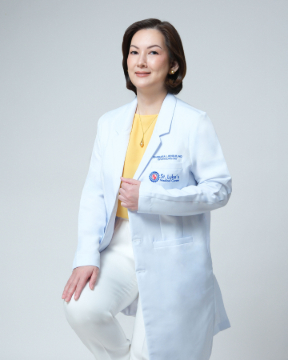
Barbara L. Roque, MD, DPBO, FPAO, FPCS
Ophthalmologist | Pediatric Ophthalmology | Strabismus | Ophthalmic Genetics
🧠 Dr. Roque's Quick Answer
Dr. Barbara L. Roque is a Filipino ophthalmologist specializing in pediatric ophthalmology, strabismus in children and adults, and ophthalmic genetics. Her clinical practice includes childhood vision assessment, refractive errors, amblyopia or lazy eye, eye misalignment, pediatric cataracts, and evaluation of suspected inherited eye disorders.
She completed ophthalmology training at Philippine General Hospital and subspecialty fellowship training in pediatric ophthalmology and strabismus at The Children's Hospital at Westmead through the University of Sydney in Australia. She practices at ROQUE Eye Clinic in Bonifacio Global City, Taguig, and Alabang, Muntinlupa.
🔑 Key Learning Points
- Dr. Barbara Roque is a Senior Partner of ROQUE Eye Clinic.
- Her subspecialty training focuses on pediatric ophthalmology and strabismus.
- She evaluates eye and vision problems in infants, children, and adolescents.
- Her clinical work includes refraction, amblyopia, myopia management, and strabismus in children and adults.
- She evaluates pediatric cataracts and suspected inherited or developmental eye disorders.
- Not every childhood eye problem requires surgery. Treatment depends on examination findings and visual development.
- Consultations are available at St. Luke's Medical Center Global City and Asian Hospital and Medical Center.
Quick Navigation
- Professional Profile
- Education and Postgraduate Training
- Six Areas of Clinical Practice
- Pediatric Eye Care
- Refraction and Myopia Management
- Amblyopia or Lazy Eye
- Strabismus in Children and Adults
- Pediatric Cataracts
- Ophthalmic Genetics
- Approach to Patient Care
- Professional Qualifications
- Clinic Locations
- Frequently Asked Questions
- Book Consultation
Professional Profile
Dr. Barbara L. Roque is an ophthalmologist whose practice focuses on eye conditions affecting infants, children, and adolescents, as well as abnormal eye alignment and selected eye movement disorders in adults.
She is a Senior Partner of ROQUE Eye Clinic and provides ophthalmic care at St. Luke's Medical Center Global City and Asian Hospital and Medical Center.
Her clinical responsibilities include evaluating visual development, examining the health and alignment of the eyes, diagnosing childhood refractive errors and amblyopia, treating appropriate cases of strabismus, and investigating selected developmental or inherited eye conditions.
Dr. Roque also provides comprehensive ophthalmic assessment and selected adult eye care, including cataract and ocular motility conditions.
Her approach considers the patient's age, visual needs, medical history, examination findings, and the practical circumstances of the patient and family.
Education and Postgraduate Training
Doctor of Medicine
University of the Philippines College of Medicine, Manila, Philippines.
Ophthalmology Residency
Dr. Roque completed ophthalmology residency training at Philippine General Hospital, University of the Philippines Manila.
She subsequently served as Chief Resident of the Department of Ophthalmology and Visual Sciences.
Pediatric Ophthalmology and Strabismus Fellowship
She undertook subspecialty fellowship training at the Royal Alexandra Hospital for Children and The Children's Hospital at Westmead through the University of Sydney, Australia.
Her postgraduate training provides the foundation for her clinical practice in childhood eye disorders, visual development, and eye alignment.
Six Areas of Clinical Practice
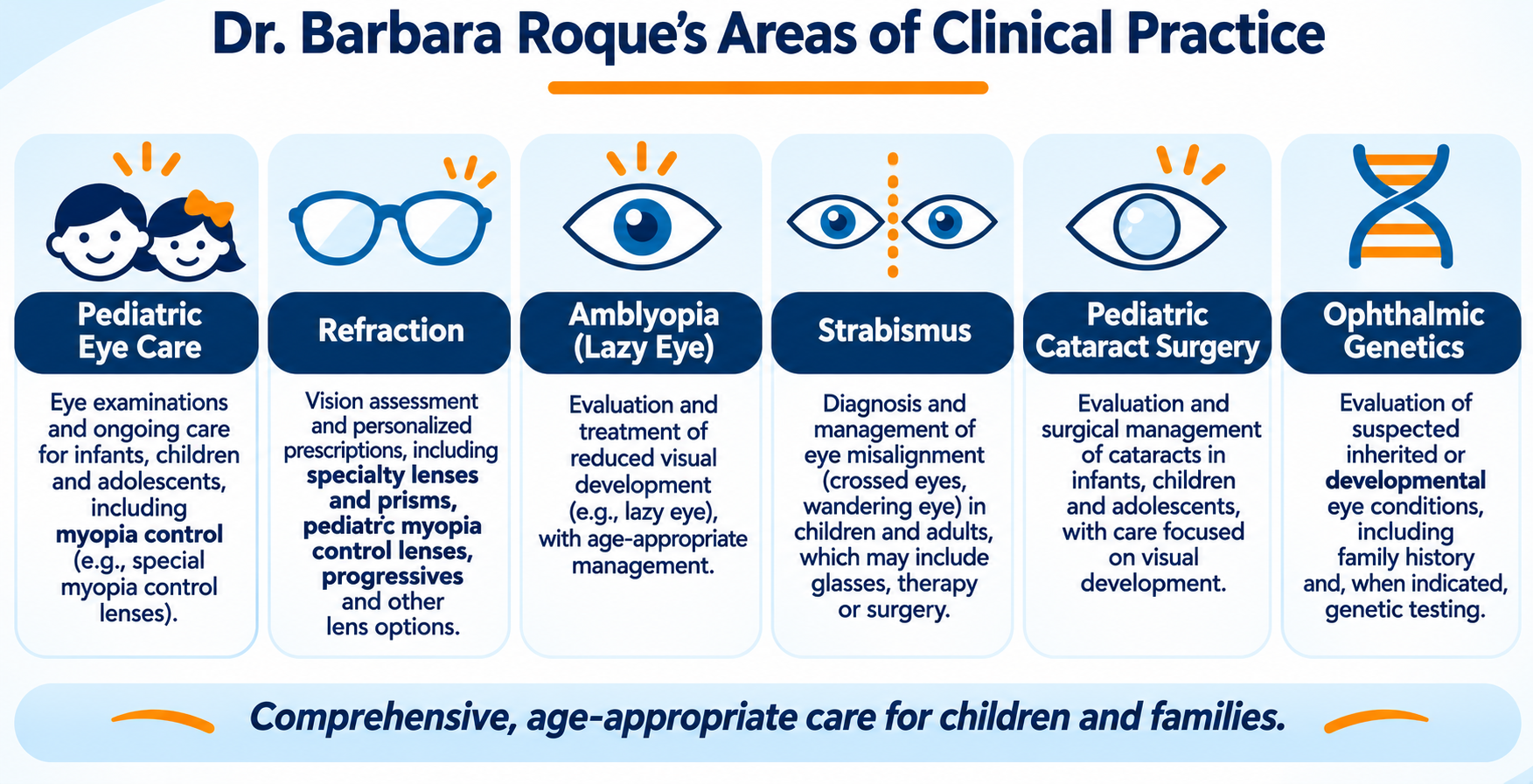
Dr. Roque's practice includes six complementary areas of ophthalmic care. The appropriate examination and treatment depend on the patient's age, visual development, eye health, and specific diagnosis.
1. Pediatric Eye Care
Children's eyes and visual systems develop throughout infancy and childhood. An eye problem may affect learning, mobility, coordination, or visual development even when a child does not complain of blurred vision.
Dr. Roque performs age-appropriate examinations for infants, children, and adolescents. These may include assessment of visual behavior, visual acuity, eye alignment, refraction, ocular structures, and the health of the retina and optic nerve.
Reasons for Pediatric Eye Consultation
- Failed vision screening at school or during a routine health examination
- Suspected blurred vision or difficulty seeing the classroom board
- Squinting, frequent eye rubbing, or unusual visual behavior
- Crossed, wandering, or misaligned eyes
- Abnormal red reflex or a white appearance in the pupil
- Family history of significant childhood eye disease
- Eye symptoms associated with developmental or medical conditions
Children with warning signs such as a white pupil, persistent eye misalignment, or abnormal visual behavior should undergo appropriate evaluation without unnecessary delay.
2. Refraction and Myopia Management
Refractive errors occur when the eye does not focus light accurately on the retina. Common examples include myopia or nearsightedness, hyperopia or farsightedness, and astigmatism.
Children may not recognize that their vision is blurred because they have no previous experience of seeing clearly.
Refraction and Optical Correction
- Assessment of nearsightedness, farsightedness, and astigmatism
- Prescription of appropriate eyeglasses
- Evaluation for contact lenses when suitable
- Cycloplegic refraction when indicated
- Monitoring of refractive changes during childhood
Myopia Management
Progressive myopia may require additional evaluation because higher degrees of nearsightedness are associated with increased lifetime risks of certain eye conditions.
Depending on age, prescription, progression, and clinical suitability, management may include behavioral measures, specialized spectacle or contact lens options, or prescribed medication where appropriate and available.
Treatment aims to reduce the rate of progression when possible. No currently available method guarantees that myopia will stop progressing.
3. Amblyopia or Lazy Eye
Amblyopia is a condition in which vision does not develop normally in one or, less commonly, both eyes during childhood.
It can occur because of unequal refractive errors, significant refractive blur, strabismus, or conditions that obstruct clear visual input during the years when vision is developing.
Amblyopia is not simply an eye that appears sleepy or closed. A child may have amblyopia even when both eyes look normal.
Possible Treatments
- Prescription eyeglasses or contact lenses when indicated
- Occlusion therapy, commonly called patching
- Atropine penalization in selected cases
- Treatment of associated strabismus or other underlying conditions
- Monitoring of visual acuity and treatment response
The most appropriate management depends on the child's age, cause of amblyopia, severity, previous treatment, and visual development.
4. Strabismus in Children and Adults
Strabismus is a condition in which the eyes are not aligned in the same direction. One eye may turn inward, outward, upward, or downward.
Misalignment may be constant or intermittent. It may begin in childhood or develop later in adulthood.
Clinical Evaluation
Dr. Roque examines ocular alignment, eye movements, refractive errors, visual acuity, binocular function, and other findings that may help identify the type and cause of strabismus.
Treatment Options
- Eyeglasses when refractive correction improves alignment
- Amblyopia treatment when indicated
- Prism correction for selected patients
- Observation or monitoring
- Strabismus surgery when clinically appropriate
- Further medical evaluation when an underlying condition is suspected
Not every patient with strabismus requires surgery. The treatment approach depends on the diagnosis, symptoms, visual function, and other findings.
New-onset eye misalignment, especially when accompanied by double vision, headache, weakness, or neurological symptoms, may require prompt medical assessment.
5. Pediatric Cataracts
A cataract is a clouding of the eye's natural crystalline lens. Although cataracts are more common in older adults, they can also affect infants and children.
Childhood cataracts may be present at birth or develop later. Their clinical importance depends on their size, location, effect on vision, and the child's age.
Pediatric Cataract Evaluation and Treatment
- Examination of the crystalline lens and other eye structures
- Assessment of the child's visual behavior and function
- Determination of whether observation or surgery is indicated
- Planning of optical rehabilitation when surgery is required
- Management of associated amblyopia
- Long-term postoperative monitoring
Pediatric cataract management differs from routine adult cataract surgery because the visual system is still developing.
Some children require early intervention to reduce the risk of permanent visual impairment. Others may be monitored when the cataract does not significantly interfere with vision.
6. Ophthalmic Genetics
Some eye diseases have a genetic or inherited component. These conditions may affect the retina, optic nerve, lens, cornea, or other eye structures.
Children with unusual ocular findings, developmental conditions, or a family history of inherited eye disease may require more detailed evaluation.
Clinical Assessment May Include
- Detailed personal and family medical history
- Examination of ocular structures and visual function
- Recognition of features suggesting inherited eye disease
- Review of associated systemic or developmental findings
- Consideration of genetic testing when clinically indicated
- Referral for genetic counseling or multidisciplinary care when appropriate
A suspected inherited condition does not automatically require genetic testing. Testing should be considered when it may help clarify diagnosis, prognosis, family counseling, or clinical management.
Approach to Patient Care
Examining a young child differs from examining an adult. Children may not be able to describe their symptoms, identify visual problems, or cooperate with every standard test.
Dr. Roque's approach emphasizes careful observation, age-appropriate examination methods, communication with parents or caregivers, and discussion of findings in understandable terms.
She considers the potential effects of eye conditions on visual development and everyday activities. Management may require repeated examinations as children grow and their visual needs change.
When discussing treatment, the aim is to explain what has been found, which options are reasonable, what benefits or limitations may be expected, and what follow-up is necessary.
Professional Qualifications
- Doctor of Medicine — University of the Philippines College of Medicine
- Ophthalmology Residency — Philippine General Hospital
- Former Chief Resident — Department of Ophthalmology and Visual Sciences, Philippine General Hospital
- Fellowship Training — Pediatric Ophthalmology and Strabismus, The Children's Hospital at Westmead, University of Sydney
- Diplomate — Philippine Board of Ophthalmology
- Fellow — Philippine Academy of Ophthalmology
- Fellow — Philippine College of Surgeons
Professional Leadership and Academic Activities
Dr. Roque has held service and departmental leadership responsibilities in pediatric ophthalmology and strabismus at Asian Hospital and Medical Center.
Her academic and professional record includes scientific presentations, educational writing, professional society participation, and contributions to ophthalmology publications.
Historical administrative appointments and academic activities are documented in her curriculum vitae. Their dates and present status should be confirmed before being described as active positions.
View Dr. Barbara Roque's Curriculum Vitae
Clinic Locations
St. Luke's Medical Center Global City
ROQUE Eye Clinic
Medical Arts Building, Room 217
Bonifacio Global City, Taguig, Philippines
Contact: +63 917 844 2020
Asian Hospital and Medical Center
ROQUE Eye Clinic
Medical Office Building, Room 509
Filinvest City, Muntinlupa, Philippines
Contact: +63 998 997 2020
Consultation schedules may change. Please confirm appointment availability before visiting.
View Dr. Barbara Roque's Clinic Schedule
Frequently Asked Questions
What is a pediatric ophthalmologist?
A pediatric ophthalmologist is an ophthalmologist with additional training in the examination and management of eye conditions affecting infants, children, and adolescents.
At what age can my child have an eye examination?
An eye examination can be performed even in infancy. The examination techniques are adapted to the child's age and developmental abilities.
How can I tell if my child has poor vision?
Possible clues include squinting, sitting unusually close to screens, difficulty recognizing distant objects, abnormal eye alignment, or failed vision screening. Some children have no obvious symptoms, so recommended screening remains important.
What is the difference between amblyopia and strabismus?
Amblyopia is reduced visual development, whereas strabismus refers to eye misalignment. They can occur together but are not the same condition.
Does every child with strabismus need surgery?
No. Treatment depends on the type of misalignment, refractive error, visual function, symptoms, and examination findings. Glasses, amblyopia therapy, observation, or other treatments may be appropriate.
Does Dr. Barbara Roque see adults with strabismus?
Yes. Her practice includes assessment of strabismus and selected eye movement disorders in adults.
What is myopia management?
Myopia management refers to strategies intended to monitor and, when possible, slow the progression of nearsightedness in children. Options depend on the child's age, prescription, progression, and clinical suitability.
When does a childhood cataract require surgery?
Surgery may be recommended when the cataract significantly affects vision or threatens visual development. The timing and treatment plan depend on the child's age, examination findings, and other factors.
Does a family history of eye disease mean my child needs genetic testing?
Not necessarily. Family history and examination findings help determine whether additional genetic evaluation or testing may be useful.
What should we bring to our child's eye appointment?
Bring current eyeglasses, previous prescriptions, school screening results, relevant medical records, and information about family eye diseases. A familiar toy or quiet activity may be helpful for younger children.
Can we request a second opinion?
Yes. Bring previous examination findings, prescriptions, treatment records, and imaging results when available.
Where can we book a consultation?
Appointments can be requested at ROQUE Eye Clinic in St. Luke's Medical Center Global City or Asian Hospital and Medical Center, subject to consultation availability.
Related Reading
- Dr. Barbara Roque — Curriculum Vitae
- Clinic Schedule and Locations
- Cataract in Children
- Meet Our Ophthalmologists
- Start Here
Take-Home Message
Children's eye care involves more than determining whether a child needs glasses. Visual development, ocular alignment, eye health, and sometimes family or developmental history all contribute to diagnosis and treatment planning.
Dr. Barbara Roque's practice encompasses pediatric eye care, refraction and myopia management, amblyopia, strabismus, pediatric cataracts, and ophthalmic genetics.
A comprehensive examination helps determine the most appropriate care for each patient.
Book Consultation
If you are concerned about your child's vision, eye alignment, school vision screening results, or a possible inherited eye condition, an ophthalmology consultation can help clarify the diagnosis and available management options.
Adults seeking assessment for strabismus may also request a consultation.
Book an Eye Consultation at ROQUE Eye Clinic
Medical Review
Physician profile: Barbara L. Roque, MD, DPBO, FPAO, FPCS.
Content revision prepared November 17, 2026.
Medical Disclaimer
This biography and its educational content provide general information only. They do not replace an individual ophthalmic examination, diagnosis, or personalized treatment recommendation.
Medical and surgical treatments are recommended according to the patient's diagnosis, examination findings, clinical needs, and relevant risks.