

Dry Eye: Symptoms, Causes, Treatment, and When to See an Eye Doctor
🧠 Dr. Roque’s Quick Answer
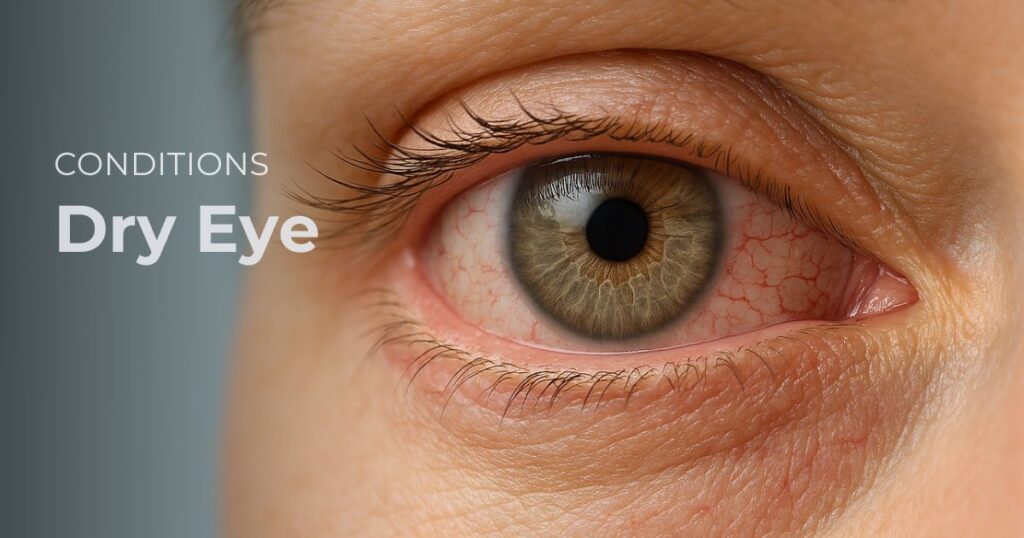
Dry eye happens when your eyes do not make enough tears, when the tears evaporate too quickly, or when the tear film is poor in quality. It can cause burning, grittiness, fluctuating vision, redness, watering, and discomfort with screens, air-conditioning, wind, or long visual tasks. Dry eye is common and often manageable, but persistent symptoms deserve a proper eye evaluation because the cause is not the same in every patient.
Dry eye is one of the most common reasons patients feel that their eyes are tired, irritated, or “just not normal.” Many people expect dry eye to feel simply dry. In real life, it is often messier than that. Dry eye can also cause watering, fluctuating vision, light sensitivity, and a heavy or irritated feeling that worsens late in the day.
This is where many patients get misled. They assume watering means the eye cannot be dry. That assumption is wrong. A dry, unstable eye surface can trigger reflex tearing, so your eyes may feel dry and watery at the same time.
🎯 Focus
Explain dry eye clearly, separate common patterns, and show patients why symptoms often fluctuate.
🏁 Goal
Help patients recognize dry eye, understand why it happens, and know when they need proper evaluation.
🛡️ Evidence-Based
Dry eye is usually driven by reduced tear production, faster tear evaporation, inflammation, or eyelid gland dysfunction.
🧠 Dr. Roque’s Key Learning Points
- Dry eye is not always just “lack of tears.” It is often a problem of tear quality and tear film stability.
- Watery eyes can still be caused by dry eye.
- Long screen time, air-conditioning, wind, poor blinking, aging, and eyelid gland problems commonly make dry eye worse.
- Not all red, irritated eyes are simple dry eye. Pain, marked light sensitivity, or reduced vision deserve proper evaluation.
- Treatment works better when it targets the actual cause, not just the symptom.
Quick Navigation
ROQUE Eye Clinic Dry Eye Diseases Knowledge Hub
This page is a cornerstone dry eye education page within the Eye.com.ph condition pathway.
Start with the main condition hub: Conditions
👁️ Anatomy Micro-Primer
The front surface of the eye needs a smooth tear film to stay comfortable and to see clearly.
- Lacrimal gland: helps make the watery part of tears.
- Meibomian glands: glands in the eyelids that produce an oily layer to slow evaporation.
- Mucin layer: helps tears spread evenly over the eye surface.
- Cornea and conjunctiva: the tissues protected by the tear film.
- Eyelids and blinking: spread the tear film and help keep the eye surface stable.
🧩 Terminology Glossary
- Dry eye disease: a condition where tears are not enough, evaporate too fast, or do not work properly.
- Tear film: the thin layer of tears covering the eye surface.
- Evaporative dry eye: dry eye caused mainly by tears evaporating too quickly.
- Aqueous-deficient dry eye: dry eye caused mainly by not making enough watery tears.
- Meibomian gland dysfunction: a common eyelid gland problem that makes the oily tear layer weak.
- Ocular surface: the tissues at the front of the eye that interact with tears and blinking.
What Is Dry Eye?
Dry eye is a condition in which the tear film does not protect the eye surface properly. That can happen because:
- You do not make enough tears.
- Your tears evaporate too quickly.
- Your tears are present, but poor in quality.
Many patients have a mixed pattern rather than a single pure cause. That matters because treatment should match the pattern. Throwing random eye drops at the problem is weak strategy. Some patients need lubrication. Some need eyelid treatment. Some need inflammation control. Some need all of the above.
💡 Dr. Roque’s Analogy
Think of the tear film like the windshield coating on a car. If the coating is smooth and stable, you see clearly. If it is patchy, thin, or breaks up too quickly, vision becomes uneven and the surface becomes uncomfortable. Dry eye is often less about “no tears” and more about a poor-quality tear film that cannot do its job well.
Common Symptoms of Dry Eye
Dry eye can feel different from one person to another. Common complaints include:
- burning or stinging
- gritty or sandy sensation
- watering or tearing
- redness
- fluctuating or blurred vision
- eye fatigue
- discomfort with air-conditioning, wind, or smoke
- difficulty with prolonged screen use or reading
- light sensitivity
- stringy mucus in some patients
A key clue is variability. Patients often say, “Some hours are fine, then suddenly my eyes feel terrible.” That is classic tear-film instability behavior.
Why Dry Eye Happens
1) Meibomian Gland Dysfunction
This is one of the biggest drivers of dry eye. If the oily layer of tears is weak, tears evaporate too quickly. Many patients have eyelid margin inflammation, clogged glands, or poor oil quality.
2) Reduced Tear Production
Some patients simply do not produce enough of the watery tear component. This can become more common with age and in certain systemic conditions or medication use.
3) Inflammation
Inflammation can damage the tear film and worsen surface irritation. Once that cycle starts, the eye surface becomes less stable and more symptomatic.
4) Incomplete Blinking and Screen Use
Many patients blink less or blink poorly while using phones, tablets, laptops, and desktop monitors. That leaves the tear film unstable and the surface exposed for longer periods.
5) Environmental Stress
Air-conditioning, fans, dry environments, wind, and smoke can all make dry eye worse.
6) Contact Lens Wear
Contact lenses can worsen symptoms in some patients by affecting the tear film and ocular surface.
7) Eyelid and Surface Disease
Blepharitis, conjunctival irritation, eyelid position problems, and other ocular surface disorders can contribute to dry eye symptoms.
Who Is More Likely to Have Dry Eye?
- older adults
- people with heavy screen use
- contact lens wearers
- people working in air-conditioned or windy environments
- patients with eyelid margin disease
- patients using certain systemic or topical medications
- patients with some autoimmune or inflammatory conditions
- people who have had ocular surgery or long-standing surface irritation
What Dry Eye Does to Vision
Dry eye does not only affect comfort. It can also affect vision quality. Patients may describe blur that improves after blinking, especially during reading, driving, or computer work. That happens because the tear film is part of the optical surface of the eye. If it becomes irregular, vision becomes unstable.
When Dry Eye Might Not Be “Just Dry Eye”
🚨 Dr. Roque’s Emergency Warning
Do not assume every irritated red eye is simple dry eye. Seek prompt evaluation if you have:
- moderate to severe eye pain
- sudden drop in vision
- marked light sensitivity
- significant redness in one eye
- injury or chemical exposure
- contact lens-related pain or redness
- pus-like discharge
- new severe symptoms that do not fit your usual pattern
This matters because corneal abrasion, infection, uveitis, glaucoma, and other problems can be mistaken for “just dry eyes” by patients who normalize their symptoms too quickly.
How an Eye Doctor Evaluates Dry Eye
A proper dry eye assessment is not just “your eyes look dry.” The real job is to identify the pattern and the drivers. In clinic, I usually want to know:
- Is tear production reduced?
- Are the eyelid oil glands working poorly?
- Is there inflammation on the ocular surface?
- Are there environmental or behavioral triggers?
- Is something else masquerading as dry eye?
Evaluation may include examination of the tear film, eyelid margins, blink quality, ocular surface staining, tear stability, and associated eyelid or gland disease.
Treatment Options for Dry Eye
Treatment depends on the pattern. This is where disciplined thinking matters. Dry eye treatment is not one bottle for everyone.
1) Artificial Tears and Lubrication
Lubricating drops can improve comfort, but they work best when chosen properly and used as part of a broader plan.
2) Eyelid Hygiene and Warm Compresses
These are often useful when meibomian gland dysfunction or blepharitis is contributing to symptoms.
3) Blink Training and Screen Habits
Better blinking, regular breaks, and reducing prolonged unbroken screen time can make a real difference.
4) Environmental Adjustment
Reducing direct fan exposure, improving humidity, and adjusting workstation habits can help reduce evaporation stress.
5) Targeted Medical Treatment
Some patients need treatment directed at inflammation, gland dysfunction, or associated ocular surface disease. This should be individualized.
6) Advanced Dry Eye Management
Patients with more severe, chronic, or refractory dry eye may need more advanced treatment strategies after full evaluation.
What Patients Commonly Get Wrong
- Assuming watery eyes mean the eyes are not dry
- Buying random drops without understanding the cause
- Ignoring eyelid disease and focusing only on the eyeball
- Underestimating the role of screens and poor blinking
- Normalizing symptoms for months or years without assessment
When to Book a Consultation
Book a consultation if your symptoms are frequent, interfere with work or reading, keep recurring, worsen with contact lenses, or do not improve with simple measures. You should also book if your symptoms feel different from your usual pattern or if redness and blur are becoming more prominent.
✅ Dr. Roque’s Take-Home Message
Dry eye is common, but it is not trivial when it keeps affecting comfort, vision, and daily function. The smartest next move is not to guess blindly. It is to identify whether the real driver is poor tear production, fast evaporation, eyelid gland dysfunction, inflammation, or a different eye problem entirely. Once the pattern is clear, treatment becomes far more effective.
Frequently Asked Questions
Can dry eye make my eyes water?
Yes. A dry, irritated surface can trigger reflex tearing, so dry eye can cause watery eyes.
Why is my vision blurry when my eyes feel dry?
Because the tear film is part of the optical surface of the eye. When it becomes unstable, vision can fluctuate.
Does screen time make dry eye worse?
Yes. Many patients blink less and less completely during screen use, which makes the tear film less stable.
Are all artificial tears the same?
No. Different formulations suit different patients and different dry eye patterns.
Can dry eye be permanent?
Dry eye can be chronic, but many patients improve significantly with proper diagnosis and a targeted plan.
Can contact lenses worsen dry eye?
Yes. Some patients experience more dryness, irritation, or unstable vision with contact lens wear.
Is redness always from dry eye?
No. Redness can also come from allergy, infection, inflammation, contact lens complications, and other eye diseases.
Do I need an eye exam if drops help a little?
Yes, if symptoms keep recurring or remain bothersome. Temporary relief does not prove the underlying cause is fully addressed.
Can dry eye get worse with age?
Yes. Dry eye becomes more common as people get older.
When should I worry that it is not just dry eye?
You should worry when there is significant pain, marked light sensitivity, reduced vision, or symptoms that feel stronger or more one-sided than usual.
📚 Related Reading
📖 References
- American Academy of Ophthalmology resources on dry eye disease and ocular surface disorders.
- Major ophthalmology references on dry eye disease, tear film instability, and meibomian gland dysfunction.
- Peer-reviewed reviews on evaporative and aqueous-deficient dry eye.
- Peer-reviewed reviews on meibomian gland dysfunction and ocular surface inflammation.
- Peer-reviewed literature on dry eye symptoms, tear-film instability, and visual fluctuation.
ROQUE Eye Clinic Patient Education Series
Reviewed by the Roque Advisory Council
Dr. Manolette Roque | Dr. Barbara Roque
St. Luke’s Medical Center Global City | Asian Hospital Medical Center
Philippines
Medical Disclaimer: This page is for patient education only and does not replace an eye examination, diagnosis, or treatment plan. If you have significant pain, marked light sensitivity, vision loss, trauma, chemical exposure, or worsening symptoms, seek prompt medical attention.